dApp basics · Explainer
5 Ways Dapps Could Change Everyday Life
Dapps can change how you access financial services, move crypto and use digital goods—but they do not remove costs or risk. Here are five practical changes to understand, plus checks to make before connecting a wallet.
By the SkyBitcoins editorial team · Updated
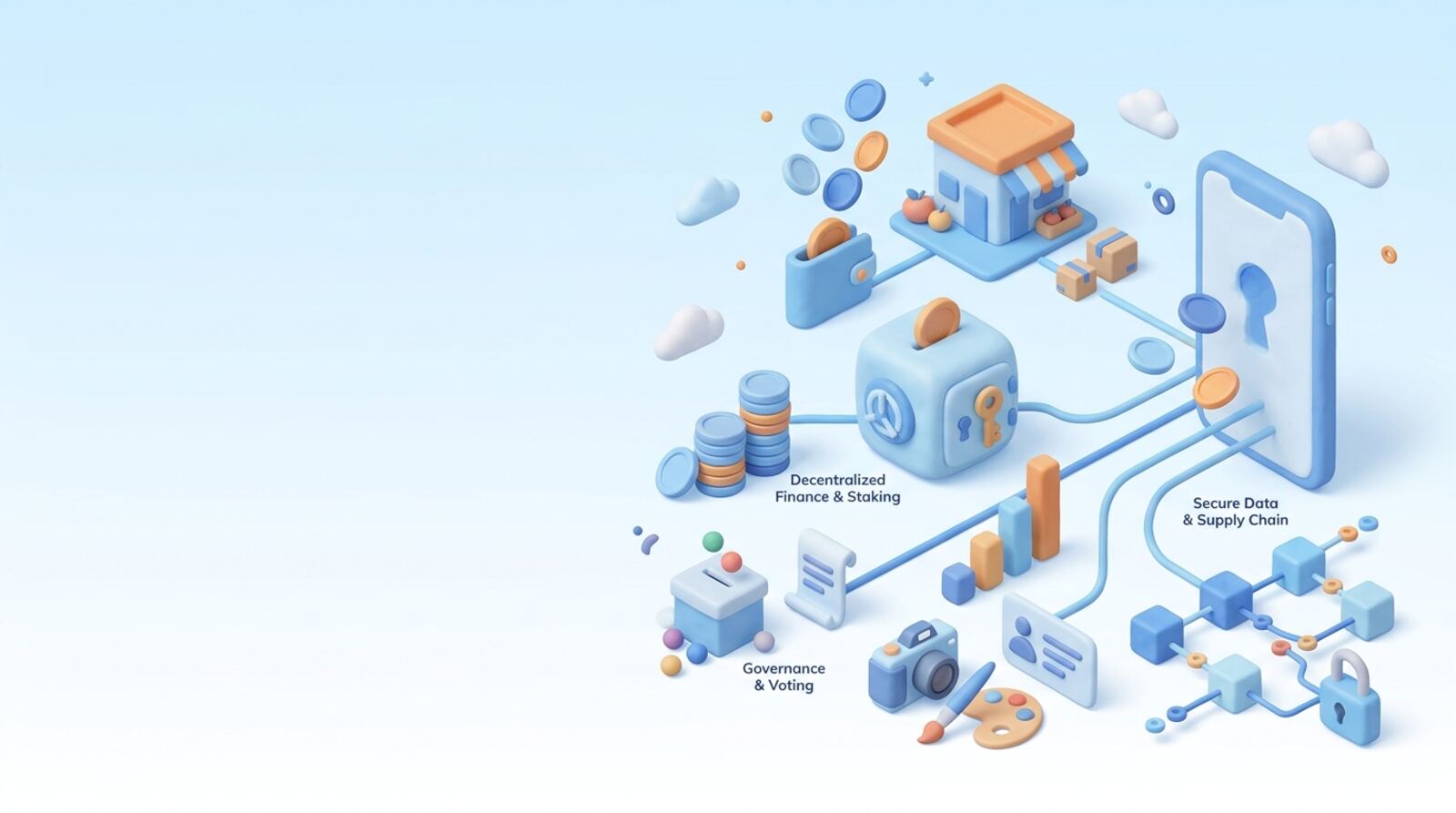
What could dapps change in your everyday life?
Dapps may change everyday life by letting you interact with financial services, digital assets and online communities through blockchain networks. The practical difference is that some actions—such as a token swap or loan—are handled by smart contracts rather than a conventional company’s database alone. You may hold the assets in your own wallet and approve transactions yourself.
That can give you more direct control, but it also shifts work and responsibility onto you. You need to manage wallet access, choose the right network, understand fees and check what a transaction authorises. Some dapps still depend on a company-run website or other centralised services, so “decentralised” does not mean there is no operator or point of failure.
The five changes to consider are:
- More direct access to lending and other financial tools.
- Token transfers and exchanges without a conventional broker for every step.
- User-held digital assets that can sometimes be used across services.
- Games and creative experiences with on-chain features.
- New ways to coordinate or vote in online communities.
These are possibilities, not guaranteed improvements. Whether a dapp is useful depends on its design, cost, accessibility and risks.
Could dapps make financial services more accessible?
Dapps can make some financial services available through a wallet rather than a bank or brokerage account. For example, lending dapps let users supply crypto to markets or borrow against collateral. Aave is one example of a crypto lending dapp. In practice, you choose a supported market, review its terms and approve transactions from your wallet.
This can mean access without opening a conventional account, but it is not the same as getting a bank loan. You generally need crypto assets and may have to provide more collateral than you borrow. Interest rates can vary, and if collateral loses value, a position can be liquidated. Network fees and protocol charges may apply. The value of crypto can also change sharply.
Before supplying or borrowing, check:
- Which token and network the market supports.
- Current rates, fees and withdrawal conditions.
- The collateral threshold and liquidation process.
- Whether the app’s contracts and market have risks you can accept.
Do not treat a displayed rate as fixed unless the terms explicitly say so. A dapp can widen access to financial tools, but it does not guarantee credit, stable returns or protection from losses.
Can dapps make payments and trading more direct?
A dapp can let you transfer or exchange tokens directly from a wallet, without placing every trade through a traditional broker or exchange account. A decentralised exchange such as Uniswap uses smart contracts and liquidity pools to facilitate swaps. You choose the tokens and network, review a quote, then approve the transaction in your wallet.
This can make some markets available around the clock and let you retain custody of your assets until you transact. But “direct” does not mean free or guaranteed. You may pay a network fee, a pool fee or both. The final amount can differ from the quote because prices move while a transaction is pending. Thinly traded tokens may have poor liquidity, and an incorrect token or network choice can be costly.
Before a swap:
- Confirm the token contract and blockchain network.
- Compare the quoted output with the amount you expect.
- Review price impact, fees and any approval request.
- Start small if you are unfamiliar with the app.
A wallet-based trade also leaves you responsible for securing your wallet. Never share its recovery phrase, and do not sign a transaction you cannot interpret.
Could you own and carry digital items between apps?
Dapps can change how you hold and use digital assets. With a conventional online service, access to an item or account may depend on the company’s database and rules. A blockchain token, by contrast, can be held in a wallet and transferred between compatible wallets. Some apps use tokens to represent in-game items, memberships or other digital goods.
That does not mean every token is useful outside its original app, or that buying one guarantees ownership of copyright or a permanent right to use a service. The item’s function depends on its terms, the smart contract, the app’s continued support and whether another service recognises it. If the website or game shuts down, the token may remain in your wallet while its practical use disappears.
Before treating a token as an asset, ask:
- What exactly does the token give you: access, an item, a vote or something else?
- Can it be transferred, and are there fees to do so?
- Does the app promise ongoing support or compatibility?
- Could its value or usefulness depend on a single company?
User-held assets can offer portability and control, but those benefits are limited by the rules and services built around them.
How might dapps change games and creative tools?
Games and creative apps can use dapps to record ownership, rewards or activity on a blockchain. That may let a player hold a tokenised item in a wallet rather than only in a game account. Other dapps focus on interactive experiences without requiring blockchain knowledge at all. Element Fusion, for example, is a free browser chemistry sandbox that saves progress in the browser; it does not require an account or wallet.
These examples show why “dapp” does not always mean a token game. A blockchain feature may be optional, or a product may be an online app with no crypto actions. If a game does involve tokens, check whether playing requires an initial purchase, whether rewards can actually be withdrawn and what fees apply. Do not assume that time spent playing will earn money.
For a first visit, check:
- Whether the app asks for a wallet, account or payment.
- Where progress is stored and whether it can be recovered.
- Whether items are tokens or simply in-app features.
- Any fees, withdrawal rules or restrictions before spending.
Dapps may broaden the ways people play and create online, but the experience can still depend on the developer, hosting service and continued maintenance.
Can dapps give users a say in online communities?
Some dapps let users take part in decisions about a protocol or online community. A project may use token voting to propose changes, adjust settings or direct community funds. In theory, this gives users a route to influence how a service develops instead of leaving every decision to a company’s managers.
Voting does not automatically mean equal or effective control. A person’s voting weight may depend on how many tokens they hold, so a small number of holders can have more influence. Proposals may also be limited, and technical teams or administrators may retain powers to update contracts or pause services. A vote can be binding, advisory or simply a signal of community opinion; you need to check which.
Before relying on governance, look for clear answers to these questions:
- Who can submit a proposal and what is needed for it to pass?
- Which decisions are actually controlled by token holders?
- Can administrators override or delay a decision?
- Are voting rights tied to buying or locking up a token?
Community governance can create more ways to participate, but it does not guarantee that your voice will carry weight or that a proposal will be implemented.
What should you check before trying a dapp?
You do not need to jump into a high-value transaction to understand a dapp. Start by identifying what you want to do, then check the app’s basic requirements and risks before connecting a wallet. If the app supports a non-financial demo or lets you explore without a wallet, use that first.
A practical first-use checklist:
- Confirm the task. Decide whether you are swapping, lending, playing or voting; do not connect a wallet just to browse.
- Check the network. Make sure your wallet is on a blockchain the dapp supports and that you have the required token for fees.
- Read the transaction. Review what you are sending, receiving or approving. Token approvals can give a contract permission to use tokens later.
- Check the cost. Look for network fees, app fees, spreads and any withdrawal or exit costs.
- Use a small test amount. If you decide to proceed, test with an amount you can afford to lose before making a larger transaction.
A dapp may not have customer support that can reverse a mistaken transfer. Keep your wallet recovery phrase offline and private, and use a separate wallet for experimentation if you want to limit exposure.
Which dapp mistakes can cost you money?
The biggest mistake is assuming that a dapp is automatically safer, cheaper or more private because it uses a blockchain. Code can contain bugs, interfaces can mislead, and a project may rely on administrators or outside services. Transactions are often difficult or impossible to reverse, so a wrong address, token or network can mean a permanent loss.
Other common mistakes include chasing a high advertised yield without understanding how it is generated, approving unlimited token access without a reason, and confusing a token’s market price with its practical value. Dapp costs can include network fees, swap or borrowing fees, and losses from price movement. These charges vary by app, blockchain and network demand; there is no single standard dapp fee.
Avoid these habits:
- Never share your wallet recovery phrase or private key.
- Do not follow a wallet prompt you do not understand.
- Do not assume an app’s website, token or social account is genuine; check carefully before connecting.
- Do not deposit more than you can afford to lose or leave locked.
- Do not assume a transaction can be undone by the developer.
Dapps can make online services more open and user-controlled, but the trade-off is often greater personal responsibility. Use them only when their specific benefit is worth the effort and risk.
Frequently asked questions
What is a dapp?
A dapp is an application that uses blockchain-based smart contracts for some of its functions. You may interact with it through a website or app, but parts of the service can still rely on centralised operators, servers or infrastructure.
Are dapps free to use?
No. You may pay network transaction fees, trading fees or other charges, depending on the app and blockchain. Fees can change with network demand, and a transaction may still cost money even if it fails.
Are dapps safer than regular apps?
Not necessarily. A dapp may let you hold assets in your own wallet, but you are responsible for protecting the wallet and checking transactions. Smart-contract flaws, scams, network outages and mistakes can still cause losses.
Do I need crypto experience to use a dapp?
No. A dapp’s interface may be easy to use, but wallets, tokens, transaction fees and irreversible transfers add steps and risks. Start with a small amount, and do not use money you cannot afford to lose.
Can users control how a dapp changes?
Some dapps use governance tokens or other voting systems, but holding a token does not guarantee meaningful influence. Check who can propose or execute changes, what votes control and whether the app has a central team with special powers.
Mentioned in this guide
dApps in this guide
Uniswap offers wallet-based swaps and liquidity pools across 15+ networks, but pool fees, gas and self-custody risks still matter.
Aave offers open crypto lending and borrowing, but variable rates, gas costs and liquidation risk make it best for informed DeFi users.
Lido turns staked ETH into liquid stETH, but variable rewards, a 10% reward fee and withdrawal and contract risks need checking.
Element Fusion is a free, no-account browser chemistry sandbox for exploring reactions, with progress saved only in your browser.
Keep reading
Related guides
dApp basics · Explainer
What Are Web3 Applications? A Practical Guide
Web3 applications use blockchains and related tools to let you interact with digital assets or services through a wallet. Learn how they work, what they cost, and how to judge whether an app is genuinely decentralized—and safe enough for you to use.
dApp basics · Explainer
What Are dApps? How to Use Them Safely in 2026
A dApp is an application that uses a blockchain, usually through smart contracts. Learn how to tell what is decentralized, what you may pay, and how to use one without rushing into a risky transaction.
dApp basics · Explainer
How to Check Which Dapps Escaped FTX Contagion
No reliable list proves which dapps were untouched by FTX. Learn how to distinguish direct exchange exposure from independent on-chain use, and check a protocol before you trust it with funds.
dApp basics · How-to
How to Find Quality Dapps for Web3 Partnerships
Finding a promising dapp for a partnership starts with fit, not follower counts. Use a repeatable process to check the product, users, on-chain activity, security, team and commercial terms before you commit business-development time.
dApp basics · Explainer
What Web3 Needs Next: A Practical Guide to Dragos Dunica
Dragos Dunica was described as a Web3 company co-founder in 2022. Here’s what that tells you—and how to judge what Web3 needs next without treating an old vision as a current roadmap.
dApp basics · Best list
10 WAX Dapps to Try: A 2026 Safety Checklist
Here are ten WAX ecosystem names to investigate, not a claim that every one is still active in 2026. Check each project’s current status, costs and wallet permissions before connecting or spending.
dApp basics · Best list
3 Web3 Projects to Explore in 2026
If you want to explore beyond the biggest crypto names, start with projects that have a clear use and risks you can inspect. These three cover Solana staking, on-chain lending and Hedera swaps.
dApp basics · Explainer
How to Verify Sixth Community Call Highlights
“Sixth community call highlights” doesn’t identify a project or a particular meeting, so there’s no reliable way to list its announcements. Use this guide to identify the call, separate decisions from ideas, and check any crypto-related claims before acting.