Security and scams · Explainer
What Is a Crypto Rug Pull? How to Spot and Respond
A crypto rug pull is a scam that leaves token buyers or DeFi users with losses, often by removing liquidity or restricting withdrawals. Learn how these schemes work, what warning signs to check and what to do if you’re affected.
By the SkyBitcoins editorial team · Updated
What is a crypto rug pull?
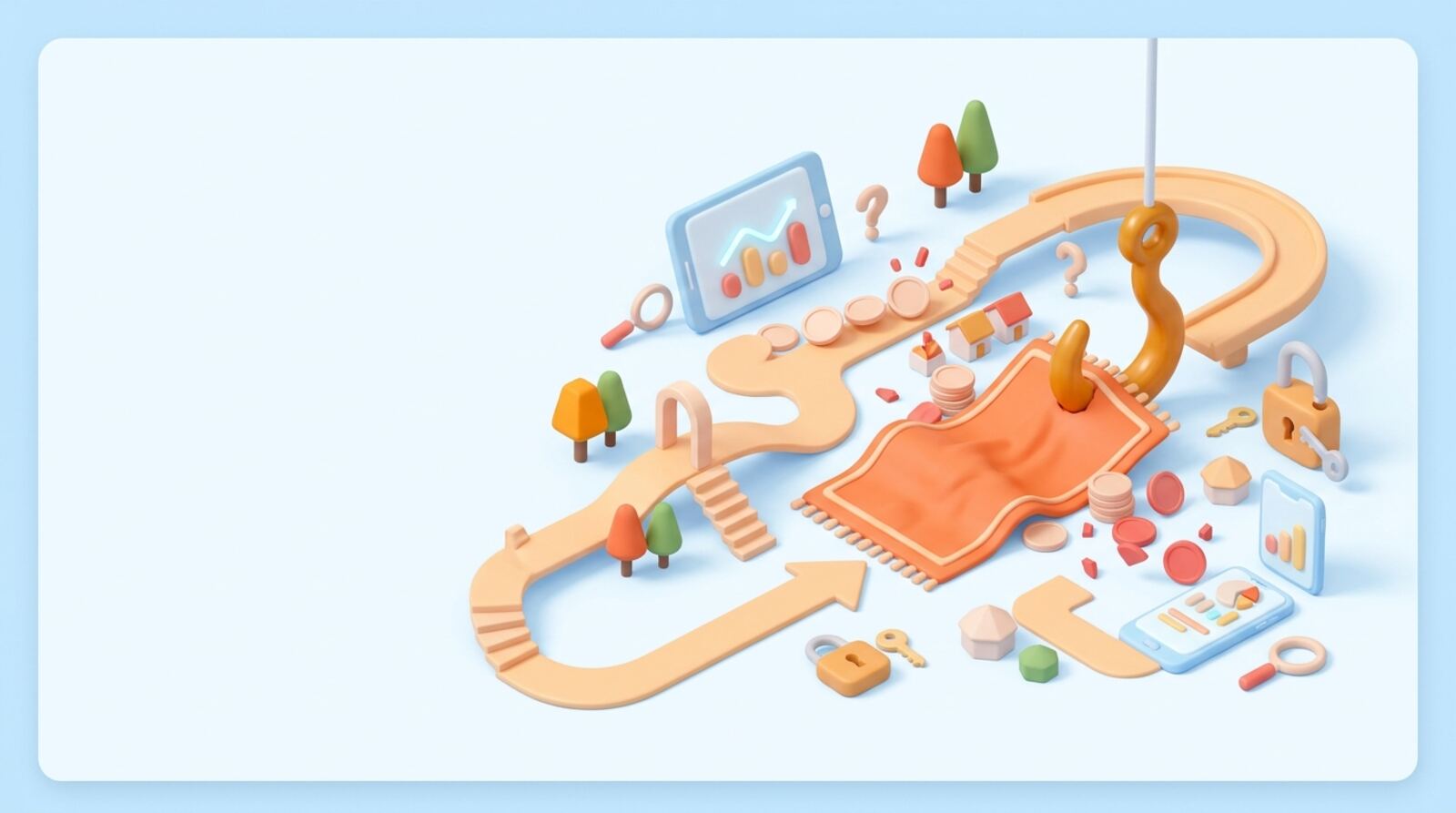
A crypto rug pull is a scam in which a project’s creators or insiders exploit users and leave them with losses. They may drain a token’s trading liquidity, take funds deposited in an app, or design a token so buyers cannot sell. The project may then disappear or stop operating.
The term is used most often in decentralised finance (DeFi), where transactions and token contracts run on blockchains. But a rug pull can also involve a centralised project or a token promoted through social media. A project looking polished, appearing on a trading app or having active chat groups does not prove it is legitimate.
The practical point: treat a new token or DeFi project as a risk to investigate, not a promise of returns. Before connecting a wallet or sending funds, find out who controls the contract, what you are authorising and whether you can exit. No single warning sign proves a scam, and no checklist can guarantee safety.
How do rug pulls work?
Rug pulls take several forms. Knowing the mechanism can help you understand what to check before you transact.
| Type | What happens | What you may notice |
|---|---|---|
| Liquidity pull | Insiders remove assets from a token’s trading pool, making swaps difficult or costly. | Liquidity drops sharply; trades have extreme price impact. |
| Sell restriction | Contract controls prevent ordinary holders from selling, or impose severe fees. | Buying works but selling fails or returns far less than expected. |
| Fund drain | A project’s contract or administrators move deposited assets out of a protocol. | Deposits become unavailable or funds move unexpectedly. |
| Slow rug | Promoters repeatedly raise expectations, sell their own holdings or stop delivering while retaining user funds. | Promises continue, but progress and accountability fade. |
A liquidity pool is a reserve of tokens used to facilitate swaps on a decentralised exchange. If a token’s pool is depleted, you may be unable to sell at a reasonable price. A token can still appear on a trading interface even when its pool is unsafe or unusable. A site’s availability is not evidence that a project is sound.
Which warning signs should you check?
Look for combinations of warning signs rather than relying on one signal. A new project can be risky without being fraudulent, and scammers can imitate signs of legitimacy.
Check for these concerns before buying or depositing:
- Unclear control: The project does not explain who can change its contract, move funds or pause activity.
- Concentrated holdings: A small number of wallets hold a large share of the token, especially if their identities and roles are unclear.
- Weak liquidity: The pool is small, can be withdrawn by insiders or is difficult to verify.
- One-way trading: Buyers report failed sales, unexpectedly high fees or transactions that revert.
- Pressure tactics: Promoters promise guaranteed returns, demand urgency or encourage you to ignore independent checks.
- Borrowed credibility: The project claims audits, partnerships or endorsements that you cannot confirm from the named organisation.
Be wary of copied websites, impersonator accounts and fake community members. A large follower count, a token listing or a successful-looking transaction is not proof. If the explanations for ownership, liquidity or contract permissions are confusing, pause rather than relying on a promoter to interpret them for you.
How can you check a token before buying?
Do your checks before connecting your wallet or signing a transaction. These steps reduce avoidable exposure, but they cannot eliminate the risk of fraud or technical failure.
- Find the exact token and network. Scammers create lookalike names and symbols. Confirm the contract address through more than one trustworthy project channel; don’t use an address sent in an unsolicited message.
- Inspect the contract and permissions. Check whether the code has been reviewed by an independent auditor and whether owners can mint tokens, change fees, blacklist wallets, pause trading or upgrade the contract. An audit is not a guarantee.
- Check holders and liquidity. See whether ownership is concentrated, whether liquidity is substantial enough for your intended trade, and whether insiders can remove it. Understand that public labels or locked-liquidity claims can be misleading.
- Test the exit. If you choose to proceed, consider a small transaction and verify that selling works. A successful test does not prove future trades will work.
- Limit exposure. Never invest money you cannot afford to lose, and do not sign approvals you do not understand.
What should you check before signing a wallet transaction?
A transaction signature is permission to do something, not just a routine confirmation. Some approvals let a contract spend a specified token amount; others may allow spending up to an unlimited amount. Malicious or compromised sites can use that permission to take assets later.
Before approving, check the wallet’s transaction details: the network, recipient or contract, token, amount and requested permission. Do not sign if the details are missing, unfamiliar or inconsistent with the action you intended. A wallet prompt can be hard to interpret; if you cannot explain what it permits, reject it and seek help through a trusted, independent channel.
After using a site, review token approvals and revoke permissions you no longer need through a reputable wallet or blockchain tool. Revoking may require a network transaction fee, and it does not reverse a transfer or restore funds already taken. Be cautious of unsolicited “recovery” services that ask for your seed phrase, private key, a remote-access session or an upfront payment. Never share your recovery phrase with anyone.
What should you do if you think you were rugged?
If you suspect a rug pull, stop interacting with the project first. Don’t send more funds to “unlock” a withdrawal, pay a recovery fee or qualify for a refund. A genuine support team should not need your seed phrase or private key.
Take these steps:
- Preserve evidence: Save transaction hashes, wallet addresses, token contract details, screenshots, messages and dates. Keep original records where possible.
- Check permissions: If you approved a token-spending allowance, use a reputable tool to review and revoke it. Make sure you are using the correct network and contract.
- Secure other assets: If you exposed your recovery phrase or private key, treat the wallet as compromised. From a clean device, move remaining assets to a newly created wallet and do not reuse the exposed phrase.
- Report the incident: Notify the exchange or wallet provider involved and consider reporting to your local consumer-protection or law-enforcement agency. Share transaction details, not secret credentials.
- Ignore recovery promises: Be especially wary of people who contact you privately after you post about a loss.
A blockchain transfer is generally difficult to reverse, so recovery is not assured. Reporting can still help document the incident and protect other users.
Is a rug pull different from a project simply failing?
Not every project that loses value or shuts down is a rug pull. Crypto projects can fail because of poor management, bugs, market declines, changing regulations or a lack of users. Those outcomes can hurt investors without proving that the team deliberately stole funds.
Focus on observable actions: Were users misled about how funds would be used? Did insiders remove liquidity or transfer deposits without a clear explanation? Did contract controls prevent holders from selling? Did the team abandon communication while retaining control of user assets? These details may raise serious concerns, but they do not always establish who acted or why.
A price crash alone is not proof. Nor is a project’s continued online presence proof that it is safe; fraudulent teams can keep posting after funds have been drained. If you are assessing a suspected incident, separate verified on-chain transactions from claims made in chat rooms, and avoid repeating accusations as established fact unless they have been substantiated. The safest decision when key facts remain unclear is to avoid adding funds while you investigate.
Which rug-pull mistakes should you avoid?
The most costly mistakes often happen when urgency replaces basic checks. Keep this short list in mind whenever you consider a new token or DeFi app:
- Don’t treat viral promotion, celebrity mentions or a large online community as evidence of safety.
- Don’t assume an audit guarantees a project is honest, free of bugs or safe from later changes.
- Don’t confuse a token’s listed price with the amount you could actually receive when selling; thin liquidity and trading restrictions matter.
- Don’t send funds to a wallet address provided by an unsolicited message or a lookalike website.
- Don’t approve a transaction just to dismiss a wallet warning or access a promised reward.
- Don’t borrow, use leverage or commit essential savings to a speculative token.
- Don’t trust anyone who claims they can recover your funds if you first pay or share credentials.
For a swap on a decentralised exchange such as Uniswap, check the token contract, pool, network and transaction approval yourself. The exchange interface can help execute a trade; it does not certify every token or project offered through it. If you cannot explain how you would exit, wait.
Frequently asked questions
What does “rug pull” mean in crypto?
A rug pull is a deliberate scam in which people behind a crypto project exploit users or take project funds and abandon it. It can involve a token, a DeFi application or another crypto project.
Is every failed crypto project a rug pull?
No. A token price can fall because of market conditions, poor execution or a project failure. A rug pull involves deceptive or exploitative conduct, such as secretly blocking sales or taking funds; proving intent can be difficult.
Can you spot a rug pull from a price chart?
It can be, but not always. A sharp fall in liquidity or an unusual price move can have multiple causes, so check the token contract, pool activity and project communications before drawing conclusions.
Can stolen crypto be recovered?
Usually, no. Blockchain transactions are generally visible, but a wallet address does not by itself reveal who controls it, and assets may be moved through multiple wallets or services. Save evidence and report the incident to relevant platforms or authorities.
Mentioned in this guide
dApps in this guide
Uniswap offers wallet-based swaps and liquidity pools across 15+ networks, but pool fees, gas and self-custody risks still matter.
Ethereum is an open blockchain for ETH and apps; check variable gas costs and wallet risks before using it.
Crypto.com offers broad crypto access and EUR deposits, but check spreads, fees and withdrawal terms before funding an account.
Save lets you lend crypto or borrow against deposits, but check changing pool rates, unclear fees and audit details before using it.
Keep reading
Related guides
Security and scams · Explainer
How Crypto Hacks Happen and How to Protect Your Funds
Most crypto theft starts with stolen credentials, a trick that gets you to reveal a recovery phrase, or a transaction you approve without understanding it. Learn how these attacks work and follow a practical routine to reduce your risk.
Security and scams · Explainer
How to Spot a Rug Pull Before You Trade
A rug pull can be planned from the start or enabled by control over a token, its liquidity or its trading rules. Use this step-by-step checklist to investigate a project before connecting your wallet, and know what to do if warning signs appear.
Token · Explainer
Axie Infinity SLP Explained: How to Use It Safely
Smooth Love Potion (SLP) is an Axie Infinity game token, not a guaranteed income stream or a share in the game. Learn what it does, how players may earn or use it, and what to check before holding or trading it.
dApp basics · Best list
Best Crypto Apps in the USA: How to Choose in 2026
There is no single best crypto app for every US user: your state, the coins you want and whether you prefer an exchange or a self-custody wallet all matter. Compare the options, check the real costs and confirm access before you deposit.
Security and scams · Explainer
Why Hackers Target Cross-Chain Bridges: A Practical Guide
Bridges move assets and messages between blockchains, but the systems that make those transfers possible can also create concentrated points of failure. Learn why attackers target them, what past exploits reveal and how to check a bridge before you use it.
Security and scams · How-to
How to Avoid Web3 Scams in 2026: A Practical Guide
Use a few repeatable checks before you click, connect a wallet or sign a transaction. If something goes wrong, act quickly to protect any funds and accounts that remain safe.
Security and scams · Explainer
Alpha Homora Exploit: What to Check Before Depositing
Alpha Homora’s roughly $38 million exploit in February 2021 is a reminder that leveraged yield farming can expose you to risks across more than one protocol. Here’s what happened, what “Binance growth” means in this context, and what to check before considering Alpha Homora in 2026.
Security and scams · Explainer
Waves-Alameda Price Claims: What You Can Verify
Waves CEO’s accusations against Alameda Research should be treated as allegations, not proof that the firm manipulated WAVES. Here’s how to assess the claim, understand what changed after FTX’s collapse and protect yourself from trading on unverified claims in 2026.