Real-world asset · Explainer
What Does Tokenized Mean in Crypto? A Practical Guide
In crypto, “tokenized” usually means an asset or right is represented by a blockchain token. The token’s existence alone does not prove that you own the underlying asset or can redeem it.
By the SkyBitcoins editorial team · Updated
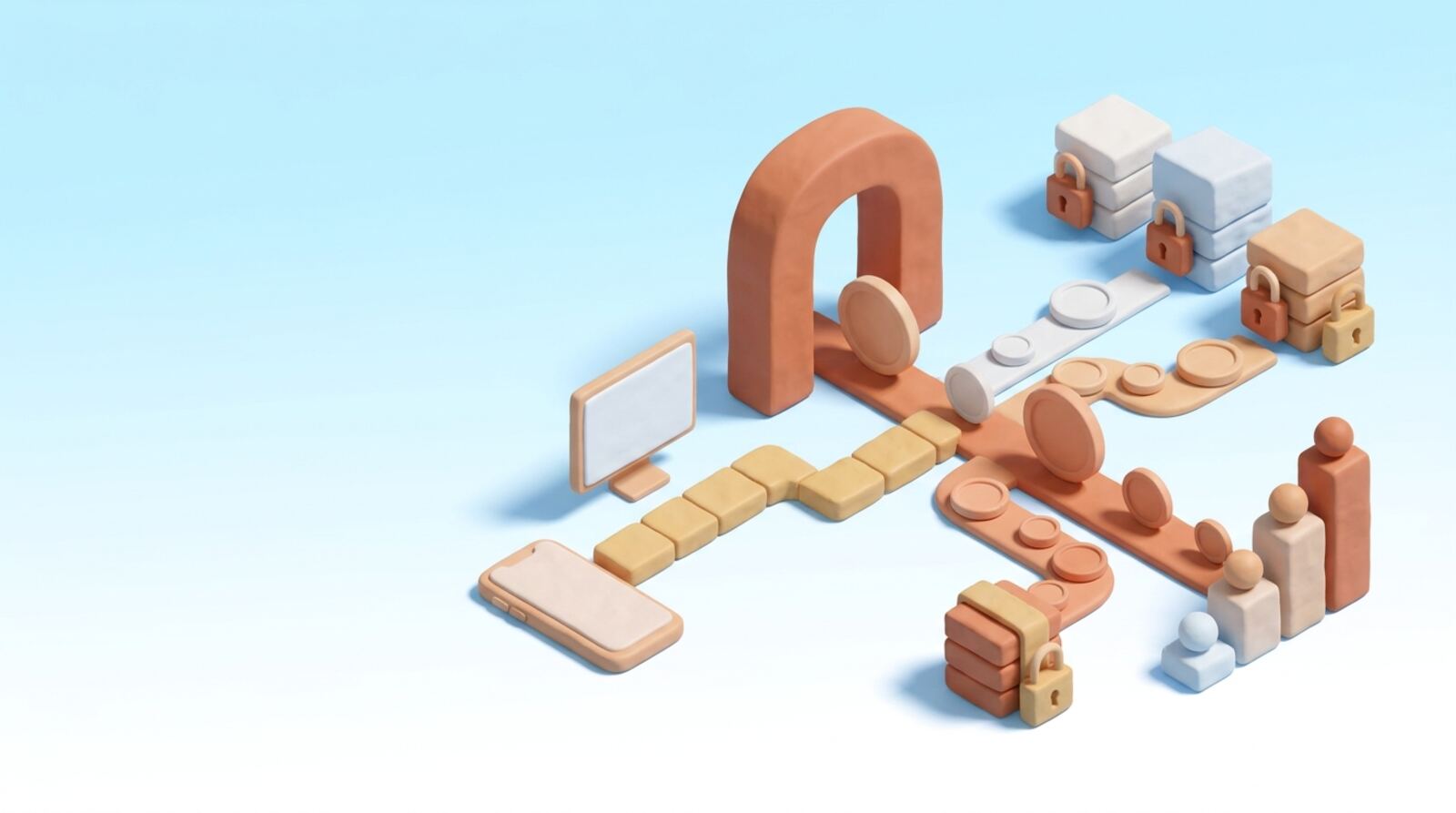
What does “tokenized” mean in crypto?
In crypto, tokenized usually means that an asset, a claim or some other right is represented by a digital token on a blockchain. The token can be held in a wallet and, where the network and rules allow, transferred or used in applications.
That definition covers different things. A token might represent a claim on a fund or other real-world asset, a digital item, a share in a protocol, or another crypto asset on a different blockchain. It might also simply track an asset’s price without giving you direct ownership of that asset.
The crucial question is not just “What does this token track?” Ask what legal or practical rights come with holding it? A blockchain record can show which wallet controls a token. By itself, it does not establish that the wallet owner holds title to a house, can demand payment from an issuer, or can redeem the token for a particular asset. Those rights depend on the product’s structure and terms.
How is a token different from a coin or an asset?
A token is a digital asset issued using a blockchain. Many tokens rely on a blockchain’s existing standards and infrastructure. A blockchain’s native asset is often called a coin—ETH on Ethereum is one example—but people do not always use “coin” and “token” consistently.
Tokenization is the process of creating a token that represents something else. The represented thing may be digital, such as an asset on another network, or off-chain, such as a fund interest or a claim linked to a physical asset. The token may be transferable, divisible into smaller units or usable in smart contracts, depending on how it was designed.
Do not confuse a token’s technical features with its legal status. A token can be divisible without giving each holder a legally enforceable fraction of an underlying asset. A token can move between wallets without the underlying asset moving with it. And a token’s presence on a public blockchain does not automatically make its issuer, records or backing transparent. Read the product terms to understand the connection between the on-chain token and what it is meant to represent.
How does real-world asset tokenization work?
A tokenized real-world asset (often shortened to RWA) is a blockchain token intended to represent an interest in, or a claim linked to, something off-chain. Examples might include a fund, a bond, property or a commodity. The exact arrangement varies: a company may issue the token, a separate entity may hold the asset, and a custodian or administrator may maintain records.
A simplified process looks like this:
- Choose the asset and legal structure. The issuer defines what the token represents and who has rights to it.
- Arrange custody and records. If the asset is held off-chain, someone must manage it and maintain reliable ownership records.
- Issue tokens. A smart contract creates tokens under specified rules, such as who may receive or transfer them.
- Manage transfers and redemption. The issuer or its partners may need to verify holders, process payments or handle redemption outside the blockchain.
A blockchain can help record token transfers, but it cannot by itself confirm that an off-chain asset exists, remains in custody or is legally available to token holders. Those links rely on people, contracts and institutions as well as code.
What kinds of things can a crypto token represent?
Not every tokenized asset represents an off-chain investment. A wrapped token can represent a crypto asset that exists on another blockchain. For example, wrapped bitcoin tokens may be designed to track bitcoin on a different network; holders depend on the arrangement that issues, backs or redeems those tokens. The token is not bitcoin on the Bitcoin network itself.
Liquid-staking tokens show another variation. Lido’s stETH represents staked ETH and associated staking rewards, while wstETH packages stETH in a non-rebasing token format. These tokens can be used in some DeFi applications, but that adds risks involving the token, the underlying staking system and the applications where it is used.
Some products tokenize access to a financial product. Spiko, for instance, is described as offering regulated, yield-bearing cash funds. That description tells you the product category, not the precise rights of every token holder. Before treating any of these examples as equivalent, check what backs the token, who can redeem it, which network it uses and what happens if an issuer or intermediary fails.
What can tokenization improve, and what might it cost?
Tokenization can make it easier to transfer certain interests, keep a shared transaction record or divide exposure into smaller units. Smart contracts may automate parts of issuance, transfers or payments. A token may also be usable in blockchain applications without relying on a conventional trading platform for every transaction.
Those potential benefits are not automatic. A token can be technically transferable but restricted by its issuer or applicable rules. Fractional units do not necessarily mean fractional legal ownership. And being listed on a blockchain does not guarantee that buyers will be available when you want to sell.
Costs can occur at several stages. Issuers may face legal, compliance, custody and technology expenses; those may affect the product, even if they are not charged as a simple transaction fee. As a holder, you may pay a purchase or redemption charge, trading spread, network fee or application fee. The specific charges depend on the product, platform and blockchain. Check the current terms and quote before transacting; do not assume that an on-chain transfer is free or that a token can always be redeemed at its stated value.
What should you check before using a tokenized asset?
A token can fail to deliver the exposure or rights you expect even if its smart contract works as designed. Review both the on-chain mechanism and the off-chain arrangements.
Before buying or using one, check:
- Rights: Does holding the token give you ownership, a contractual claim, access to a service or only price exposure?
- Backing: What asset or obligation supports it, and who verifies that the backing exists?
- Custody and issuer: Who holds the underlying asset, issues tokens and handles records or payments?
- Redemption: Who is eligible, what steps apply, and can redemption be paused or refused?
- Restrictions: Are transfers limited by identity checks, location, investor eligibility or other rules?
- Technology: Which chain and smart contracts are involved, and what happens if the network or contract is disrupted?
- Market: Is there real trading liquidity, or would you have to rely on the issuer or a particular platform to exit?
Also consider legal and regulatory risk, custody failure, fraud, price divergence and loss of access to your wallet. A token’s market price can fall or separate from the value it is intended to track. Do not treat a label such as “backed,” “regulated” or “asset-backed” as a substitute for reading the terms.
How can you check a token before you use it?
Use this order to assess a token before you connect a wallet, pay for it or rely on it as collateral:
- Identify the exact token. Confirm its name, ticker, contract address and network through the issuer’s official documentation. Look out for copycat tokens with similar names.
- Read the legal terms. Find the entity responsible for issuing it and the rights, restrictions and dispute process that apply to you.
- Trace the asset link. Establish what backs or supports the token, who holds it and how that information is checked.
- Check the exit route. Confirm whether you can sell on a market, redeem with an issuer, or both. Review eligibility, timing and charges.
- Check the transaction. Confirm the network, recipient address, fees and any wallet approval. A mistaken blockchain transfer may be difficult or impossible to reverse.
- Size your exposure carefully. Consider what you could lose if the token depegs, cannot be redeemed or becomes difficult to sell.
If the issuer does not clearly explain the rights, backing or exit route, treat those as unresolved risks. Do not rely on social-media claims or a token’s displayed price alone.
Which tokenization mistakes should you avoid?
The most common mistake is assuming that the token and the underlying asset are interchangeable. They may be connected by a contract, custodian or issuer, and that link can break or become hard to use. Verify the redemption terms rather than assuming you can exchange one for the other whenever you want.
Other mistakes to avoid:
- Treating a blockchain record as proof of legal ownership. The record shows token control; legal rights depend on the governing documents and structure.
- Equating fractional tokens with fractional title. The token may represent a contractual interest or exposure, not direct ownership of a physical asset.
- Ignoring the issuer and custody chain. If an off-chain asset is involved, identify who holds it and who is accountable for records and redemption.
- Assuming a stable price means no risk. A token may trade below its target value or become difficult to redeem.
- Approving a wallet transaction without checking it. Confirm the network, token contract, amount and permissions before signing.
- Using one token across multiple applications without checking each one. A lending or trading application adds its own contract, liquidity and liquidation risks.
If you cannot explain what the token entitles you to and how you could exit, pause before committing funds.
Frequently asked questions
Does a tokenized asset mean I own the real asset?
Not necessarily. Some tokens represent a legal claim on an asset, while others only track a price or provide access to a service. Check the terms and legal structure to find out what rights the token actually gives you.
What is the difference between a coin and a token?
A coin is generally the native asset of its own blockchain, such as ETH on Ethereum. A token is usually created using a blockchain’s existing infrastructure, though people sometimes use “coin” and “token” loosely.
Are tokenized assets always easier to sell?
No. Tokenization can make transfers or fractional holdings possible, but it does not guarantee an active market, a buyer, or quick redemption. Liquidity depends on the asset, platform, rules and demand.
Can a tokenized asset lose its link to the underlying asset?
A token may keep trading on-chain even if the issuer, custodian or redemption process has problems. Its price can also diverge from the asset it is meant to represent. Review the backing, redemption terms and risks before relying on a price peg.
What does RWA mean in crypto?
They are often called real-world asset (RWA) tokens when they represent assets such as funds, securities, property or commodities. The label does not establish that a token holder has direct ownership or a particular legal protection.
Mentioned in this guide
dApps in this guide
Spiko offers regulated, yield-bearing cash funds, but check product risks, eligibility and withdrawal terms before depositing.
wstETH packages Lido staked ETH in a non-rebasing token for DeFi, but it still carries staking, smart-contract and market risks.
Crypto.com offers broad crypto access and EUR deposits, but check spreads, fees and withdrawal terms before funding an account.
Lido turns staked ETH into liquid stETH, but variable rewards, a 10% reward fee and withdrawal and contract risks need checking.
Keep reading
Related guides
DeFi · Explainer
What Does Staking Mean in Crypto? A 2026 Guide
Crypto staking means putting eligible tokens to work on a proof-of-stake blockchain, usually by helping secure the network or delegating to a validator. Rewards are variable, and the method you choose affects fees, access to your coins and the risks you take.
DeFi · Best list
5 Crypto Passive Income Options: A Practical Guide
The five most practical crypto income routes are staking, liquid staking, lending, liquidity provision and tokenized cash funds. None is guaranteed or truly hands-off: compare the risks, fees, exit terms and tax treatment before you deposit.
DeFi · Explainer
How Crypto Staking Works: A Practical Guide
Crypto staking uses tokens to help secure certain blockchains, and may earn rewards in return. Learn how staking works, how to choose a method, and what to check before committing your crypto in 2026.
DeFi · Explainer
How Cryptocurrency Staking Works: A Practical Guide
Staking can earn token rewards while helping secure a proof-of-stake network, but the process, access to your funds and risks depend on how you stake. Learn how validators, pools and liquid-staking tokens work before committing crypto.
Real-world asset · Explainer
What Is Tokenization? How Crypto Asset Tokens Work
In crypto, tokenization means creating a blockchain token that represents a claim, right or interest in an asset. Learn what the token may—and may not—give you, how to check it and what risks to weigh before using one.
Real-world asset · Explainer
What Is Asset Tokenization? A Practical Guide
Asset tokenization puts a digital representation of an asset or its rights on a blockchain. Learn what a token may—and may not—give you, how to assess one, and what costs and risks to check before buying.
Real-world asset · Explainer
What Is Tokenized Oil? A Practical Guide
Tokenized oil is a blockchain token linked to oil or oil-related assets, but the token may represent very different rights. Before you consider one, check what it entitles you to, how its value is set, and whether redemption is practical and legally enforceable.
Real-world asset · Explainer
How to Assess Tokenized Gold Before You Buy
Tokenized gold is a blockchain token designed to represent a claim on physical gold, but the token’s legal rights depend on its issuer and terms. Before buying, check the backing, redemption rules, costs and risks—not just whether the token tracks gold’s price.