NFT · Explainer
How Nike x RTFKT CryptoKicks Worked
Nike x RTFKT CryptoKicks turned a digital sneaker drop into a sequence of reveals and customization choices. Here’s how the mechanics worked, what the NFTs did—and did not—represent, and what to check before engaging with them in 2026.
By the SkyBitcoins editorial team · Updated
What did Nike x RTFKT CryptoKicks actually offer?
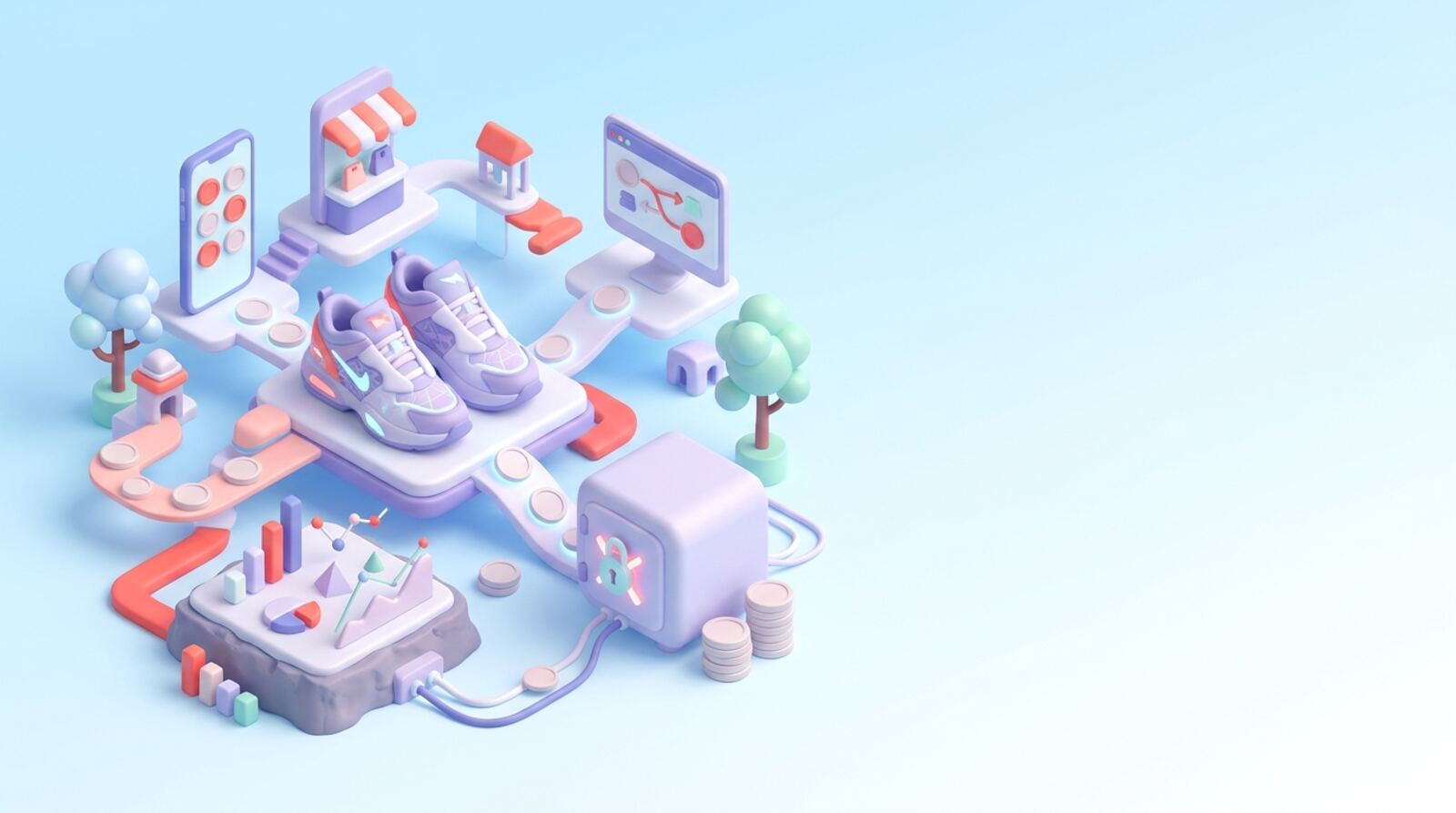
Nike x RTFKT CryptoKicks were digital sneaker NFTs revealed through a staged, game-like process rather than presented as a simple, fully specified product at the outset. The 2022 Nike Dunk Genesis drop used the MNLTH mystery-box concept: collectors encountered a sealed digital object, then saw its contents revealed as the campaign progressed. Skin Vials added a customization element, letting collectors alter a sneaker’s digital appearance.
The important distinction is that these were blockchain collectibles, not automatically physical shoes. A digital sneaker NFT does not, on its own, promise a pair you can wear, a future redemption, or ongoing access to an app. RTFKT later announced it was winding down operations, so in 2026 you should treat any app-based utility or support as uncertain unless it is currently confirmed.
If you are researching a CryptoKicks NFT now, focus on three things: what token you are looking at, what its current media and functionality depend on, and whether the seller’s claims match the actual terms. The reveal mechanics made the drop engaging; they did not remove the usual NFT risks.
How did Nike’s RTFKT project lead to the Dunk Genesis drop?
Nike acquired RTFKT in 2021 as the sportswear company expanded into digital collectibles and virtual products. In April 2022, Nike and RTFKT revealed the Dunk Genesis CryptoKicks, a collection presented through RTFKT’s digital-sneaker project. It became a prominent example of a familiar marketing idea adapted to NFTs: make the initial collectible mysterious, then let holders discover what it contains.
The experience was connected to RTFKT’s wider ecosystem, including its CloneX digital collectibles and related drops. But don’t assume every NFT in that ecosystem had the same eligibility, rights, or use. Individual releases could have different participation rules and functions.
The project also had a physical-sneaker strand. RTFKT later promoted Cryptokicks iRL, a connected physical sneaker project. That was a separate product context from owning a Dunk Genesis NFT. A reference to “CryptoKicks” may mean the digital collectibles, a physical product, or the broader brand, so check exactly which one a listing or claim concerns before making a decision.
How did the MNLTH mystery-box reveal work?
The MNLTH (“monolith”) mystery-box idea made discovery part of the drop. Instead of showing the final sneaker immediately, the project presented a sealed digital collectible and built anticipation around its eventual reveal. Holders could follow the release and interact with the NFT experience as the hidden contents became clearer.
That format added a game-like loop: collect the object, wait or take part in the reveal process, and then see what the collectible represented. The appeal was partly the sneaker design and partly the act of uncovering it. It was a promotional and collecting mechanic, not evidence that the NFT would rise in value or deliver a physical item.
When you encounter an old MNLTH listing, don’t rely on its name or artwork alone. Check the token’s collection and contract, inspect its current metadata, and look for the specific release terms. Historical explanations may describe how the reveal worked at launch, but they do not guarantee that a website, interactive feature, or claim process is still operating today.
What did Skin Vials let collectors customize?
After the reveal, Skin Vials offered a way to customize the digital sneaker’s look. The concept connected separate collectibles: the sneaker NFT represented a CryptoKicks design, while a vial could be used to change its appearance. This made the collection feel more participatory than a static image drop, because collectors could engage with variations and styling.
Treat that utility as specific to the project’s system, not as a permanent feature of every copy of the artwork. Whether a vial can still be used may depend on the token, the contract, compatible software, and the continued availability of RTFKT services. A screenshot or seller description is not enough to establish that a customization action remains possible.
Before spending on a vial or a customized sneaker, verify:
- Which collection and token you are considering.
- Whether the stated function is still supported, rather than merely described in old promotional material.
- Whether using it requires a transaction, a burn, or permission to move another NFT.
- What the wallet asks you to sign, including any token approval.
If those terms cannot be confirmed, value the item as a collectible, not as a working customization tool.
What does owning a CryptoKicks NFT mean in 2026?
A CryptoKicks NFT is a token recorded on a blockchain. It can establish control of that token under the relevant contract, but it does not automatically transfer copyright, trademark rights, ownership of a physical sneaker, or a right to redeem one. Those rights depend on the project’s explicit terms and any separate redemption process.
There is also a difference between the token and the media people see. The blockchain may retain a record of a token while its image, animation, or interactive display relies on metadata and hosting services. If a service is changed or unavailable, the token may remain while the experience becomes harder to access. A temporary display problem does not necessarily mean the token itself was erased, but it can affect how useful or presentable it is.
RTFKT announced a wind-down of its operations, so do not assume that customer support, mobile apps, future updates, or interactive features will continue. Before buying, ask what you would own if the project’s website and tools were unavailable. If your reason for wanting the NFT depends on a physical benefit or a live feature, look for current, written terms confirming it.
What should you verify before buying or listing one?
If you are considering a CryptoKicks NFT, separate the collectible from the story told around it. Historical campaigns, rarity claims, and customization demonstrations describe the project’s appeal; they do not establish a current market price, working utility, or future resale demand.
Use a careful verification process:
- Identify the exact item. Confirm its blockchain, collection, token number, and contract address from trustworthy project records. Similar names and copied artwork can be used to mislead buyers.
- Inspect the listing. Check whether the token is actually for sale, what currency is required, and whether the displayed price excludes network costs or other charges.
- Check the media and terms. See whether the image loads and whether any promised utility has current, explicit instructions. Don’t treat a listing description as proof of a redemption right.
- Read the wallet prompt. A purchase or transfer should match what you intend to do. Reject unexpected requests to grant broad token permissions or sign a message you do not understand.
- Set a loss limit. NFT prices and liquidity can change sharply, and a seller may not be easy to find later.
OpenSea is one marketplace where NFTs may be listed, but a listing there is not a guarantee of authenticity, liquidity, or project support. Verify the specific token before acting.
Which CryptoKicks assumptions should you avoid?
The game-like reveal was a distinctive way to introduce a digital sneaker: mystery first, then discovery, followed by the option to customize through Skin Vials. That sequence created anticipation and gave collectors something to do beyond viewing an image. It also made the campaign easy to discuss as an experience rather than just a drop.
The same design can make it harder to distinguish entertainment from lasting value. A reveal, a rare appearance, or a limited-edition label does not guarantee resale demand. Nor does an interactive launch establish that the feature will remain available years later. With RTFKT winding down, that distinction matters more: assess the on-chain collectible separately from services that may depend on a company continuing to operate.
Avoid these common mistakes:
- Assuming a digital sneaker NFT includes a physical pair.
- Treating a past app feature as a promise of current access.
- Buying a Skin Vial without confirming its present function and transaction requirements.
- Trusting a marketplace title or image instead of verifying the token and collection.
- Spending money you cannot afford to lose because a drop was promoted as rare or gamified.
For a 2026 decision, the safest baseline is to view CryptoKicks as digital collectibles unless specific, current terms prove otherwise.
Frequently asked questions
Were Nike CryptoKicks actual shoes?
The Nike Dunk Genesis CryptoKicks were NFTs: blockchain-based digital collectibles. They were not automatically a claim to receive a physical pair of sneakers.
What did a Skin Vial do?
Skin Vials were digital collectibles used to change the appearance of a CryptoKicks sneaker. Check the specific NFT and its current contract or collection details before assuming a vial still works or has a particular utility.
Can you still use RTFKT’s CryptoKicks in 2026?
RTFKT announced that it was winding down operations, so don’t assume that its apps, services, or support remain available. An NFT may still exist on a blockchain even if a website, image host, or feature stops working.
Does a CryptoKicks NFT entitle you to a physical pair?
No. Owning a digital sneaker NFT does not by itself grant ownership of a physical shoe, intellectual property rights, or a guaranteed redemption. Look for explicit terms attached to the specific drop before treating it as a claim.
What should you check before buying a CryptoKicks NFT?
A marketplace listing is not proof that an NFT is authentic or that its features work. Verify the collection and contract through trusted project records, check the chain and token details, and read the wallet prompt before approving anything.
Mentioned in this guide
dApps in this guide
OpenSea is an NFT marketplace for buying, selling and offers; check the chain, fees and wallet prompt before approving a transaction.
Keep reading
Related guides
NFT · Explainer
Nike and RTFKT: What NFT Holders Should Know
Nike bought RTFKT in 2021, later wound down the digital collectibles studio, and reportedly sold it in December 2025. Here’s what that history means for RTFKT NFT holders and anyone considering a purchase in 2026.
NFT · Explainer
Instagram NFTs: How They Worked and What Changed
Instagram once let selected users display blockchain collectibles on their profiles and in posts. Meta discontinued the feature in 2023, so you can’t use Instagram to mint, share or manage NFTs in 2026.
NFT · Explainer
How to Check 0x0 Art’s NFT Income Claims
0x0 Art is presented as a way to earn from NFTs without selling them, but that promise is not enough to assess the risk. Learn what income mechanism to look for, what to verify before connecting a wallet, and when to walk away.
NFT · Review
Should You Use Agora by Vulcan Forged? A 2026 Review
Agora is Vulcan Forged’s marketplace for Vulcan and Elysium NFTs, promoted as a near-zero-gas place to create and trade. Treat “gas-free” as a claim to verify at checkout: check the live marketplace, network, total costs and wallet prompt before you transact.
NFT · Explainer
How to Read Nike, Adidas and Pepsi’s $220M NFT Figure
The roughly $220 million figure associated with Nike, Adidas and Pepsi NFTs is a historical estimate, not a measure of what the brands earned or what those NFTs are worth today. Learn how to read the number, why reported totals differ and what to check before buying a brand-linked NFT in 2026.
NFT · Explainer
Nouns NFTs vs Bored Apes: What to Know in 2026
Nouns is a distinctive Ethereum NFT project with a daily-auction model and a community treasury—not a direct copy of Bored Ape Yacht Club. Learn what the comparison means, what ownership may involve and what to check before buying.
NFT · Explainer
Niftyville Property NFT Sale: What to Check in 2026
The Niftyville property NFT sale is associated with Binance and Galler, but its current availability, price and legal rights need to be confirmed before you act. Use this guide to check what the token represents, what it may cost and whether the sale is still live in 2026.
NFT · Explainer
Nouns NFT Sales Highlights: What to Check Before Buying
Nouns have appeared in NFT sales roundups because their daily auction format and distinctive, generative avatars made them easy to spot. Here’s how the project works, what a sales highlight does—and doesn’t—tell you, and what to check before buying in 2026.