NFT · Explainer
Why a Digital Artist Burned a $40,000 CryptoPunk
A CryptoPunk reported to be worth about $40,000 was burned by digital artist Erick Calderón. Here’s what that means on-chain, what it did—and did not—destroy, and why a later “rebirth” is a separate work.
By the SkyBitcoins editorial team · Updated
What happened to CryptoPunk #3493?
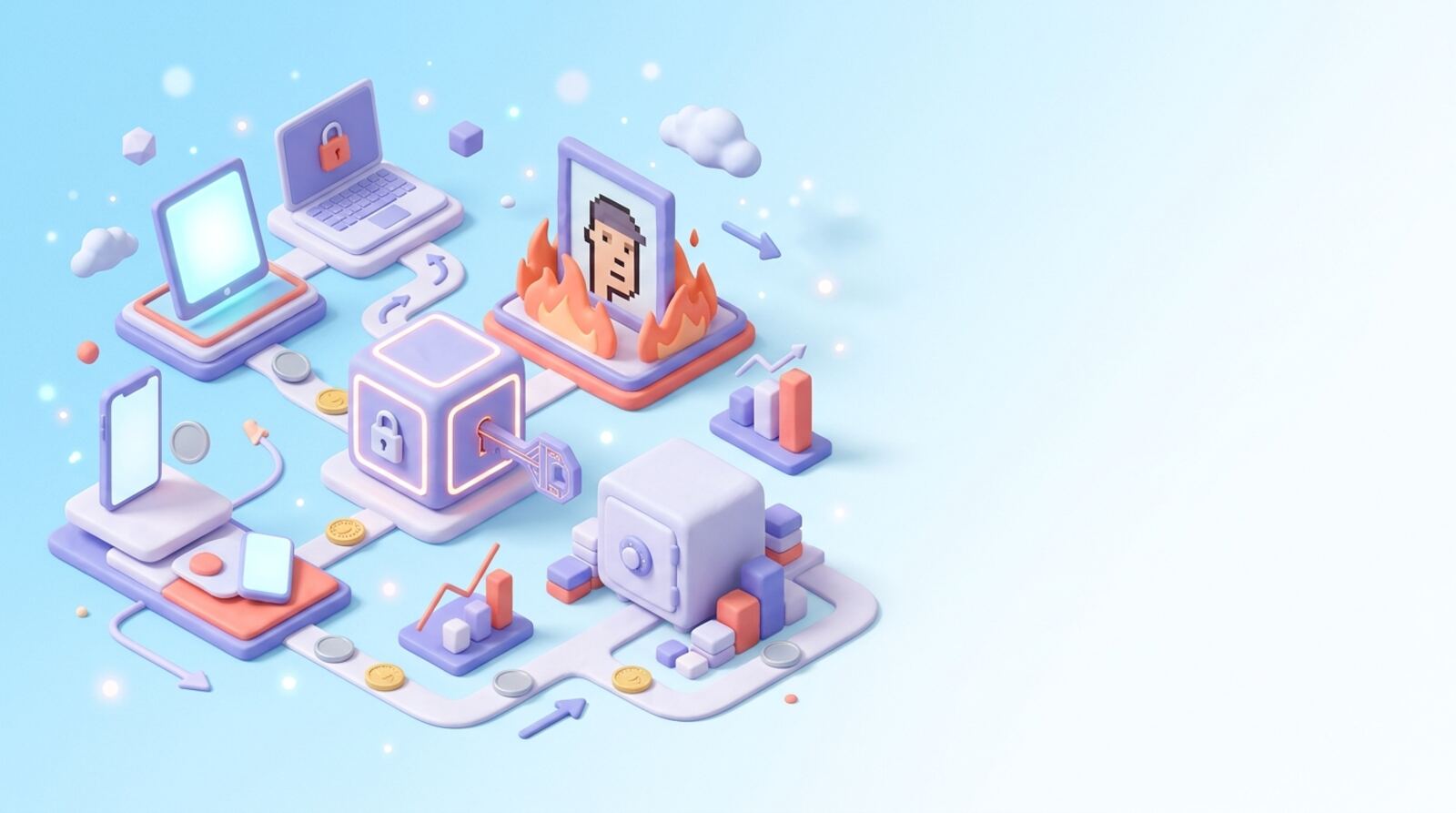
The story is about CryptoPunk #3493: digital artist Erick Calderón bought the NFT and later burned it. The Punk was described as worth about $40,000 at the time, but that figure is historical context—not a current price or a promise of what it could sell for. The dollar value of an NFT bought or sold in ETH depends on the exchange rate at the time.
The act did not wipe the CryptoPunk from the blockchain. Burning generally means sending a token to an address that cannot be controlled, making it practically impossible to transfer or sell. The transaction and the token’s history can still be recorded and inspected.
A later project called PUNK3493 drew on the burned CryptoPunk and used AI in a “rebirth” concept. That did not restore the original NFT. The useful distinction is simple: the original Punk’s ownership status changed irreversibly, while later art could still reference its image and story.
Why burn an NFT that could be sold?
Buying a CryptoPunk gives the buyer control of the token under the collection’s contract. Burning it gives up that control in a way that is generally irreversible. The token may remain visible in blockchain records, but the holder cannot normally list it, transfer it to another wallet or receive a resale payment for it.
That makes a burn different from selling an NFT or removing an image from a website. It is an on-chain action that changes what can happen to the token. It can also have an artistic meaning: the act of making an asset unusable can become part of the work’s story. But a reader should separate that interpretation from a confirmed statement of the artist’s personal motive.
In this case, the reported purchase value helps explain why the burn attracted attention: an expensive collectible was made unavailable for ordinary resale. It does not prove that burning the Punk created value for anyone else, or that a later project inherited its ownership rights.
What does “burned” mean on the blockchain?
A burn does not mean the blockchain forgets that a CryptoPunk exists. The chain retains transaction history, including the token’s movements and the address that received it. If that address is inaccessible, the practical result is that nobody can use the token as a normal, transferable collectible.
The image is a separate question. A public image may continue to be displayed, copied or discussed after the token is burned. Even when a token points to digital content, burning the token does not automatically erase every copy of that content from the internet or from other storage systems.
For this story, avoid treating “burned” as shorthand for “the image was destroyed.” It describes what happened to control of the token. The original transaction can remain part of CryptoPunks’ history, even though the NFT is no longer available for an ordinary sale. The exact mechanics depend on the transaction and contract involved, so verify the token’s on-chain record rather than relying only on a post or marketplace label.
Did the burn destroy the Punk’s image or history?
The original CryptoPunk and its image should not be treated as the same thing. The NFT is a blockchain token that records ownership under a particular contract. The image is the artwork people can view. A burn can make the token effectively untradeable without making every image of the Punk disappear.
That distinction matters if you see an image of #3493 after the burn. A picture, a re-created artwork or a token using a similar name is not proof that the original NFT has been recovered. Nor does possessing a copy of an image automatically provide the token’s history or whatever rights may be attached to it.
CryptoPunks are an early Ethereum NFT collection, and their distinctive contract history is part of how collectors identify them. If you are checking a claim about a Punk, compare the token number and contract details, then inspect its transaction history. Do not rely on artwork that looks right, a familiar collection name or a social-media account’s claim by itself.
Was the original Punk “reborn” as PUNK3493?
A 2024 project called PUNK3493 used AI “rebirth” as a way to revisit the story of the previously burned CryptoPunk. That can create a new artwork or project narrative, but it does not reverse the earlier burn or place the original token back in a wallet. The name and visual reference connect the projects; they do not make them the same asset.
If you encounter a PUNK3493 listing or token, check exactly what is being offered. Confirm its contract, creator, transaction history and any rights stated for that specific work. A connection to CryptoPunk #3493 is not, by itself, proof that it is an official replacement, an authorized derivative or a claim on the original.
This is a general NFT lesson: a later work can reinterpret, reference or imitate an earlier token, while remaining a distinct asset. Its price, ownership and transfer rules have to be evaluated separately. Treat terms such as “reborn” as project language, not as evidence that an inaccessible NFT has been technically restored.
Is the $40,000 figure a current valuation?
The roughly $40,000 figure belongs to the story’s historical context. It should not be used as a present-day estimate for CryptoPunk #3493, a comparable Punk or the later PUNK3493 project. NFT prices can move sharply, and ETH’s dollar exchange rate can make the same crypto-denominated transaction look very different at different times.
When you compare a reported sale with a current listing, check whether the number refers to an actual completed transaction or merely an asking price. Note the transaction date, the currency paid and the exact token identifier. Also account for Ethereum network costs and any marketplace charges where applicable. A displayed amount may not equal the seller’s net proceeds.
There may be no current market price for a burned token in the ordinary sense: if it cannot be transferred, it cannot complete a normal sale. An estimate based on another CryptoPunk is not a substitute for a sale of #3493. Do not use this story as a reason to buy an NFT or assume that a dramatic burn will make another collection more valuable.
What mistakes should you avoid when reading this story?
This story is easy to misread because “burn” sounds like permanent deletion and “rebirth” sounds like reversal. Keep the token, its image and later works separate. The original Punk’s on-chain history may survive; the image may continue to circulate; and a new project may reference the same number without becoming the original NFT.
Avoid these common mistakes:
- Treating a historical dollar figure as today’s market value.
- Assuming a visible image proves the original token is transferable.
- Treating an AI-inspired follow-on as the original CryptoPunk restored.
- Trusting a token name or marketplace thumbnail without checking the contract.
- Approving a wallet transaction without reading what it authorizes.
If you are considering a purchase, decide first what you want to own: the canonical CryptoPunk, a derivative artwork, or a token tied to a later project. Then check the asset’s exact identity, transferability, rights and total cost. If any of those points are unclear, pause rather than relying on the story’s publicity or on the assumption that rarity alone makes an NFT valuable.
Frequently asked questions
Does burning a CryptoPunk delete it?
No. Burning an NFT generally makes it untransferable by sending it to an address no one can spend from; it does not erase the blockchain record. Images and copies may also remain viewable.
Which CryptoPunk was burned?
The story concerns CryptoPunk #3493, which was bought and later burned. The reported approximate dollar value is tied to the time of the transaction, not a current valuation.
Did the AI “rebirth” bring the original CryptoPunk back?
No. The 2024 AI-based PUNK3493 was created in reference to the burned CryptoPunk. It is a separate work, not the original NFT restored to circulation.
How can you check a CryptoPunk’s history?
Check the exact token identifier, the contract and the transaction history before relying on a listing or a social-media post. A marketplace display alone does not establish that an NFT is the original or that it can be transferred.
Mentioned in this guide
dApps in this guide
Punks Terminal offers trait-filtered CryptoPunks bids on Ethereum, but check contract security and costs before funding a Stash.
OpenSea is an NFT marketplace for buying, selling and offers; check the chain, fees and wallet prompt before approving a transaction.
Match-Trader sells trading software to brokers and prop firms; get a full quote and verify security details before choosing it.
Keep reading
Related guides
NFT · Explainer
Marshmello’s CryptoPunk Reveal: What It Means
DJ Marshmello’s CryptoPunk reveal refers to his publicly shared purchase of Punk #6033 in 2021. Here’s what that tells you—and how to check ownership and risk before considering a CryptoPunk yourself.
NFT · Explainer
What Sotheby’s $11.8M CryptoPunk Sale Means in 2026
Sotheby’s sold CryptoPunk 7523, nicknamed “Covid Alien,” for about $11.8 million in 2021. Here’s what that auction price tells you—and what it does not tell you about the NFT’s value or ownership today.
NFT · Review
Should You Buy a CryptoPunk in 2026? A Review
CryptoPunks are historic Ethereum collectibles, not a low-risk investment or a product with guaranteed utility. Here’s how to check a Punk, understand the costs and decide whether it suits you in 2026.
NFT · Explainer
Do Genshiro Cats Really Sell for More Than CryptoPunks?
A claim that Genshiro Cats sell for more than CryptoPunks needs a specific, verifiable sale behind it. Check completed transactions, collection identity and comparable prices before treating it as a market fact.
NFT · Explainer
How to Read CryptoPunks’ FTX-Era Lead Over Bored Apes
CryptoPunks briefly moved ahead of Bored Ape Yacht Club during the FTX crisis, but that was a market ranking—not proof that one collection was worth more in every sense. Here’s what the shift meant and how to assess the collections today.
NFT · Explainer
How to Assess CrypToadz, Humanoids and Winter Bears
CrypToadz and Winter Bears are identifiable Ethereum NFT collections, but “Humanoids” needs a precise project match before you can assess it. Learn what is established, how to verify a listing, and what to check before spending in 2026.
NFT · Explainer
CryptoPunks Insider Trading: How to Assess a Claim
“Insider trading at CryptoPunks” is not proof that a specific crime occurred. Learn what the term can mean in NFT markets, how to assess suspicious activity and what blockchain records can—and cannot—show.
NFT · Explainer
Did a Crypto Crash Spark an NFT Sales Surge? How to Check
A crypto sell-off can coincide with a jump in NFT trading, but timing alone does not prove the crash caused it. Learn how to check the numbers, judge whether a surge is meaningful and protect yourself before trading.