Security and scams · Explainer
Balancer Exploit in November 2025: What to Do Now
Balancer’s November 2025 exploit involved a precision-loss bug affecting composable stable pools. Learn how to check whether your position may be exposed and what to verify before using Balancer in 2026.
By the SkyBitcoins editorial team · Updated
What happened in the Balancer exploit in November 2025?
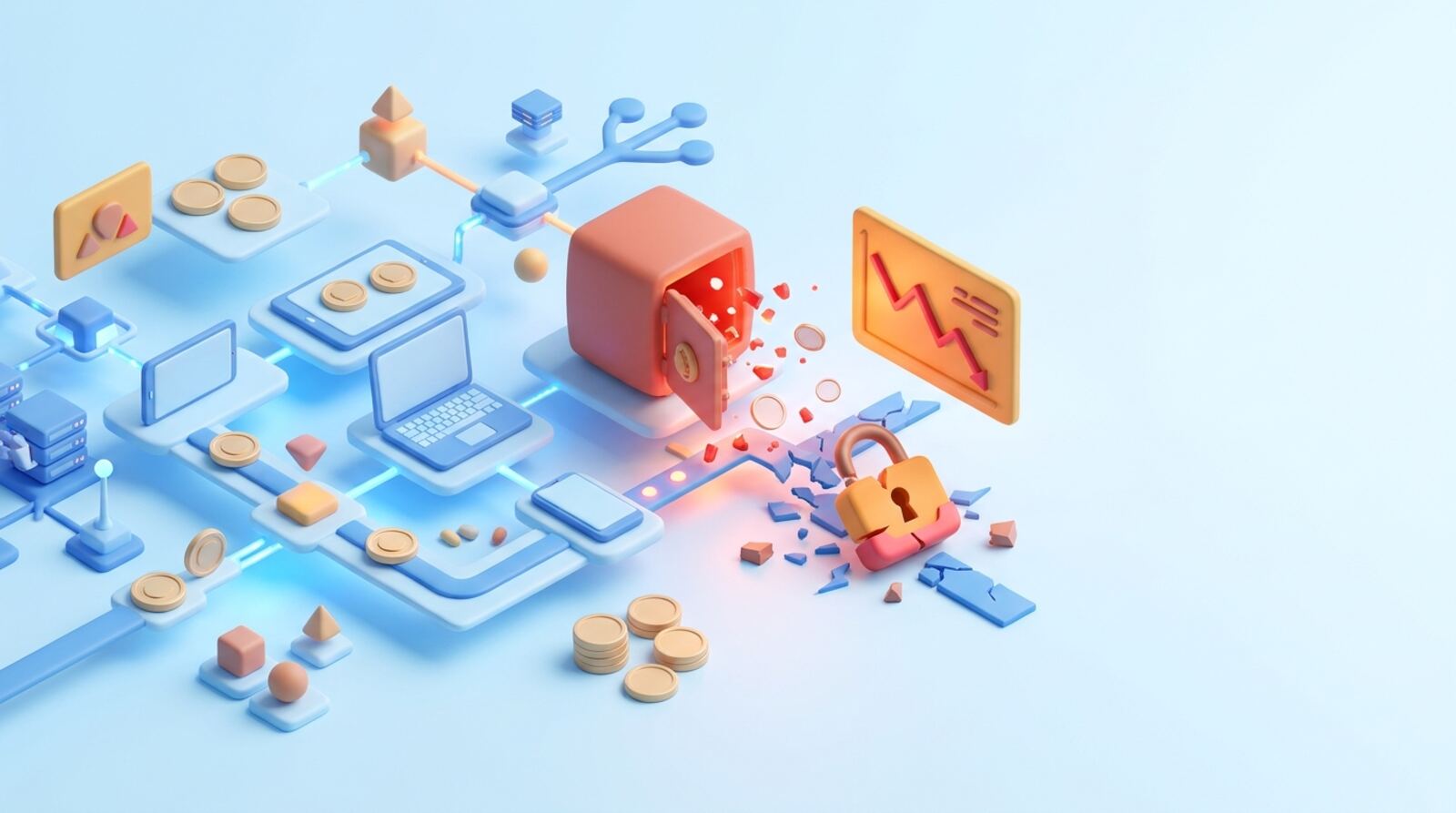
The November 2025 Balancer exploit was reported to involve a precision-loss bug in Balancer v2 composable stable pools. Attackers used carefully constructed batch swaps to drain liquidity across pools. Reports put losses at about $128 million, though some described the amount as more than $100 million.
If you had funds in a Balancer pool around the incident, don’t assume either that your position was affected or that it is safe now. First identify the network and exact pool contract you used. Then check Balancer’s current incident guidance for that pool before attempting a withdrawal or approving another transaction.
The exploit does not, by itself, establish the current status of any contract, recovery or compensation. In 2026, verify the exact pool’s status before depositing, swapping through it or moving funds into a related position. Treat unsolicited messages offering recovery help with suspicion.
How did the rounding bug drain liquidity?
The reported flaw involved _upscaleArray, an internal function handling scaled token amounts. In smart contracts, calculations often use fixed-point numbers rather than ordinary decimal fractions. Rounding during scaling can create small discrepancies; a carefully designed sequence of swaps may be able to exploit those discrepancies if the contract’s checks allow it.
In this incident, reports described a precision-loss or rounding issue combined with crafted batchSwap transactions. The attack affected composable stable pools and drew on the interconnectedness of Balancer v2 pools. This is different from a stolen password or a user tricked into signing a phishing transaction: the reported issue was in contract logic.
That distinction matters when deciding what to do. Changing your wallet password or revoking an allowance does not repair a vulnerable pool contract. Conversely, the incident does not prove that your wallet itself was compromised. Check the pool and transaction details separately from your wallet’s security, and don’t sign transactions based only on a message claiming to explain the exploit.
How can you check whether your Balancer position is exposed?
Start by finding the transaction or position you actually used. A familiar pool name is not enough: Balancer has pools on different networks, and contracts can differ by version and address.
Use this checklist:
- Identify the network and pool address from your wallet history or transaction records.
- Check whether your funds were deposited in the affected pool type—reported as Balancer v2 composable stable pools—or another product.
- Match the exact contract address against Balancer’s current incident instructions. Don’t rely on a token symbol or a search result alone.
- Check whether your position is still represented in your wallet or through a pool token, and whether the contract is currently usable.
- If you can’t confirm the pool’s status, pause. Don’t deposit more or approve a new contract to test it.
A position in a different pool or version is not automatically affected, but it is not automatically safe either. The exploit reports do not establish the status of every Balancer contract. If you used an aggregator or another protocol that routed through Balancer, inspect the transaction route and the contracts it interacted with.
What should you do if you still have funds in a pool?
If you still have liquidity in a potentially affected pool, check Balancer’s current, pool-specific instructions before taking action. A pool may be paused, its state may have changed, or an attempted withdrawal may fail. Repeatedly submitting transactions without understanding the contract can cost gas and may expose you to additional risks.
Use this order:
- Confirm the pool address and network.
- Read the current official incident guidance for that exact pool.
- Check whether withdrawals are supported and whether the instructions name a replacement or migration contract.
- Confirm every contract address in your wallet before signing. A token name or logo is not proof that an address is genuine.
- If instructions are unclear, stop and seek help through Balancer’s official support channels—not through direct messages from strangers.
A successful withdrawal is not guaranteed, and the exploit reports do not establish individual recovery amounts or compensation. Network gas still applies to on-chain transactions and varies with network conditions. Never pay an alleged “unlock,” “recovery” or “verification” fee to someone promising to return your funds.
Should you revoke approvals or move assets to another wallet?
A contract exploit and a compromised wallet are different problems. If you interacted with a suspicious site or signed an unexpected approval, review your wallet’s token allowances for the relevant network. Revoke allowances only through a wallet feature or a trusted tool whose contract and network you have independently verified.
Revoking an allowance can require a separate on-chain transaction and network gas. It does not recover tokens already drained, undo a completed swap or make a vulnerable pool safe. If you see an unfamiliar transaction, record its details and avoid signing anything else until you understand what happened.
Protect your recovery phrase and private keys: Balancer support, a security researcher or a recovery service should not need them. Don’t install software or share your screen at the request of someone claiming they can restore funds. If you believe your wallet key is exposed, use a clean device and a new wallet with a new recovery phrase, and move remaining assets only after checking the destination address and transaction carefully. Consider getting qualified security help before moving substantial funds.
What should you verify before using Balancer again?
Before using Balancer in 2026, check the exact pool and contract rather than relying on the brand name alone. The November incident involved a specific class of Balancer v2 pools; it does not establish the safety or status of every Balancer product. Nor does the incident alone show whether a particular contract has since been paused, patched or replaced.
Before you deposit or swap:
- Find a current Balancer announcement that addresses the pool and network you plan to use.
- Compare the pool’s contract address with the address in the official interface and your wallet transaction preview.
- Check whether the pool is active and whether Balancer gives specific instructions for it.
- Review token approvals before confirming a transaction; limit approvals where your wallet allows it.
- Consider whether you can tolerate losing the amount you are putting at risk.
Balancer is a decentralized exchange and liquidity protocol, not a bank account. Smart-contract defects, token risks, transaction costs and changing pool conditions can all affect your funds. If you cannot independently verify a contract’s status, wait rather than treating a working interface as proof that the underlying risk is resolved.
Which mistakes could put your funds at further risk?
After a high-profile exploit, fake recovery offers and lookalike interfaces can target affected users. Be wary of unsolicited messages, ads or replies that promise compensation, claim to be official support, or ask you to connect a wallet to “verify” a claim. Never share your recovery phrase or private key, and never sign a transaction you cannot explain.
Other mistakes to avoid:
- Assuming every Balancer pool was affected—or assuming yours was not—without checking its contract address.
- Treating an old announcement as confirmation of a pool’s current status.
- Depositing a small test amount into a pool whose safety you have not verified. Even a small test transaction can create risk and cost gas.
- Confusing allowance revocation with fixing a contract vulnerability.
- Trusting a pool name, logo or token symbol instead of checking the address and network.
- Paying an upfront fee to someone who claims they can recover stolen assets.
If you have doubts, pause and verify using Balancer’s official channels. Don’t let urgency or promises of fast recovery push you into an irreversible transaction.
How can you reduce risk when using DeFi pools?
The incident is a reminder that a pool’s apparent stability and a familiar protocol name do not guarantee safe contract arithmetic. The reported bug involved a low-level calculation, but the loss extended across connected pools. For users, the practical lesson is to track the exact contracts behind a deposit, not just the app or token label shown in a wallet.
If you provide liquidity, keep a record of the chain, pool address, deposit transaction and pool tokens you receive. That makes it easier to check whether a specific incident applies to you. Before approving a contract, inspect the transaction details and consider whether the allowance is broader or longer-lived than necessary.
For any DeFi position, decide in advance what you will do if a pool is paused or an exploit is announced. Keep recovery phrases offline, use a wallet you control, and avoid putting funds you cannot afford to lose into a single protocol. These precautions cannot prevent a contract bug, but they can help you identify exposure sooner and avoid signing a second harmful transaction while responding.
Frequently asked questions
What caused the Balancer exploit in November 2025?
The November 2025 exploit was reported to involve a rounding or precision-loss vulnerability in Balancer v2 composable stable pools. It was used with carefully constructed batch swaps to drain liquidity across pools.
How much was taken in the Balancer hack?
Reports put the amount at about $128 million, while some described it more broadly as over $100 million. Treat the figure as approximate; it does not tell you whether a particular pool or your position was affected.
Were all Balancer pools affected?
The incident does not establish that every Balancer pool or version was affected. Check the exact network, pool address and contract version against Balancer’s current incident guidance before interacting.
Can I still withdraw liquidity from an affected pool?
Not necessarily. Whether you can withdraw depends on the pool’s current state and any official instructions. Check Balancer’s current guidance for your specific pool before signing a transaction.
Has Balancer fixed the vulnerability?
The exploit itself does not establish whether contracts have since been paused, patched, migrated or compensated. In 2026, verify the current status of the exact pool and contract before depositing or trading.
Mentioned in this guide
dApps in this guide
Balancer offers Ethereum swaps and liquidity pools, but variable costs and a reported 2025 exploit call for careful contract checks.
Match-Trader sells trading software to brokers and prop firms; get a full quote and verify security details before choosing it.
Keep reading
Related guides
DeFi · Review
Balancer Review 2026: Should You Use It?
Balancer is a wallet-based decentralized exchange for swaps and liquidity pools, but it is not a set-and-forget way to trade or earn. Before using it in 2026, check the exact pool and network, estimate your full transaction cost, and investigate the reported 2025 exploit’s relevance to the contracts you plan to use.
Security and scams · Explainer
QiDao–Superfluid Exploit: What Should You Check?
The roughly $13 million headline concerns an exploit tied to QiDao’s use of Superfluid contracts. Here’s how to understand the incident, check whether you may be exposed, and avoid treating an old loss figure as a current security verdict.
Web3 gaming · Best list
2025 Web3 Game Awards: What to Do Now
The 2025 GAM3 Awards voting window has closed, so you can’t cast a vote in that poll now. Here’s when voting ran, which action-game nominees were named, and how to check results and assess a Web3 game before playing in 2026.
Security and scams · Explainer
Should You Trust BXH’s Rebound After the OKExChain Hack?
A price rebound after a reported hack does not prove that BXH is safe, that losses were recovered, or that the project has resumed normal operations. Before interacting with a BXH token associated with OKExChain, verify the incident, the exact contract and any recovery plan.
Security and scams · Explainer
Is Binance Banned in the UK? What to Check in 2026
Binance is not subject to a blanket UK ban on crypto ownership, but the FCA restricted regulated activity and new UK sign-ups have remained closed. Here’s what that means for you in 2026 and how to check your account safely.
Security and scams · Explainer
BadgerDAO Hack: What Happened and What to Do Now
The BadgerDAO hack was a 2021 attack that drained about $120 million in crypto from users connected to the DeFi protocol. Here’s how the attack worked, what a potentially exposed wallet can do now, and why old Badger vaults need extra caution in 2026.
Security and scams · How-to
How to Stay Safe in Crypto in 2026: 4 Tips
Learn four practical ways to protect crypto in 2026: secure accounts, back up wallet keys, check transactions and act quickly if something goes wrong.
Security and scams · Explainer
Azuki’s Founder Controversy: What Holders Should Do
Azuki’s founder disclosed a history of projects that were later abandoned, prompting backlash from NFT holders. Here’s what that history does—and does not—show, and how to make a careful decision about your Azuki NFT in 2026.