


When the news broke that Pakistan courts Binance to tokenise $2B in state assets and launch a stablecoin, it immediately raised eyebrows across the global crypto and finance communities. This was not just another developing country experimenting with blockchain. It was a clear signal that Pakistan is actively exploring how crypto infrastructure, asset tokenisation, and digital currencies could become part of its official financial system.
For years, crypto activity in Pakistan existed mostly in the background. Millions of people used digital assets informally, often without regulatory clarity or legal protection. Now, the country is shifting direction. Instead of ignoring crypto or treating it purely as a risk, Pakistan is trying to bring crypto inside a regulated framework, with help from one of the most powerful names in the industry: Binance.
The plan focuses on two major ideas. First, Pakistan wants to explore the tokenisation of up to $2 billion worth of state assets, such as government bonds and commodity reserves. Second, it plans to launch a stablecoin, which could play a major role in payments, remittances, and digital finance.
This article explains the story in simple language. You will learn what tokenisation really means, why Pakistan is working with Binance, how a stablecoin fits into the picture, and what risks and opportunities lie ahead. Most importantly, you will understand why this move matters not only for Pakistan, but for the future of crypto adoption at the government level.
Why Pakistan Is Looking to Crypto Now
Pakistan’s interest in crypto did not appear overnight. The country has a large young population, growing internet access, and strong demand for digital financial tools. At the same time, Pakistan faces economic challenges such as limited access to global capital, high transaction costs, and inefficiencies in traditional financial systems.
Crypto and blockchain technology offer a possible way to modernize parts of this system. By using blockchain-based finance, governments can experiment with faster settlements, better transparency, and broader investor access. For Pakistan, this is especially important because attracting foreign investment has always been difficult due to trust, liquidity, and structural barriers.
By courting Binance, Pakistan is not just choosing a technology partner. It is choosing a bridge to global crypto markets. Binance brings technical experience, liquidity networks, and global recognition. Pakistan brings sovereign assets, regulatory authority, and a real-world use case. Together, they are testing whether crypto can move beyond speculation and into public finance.
What Tokenisation Means in Simple Words
Tokenisation sounds complex, but the idea is actually easy to understand. Tokenisation means creating a digital version of a real-world asset on a blockchain. The asset itself does not disappear or change. What changes is how ownership, value, or claims are recorded and transferred.
For example, a government bond can exist as a paper document or a record in a traditional system. A tokenised bond exists as a digital token on a blockchain, but it still represents the same bond, backed by the same government. The difference is that the digital version can be easier to track, transfer, and settle.
When Pakistan courts Binance to tokenise $2B in state assets, it is exploring whether this digital approach can improve efficiency and transparency. It is not selling the country or giving away control. It is testing a new financial wrapper for existing instruments.
What Are the State Assets Being Considered
The discussion around tokenisation includes assets such as government bonds, treasury bills, and possibly commodity reserves like oil, gas, or metals owned by the state. These are not experimental assets. They are core components of national finance.
Tokenising these assets could make them easier to access for international investors who are already comfortable with digital platforms. It could also reduce settlement times and administrative costs that come with traditional systems.
However, tokenising state assets is not just a technical task. It requires strong legal frameworks, clear investor rights, proper audits, and strict oversight. Without these elements, tokenisation does not work, no matter how advanced the technology is.
Why Binance Is a Central Part of This Plan
Pakistan is courting Binance because tokenisation is not only about writing code. It is about building trust, liquidity, and global connections. Binance has experience running large-scale crypto infrastructure and interacting with regulators across many countries.
From Pakistan’s point of view, working with Binance speeds up learning. Instead of building everything from scratch, Pakistan can use Binance’s technical knowledge while shaping its own regulatory rules.
At the same time, this partnership is not unconditional. Pakistan has made it clear that Binance must go through local registration and licensing processes. This shows that Pakistan wants crypto activity to happen inside a legal framework, not outside it.
This balance is important. Pakistan wants innovation, but it also wants control, compliance, and financial stability.
The Stablecoin Plan Explained Clearly
Alongside tokenisation, Pakistan plans to launch a stablecoin. A stablecoin is a type of cryptocurrency designed to keep a stable value, usually by being backed by real assets such as cash or government securities.
Stablecoins are important because they reduce volatility. Instead of prices moving up and down like Bitcoin or Ethereum, a stablecoin stays close to a fixed value. This makes it useful for payments, savings, and settlements.
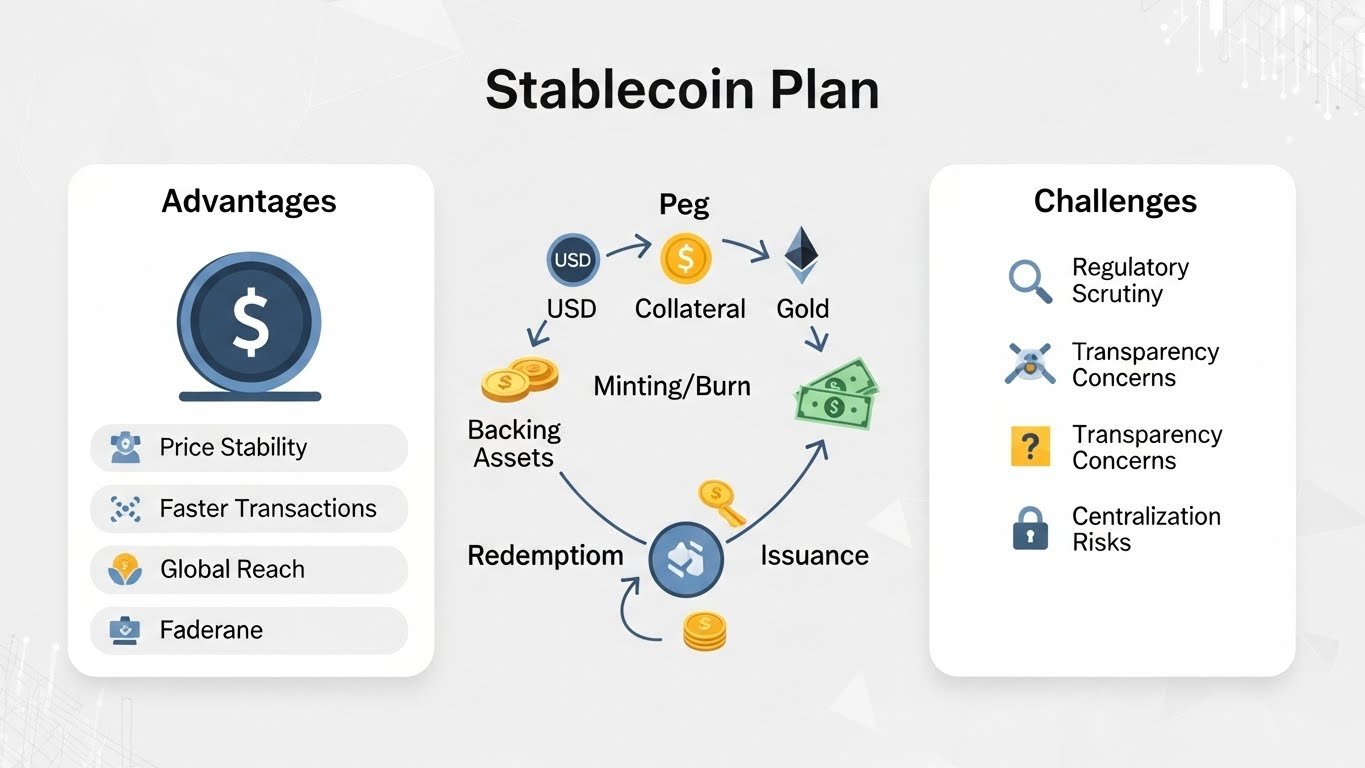
For Pakistan, a stablecoin could support digital payments, help with remittances, and act as a foundation for tokenised assets. If tokenised bonds or commodities exist on a blockchain, they need a stable digital currency to trade against.
However, stablecoins also carry risks. Poorly managed stablecoins can collapse, damage trust, and disrupt financial systems. That is why regulation, transparency, and reserve backing are essential.
Why a Stablecoin Matters for Pakistan’s Economy
Pakistan is one of the world’s largest recipients of remittances. Many overseas workers send money home every month, often paying high fees and waiting days for transfers to settle. A well-regulated stablecoin could reduce costs and speed up these transactions.
Domestically, a stablecoin could improve access to digital payments, especially for people who do not use traditional banks. It could also support small businesses by making transactions faster and cheaper.
At the same time, policymakers must be careful. If a stablecoin is too easy to move across borders, it could increase capital flight. That is why Pakistan’s approach emphasizes regulation first, not experimentation without limits.
Regulation Is the Real Foundation of This Plan
One of the most important parts of this story is regulation. Pakistan is not treating crypto as a free-for-all. It is developing laws, licensing rules, and oversight mechanisms to control how digital assets operate inside the country.
This includes creating new regulatory bodies, drafting virtual asset laws, and working toward clear rules for exchanges, custodians, and issuers. These steps are necessary if tokenised assets and stablecoins are to be trusted by investors and institutions.
Without regulation, crypto projects remain fragile. With regulation, they can become part of the financial system.
Benefits of Tokenising State Assets
If done correctly, tokenisation could bring real advantages to Pakistan. It could improve transparency by recording transactions on-chain. It could reduce settlement delays and paperwork. It could attract new types of investors who prefer digital assets.
Tokenisation could also help Pakistan modernize its capital markets without changing the underlying economic structure. It is an upgrade, not a replacement.
However, these benefits only appear if governance is strong. Technology cannot fix weak institutions. It can only amplify what already exists.
Risks That Cannot Be Ignored
Tokenising state assets also creates serious risks. Legal uncertainty is one of the biggest. Investors need to know what rights a token gives them and how disputes are resolved. Cybersecurity risks also increase when assets move into digital form.
There is also reputational risk. If a tokenised project fails, it can damage trust not just in crypto, but in the government itself. That is why Pakistan must move carefully and transparently.
The same applies to the stablecoin. Without proper reserves, audits, and controls, a stablecoin can do more harm than good.
How This Fits into Global Crypto Trends
Pakistan is not alone in exploring tokenisation and stablecoins. Governments around the world are testing real-world asset tokenisation, central bank digital currencies, and regulated stablecoins.
What makes Pakistan’s move notable is its scale and ambition. Courting Binance and talking about $2 billion in tokenised assets places Pakistan firmly in the global conversation about the future of finance.
If successful, Pakistan could become a model for other emerging economies. If not, it will still provide lessons about the limits of crypto in public finance.
What to Watch Going Forward
The real test will not be announcements, but execution. Licensing decisions, legal clarity, pilot projects, and public disclosures will show whether Pakistan’s plans are becoming reality.
Clear rules, transparent audits, and cautious rollouts will build confidence. Vague promises and rushed launches will not.
Conclusion: A Bold Step That Needs Careful Execution
When Pakistan courts Binance to tokenise $2B in state assets and launch a stablecoin, it is taking a bold step toward modernizing its financial system. This is not about hype or quick profits. It is about testing whether blockchain can improve how governments manage money, assets, and payments.
The opportunity is real, but so are the risks. Success will depend on regulation, transparency, and disciplined execution. If Pakistan gets this right, it could reshape how emerging markets use crypto. If it gets it wrong, it will reinforce skepticism.
Either way, this is a story worth watching closely.
FAQs
Q: Is Pakistan selling its state assets through tokenisation?
No. Tokenisation does not mean selling assets. It means creating digital representations of financial instruments linked to those assets.
Q: Why is Binance involved in Pakistan’s plan?
Binance brings technical expertise, global liquidity, and experience working with regulators, making it a useful partner for large-scale crypto projects.
Q: What is Pakistan’s stablecoin meant to do?
The stablecoin is intended to support digital payments, remittances, and tokenised assets while operating under a regulated framework.
Q: Is this move risky for Pakistan?
There are risks, but they can be managed with strong regulation, transparency, and phased implementation.
Q: Could this influence other countries?
Yes. If successful, Pakistan’s approach could inspire other emerging economies to explore regulated tokenisation and stablecoins.
Also More: Bitcoin ETFs Drop as Altcoins Surge in New Market Shift
