


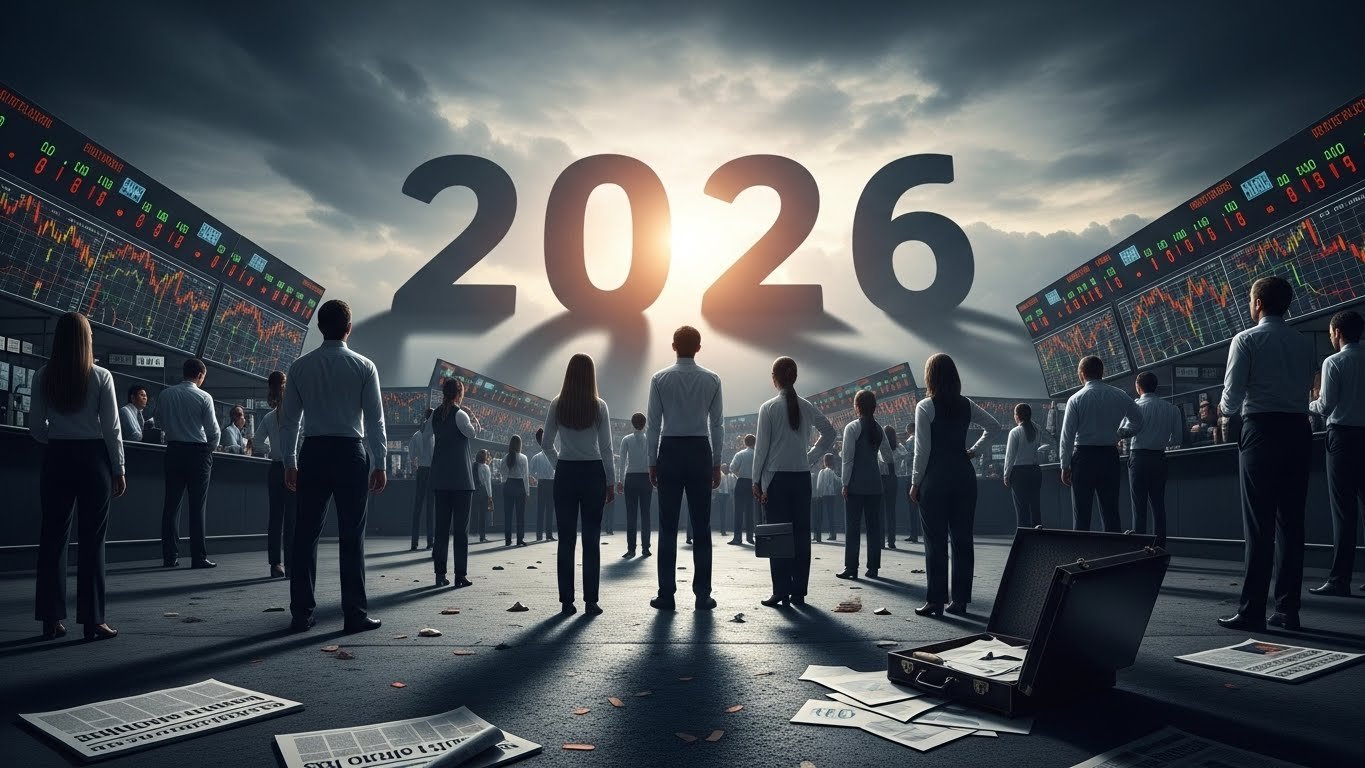
Markets stare down 2026 with a mixture of caution and curiosity. On one side, recession probabilities keep showing up in conversations among investors, economists, and corporate leaders. On the other, liquidity hopes—the belief that financial conditions could loosen and support risk assets—remain stubbornly alive. This push and pull is not just a talking point. It shapes pricing across equities, bonds, and currencies, and it affects how investors position for the year ahead.
To understand why markets stare down 2026 with such conflicting signals, it helps to zoom out. The global economy has been digesting tighter monetary policy, higher interest rates, and changing consumer demand. Meanwhile, the financial system has been adjusting to shifting fiscal dynamics, evolving bank lending standards, and periodic volatility in the credit cycle. In this context, the central question is no longer simply “Will growth slow?” It is “How far can growth slow before the market has to reprice risk—and will liquidity arrive in time to cushion the landing?”
The tension is especially visible in how different corners of the market interpret the same data. A slightly weaker jobs report can be read as a warning sign of slowing growth, pushing recession odds higher. Yet the same report can spark optimism that rate cuts are closer, reinforcing liquidity hopes. Inflation prints can trigger similar reactions—either fear that policy will stay restrictive or relief that disinflation is returning and financial conditions can ease.
This is why markets stare down 2026 as a year defined by crosscurrents. The discussion is not about one clean narrative. It’s about competing narratives: soft landing versus hard landing, tight money versus easier money, credit stress versus policy support, earnings resilience versus margin compression. The winners in 2026 may be those who can stay flexible, read liquidity conditions, and manage risk while the cycle reveals itself.
Why Recession Odds and Liquidity Hopes Can Rise Together
It might sound contradictory that recession odds could rise at the same time liquidity hopes grow, but it’s one of the most common patterns late in an economic cycle. When growth slows, investors begin to price in the possibility of a downturn. That naturally elevates recession expectations. Yet slowing growth can also increase confidence that policymakers will eventually respond—either by cutting rates, easing financial conditions, or signaling support. That response is the foundation of liquidity hopes.
This dynamic helps explain why markets stare down 2026 with both defensive caution and speculative optimism. Investors are not only reacting to the economy; they are reacting to how the policy environment might change. In many cycles, markets move ahead of the real economy. Equities can rally months before a recession ends because investors anticipate policy easing and a recovery. At the same time, stocks can sell off while data still looks okay if investors anticipate that earnings or credit quality will deteriorate.
The tug-of-war heading into 2026 reflects that timing mismatch. Economic data may be slowing, but financial markets are always forward-looking. The market’s job is to discount. So markets stare down 2026 by attempting to discount both the downside scenario (recession risk) and the upside scenario (liquidity support) at the same time.
Role of Expectations in “Two-Way” Markets
Expectations are not just a psychological factor; they are a pricing mechanism. When investors expect growth to weaken, they demand higher compensation for risk. That can widen credit spreads, steepen volatility skews, and pressure cyclical sectors. But when investors expect policy easing, discount rates can fall, valuations can expand, and longer-duration assets—like growth stocks—can benefit.
In a year like 2026, expectation swings can be fast and sharp. Market volatility often rises when the macro narrative shifts quickly. And that’s precisely why markets stare down 2026 as a year where positioning matters as much as forecasting. Being “right” about the economy but wrong about liquidity timing can still lead to poor outcomes.
Recession Odds: The Signals Investors Watch Most Closely
Recession odds are rarely determined by a single indicator. They emerge from a cluster of signals that tend to deteriorate when the economy is losing momentum. As markets stare down 2026, three themes keep resurfacing: labor market conditions, consumer resilience, and corporate profitability.
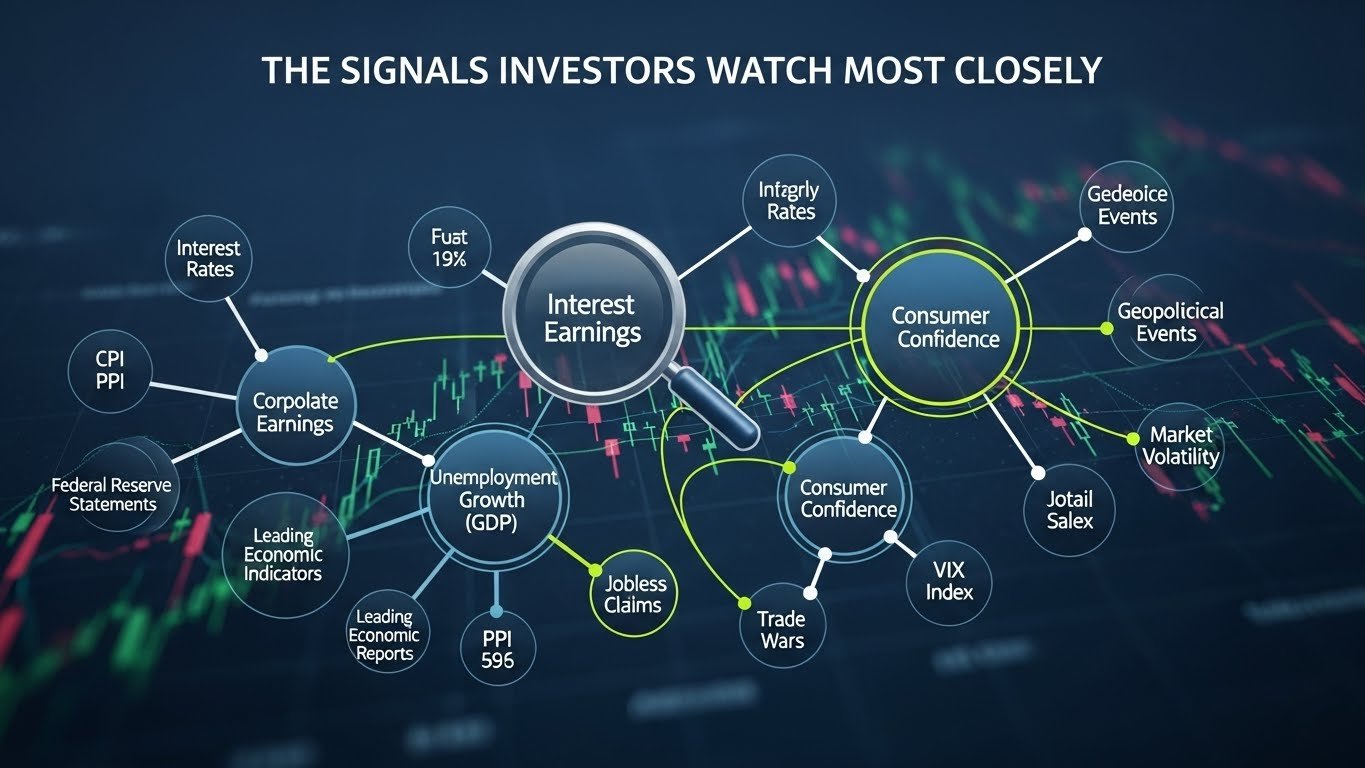
Labor markets are often the last line of defense. When hiring slows and layoffs rise, consumer spending can weaken, and recession risk grows. Consumers matter because consumption is a large portion of economic activity in many major economies. Corporate profitability matters because margins and earnings expectations drive investment, hiring, and market valuations.
The key is not whether one data point looks soft; it’s whether softness is spreading. As markets stare down 2026, investors are watching for broad-based cooling rather than isolated weakness.
Yield Curve and Leading Indicators
One classic recession indicator is the yield curve. When short-term rates are higher than long-term rates for a sustained period, it can reflect restrictive policy and expectations of weaker growth ahead. The yield curve is not a perfect timer, but it remains a widely followed signal because it captures the market’s collective expectations for future growth and inflation.
Alongside the yield curve, investors track leading indicators like new orders, business sentiment, and manufacturing surveys. If these measures weaken consistently, recession odds often rise. This is part of why markets stare down 2026 with heightened sensitivity to each release. In uncertain conditions, even “second-tier” data can move markets if it changes the trajectory of expectations.
Liquidity Hopes: What They Really Mean and Why They Matter
Liquidity is one of the most misunderstood market concepts because it can refer to multiple things: central bank balance sheets, money market conditions, bank lending, or the simple ability to buy and sell assets without large price swings. In the context of 2026, liquidity hopes usually mean an expectation that financial conditions may loosen—through rate cuts, improved credit availability, or reduced stress in funding markets.
When liquidity improves, markets often behave differently. Risk appetite tends to rise. Investors are more willing to pay higher valuations for future earnings. Financial conditions ease, which can support economic activity. This is why markets stare down 2026 with cautious optimism: even if growth slows, liquidity could cushion the blow.
Rate Cuts, Policy Signaling, and Market Psychology
Markets don’t wait for rate cuts; they often price them months in advance. That’s why a single speech or policy statement can matter so much. If investors believe the policy path is shifting toward easing, liquidity hopes can surge—lifting equities, compressing credit spreads, and weakening the currency in some cases.
But liquidity hopes also come with risk. If markets price easing too early and inflation remains sticky, policymakers may keep conditions tighter for longer. That can lead to sharp repricing. So as markets stare down 2026, investors must distinguish between “hope” and “evidence.” Hope alone can fuel rallies, but evidence is what sustains them.
Difference Between System Liquidity and Market Liquidity
System liquidity refers to how easily money flows through the financial system—bank reserves, funding markets, credit creation. Market liquidity refers to trading conditions—bid-ask spreads, depth, and how quickly prices move when large trades occur. In stress periods, market liquidity can vanish even if system liquidity seems adequate.
This distinction matters because markets stare down 2026 with potential volatility spikes. Liquidity can look fine—until it doesn’t. When risk-off sentiment hits, correlations can rise and “safe” positions can become crowded, creating abrupt moves. Investors who understand liquidity in both senses may manage risk more effectively.
Earnings, Valuations, and the “Reality Check” for Risk Assets
Even if liquidity improves, earnings ultimately matter. Stocks can rise on falling discount rates, but sustained rallies usually need profit growth. Heading into 2026, investors are balancing two possibilities: earnings resilience due to productivity and pricing power, or earnings pressure due to slowing demand and higher financing costs.
This is another reason markets stare down 2026 with mixed emotions. Valuations may already reflect optimism in some segments, while other areas may price a slowdown. The result can be a market that rotates frequently—rewarding adaptability over certainty.
Margin Story: Costs, Wages, and Pricing Power
Margins are the battleground. If wage costs remain high while demand cools, companies may struggle to maintain profitability. If productivity improvements and efficiency initiatives offset cost pressures, earnings may remain stronger than expected. Investors will watch how companies talk about demand visibility, inventory levels, and pricing strategies.
In this environment, markets stare down 2026 by focusing heavily on guidance. Quarterly earnings calls can move entire sectors if leadership teams hint at a sharper slowdown or an unexpected rebound.
Duration Sensitivity and Sector Rotation
When interest rates are high, “long-duration” equities—companies whose profits are expected further in the future—can be more sensitive to changes in discount rates. If liquidity hopes strengthen and rates fall, long-duration growth stocks may benefit. If recession odds rise sharply and credit stress spreads, defensive sectors may outperform.
This creates a rotation-prone market. And it helps explain why markets stare down 2026 as a year where broad index returns might hide large dispersion under the surface.
Global Crosscurrents: Currency, Commodities, and Geopolitical Risk
No market exists in isolation. In 2026, global factors could amplify the tug-of-war between recession odds and liquidity hopes. Currency moves can change financial conditions. Commodity prices can influence inflation and consumer spending. Geopolitical risks can disrupt supply chains or shift energy dynamics.
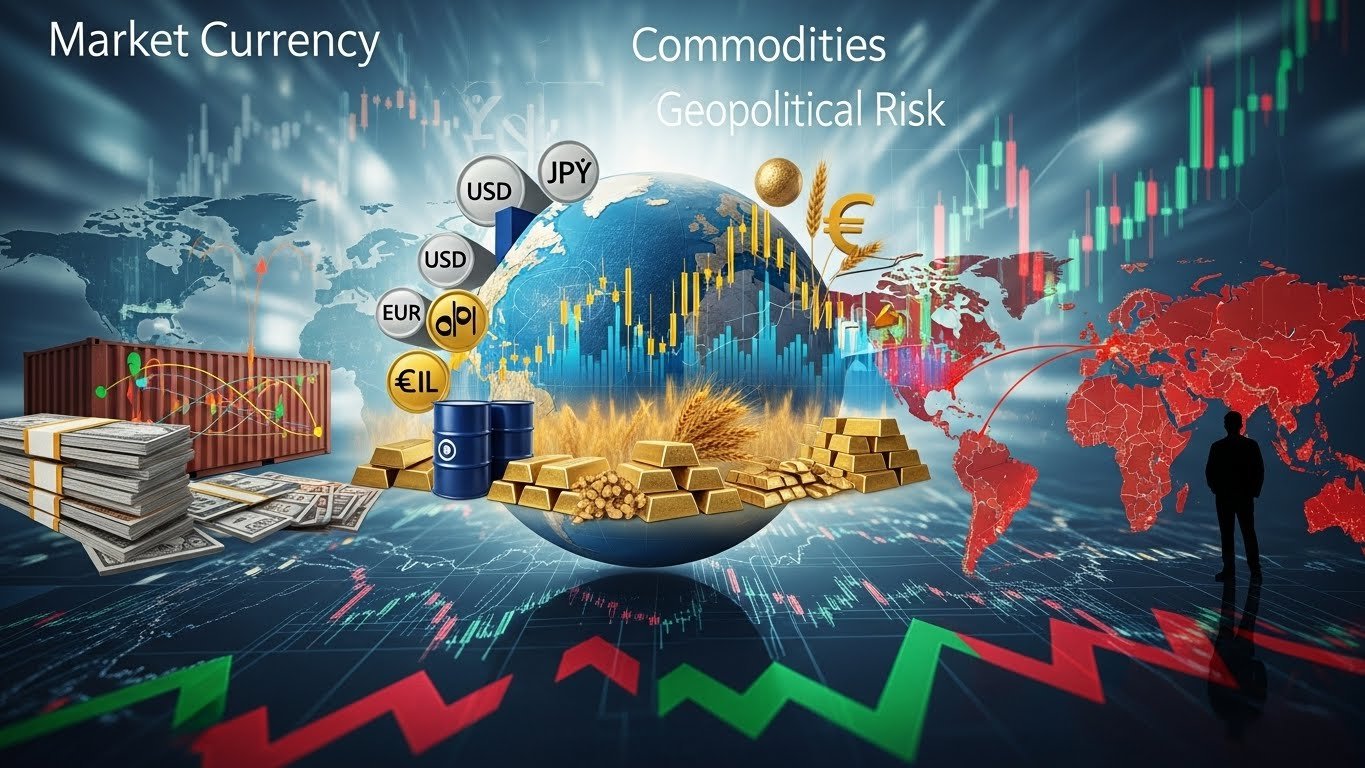
As markets stare down 2026, global investors are also tracking how different central banks respond to domestic pressures. Diverging policy paths can drive big swings in foreign exchange markets, affecting import costs, corporate earnings, and capital flows.
Currency Strength and Financial Conditions
A stronger currency can reduce imported inflation but also pressure exporters’ earnings. A weaker currency can support exports but raise import costs. Currency dynamics therefore feed into both recession odds and liquidity hopes. If the currency strengthens due to higher rates, financial conditions may tighten. If it weakens due to expected rate cuts, conditions may ease.
This is another layer of complexity as markets stare down 2026. The market’s “liquidity story” is not just domestic; it’s global.
Commodities as a Signal, Not Just a Trade
Commodities often reflect growth expectations. Industrial commodities can weaken if demand slows, reinforcing recession odds. Energy prices can also affect inflation expectations, influencing how policymakers respond.
In 2026, commodities may play a dual role: a barometer of growth and a driver of inflation. That’s why markets stare down 2026 by watching commodity trends for confirmation of the macro narrative.
What Investors Are Watching: The 2026 Dashboard of Key Signals
The most important skill in a crosscurrent year is knowing what matters most and what can be ignored. The 2026 dashboard is likely to include inflation trends, employment data, credit conditions, and policy communication. But it’s not just the data itself—it’s how the data changes expectations for policy and earnings.
This is where markets stare down 2026 with heightened sensitivity to “inflection points.” When the trend changes, markets can move fast.
Inflation Progress Versus Growth Cooling
If inflation continues to ease, it supports liquidity hopes and potentially lower rates. If inflation stalls, policymakers may keep conditions restrictive, raising recession odds. The balance between inflation progress and growth cooling is central to 2026 pricing.
Investors should watch not only headline inflation but also underlying measures like services inflation, shelter costs, and wage growth. These can influence central bank credibility and policy timelines, shaping how markets stare down 2026 day to day.
Banking and Credit Availability
Credit availability can tighten quietly. Lending surveys, bank earnings, and delinquency trends can provide early signals of stress. If credit is flowing, liquidity hopes remain credible. If credit tightens, recession odds can rise even if policy rates start to fall.
This is why markets stare down 2026 with attention to credit plumbing—not just stock charts.
Putting It Together: Navigating 2026 Without Getting Whipsawed
A year defined by opposing forces often produces whipsaw price action. Markets rally on liquidity hope, then sell off on recession fear. They rotate from growth to value, from cyclical to defensive, then back again. The challenge is not just picking a direction; it’s managing the path.
As markets stare down 2026, investors may benefit from focusing on quality, balance sheet strength, and clarity of cash flows. Companies with strong fundamentals can be more resilient if recession odds rise, while still participating if liquidity hopes spark rallies. Meanwhile, understanding the macro calendar—policy meetings, inflation releases, major earnings seasons—can help investors avoid overreacting to noise.
This is also a year where diversification can matter in a different way. When correlations rise in stress periods, traditional diversification may disappoint. But diversification across factors—quality, value, momentum, carry—can sometimes provide more stability. Ultimately, markets stare down 2026 as a year where humility and flexibility may outperform strong convictions.
Conclusion
As markets stare down 2026, the world is not offering a single clear narrative. Recession odds and liquidity hopes are pulling in opposite directions, creating a market environment that can feel confusing, reactive, and noisy. Yet within that noise, a consistent framework emerges: watch the trend in growth, monitor the path of inflation, track credit conditions, and listen closely to policy signals.
Liquidity hopes can support markets, but they do not erase economic reality. Recession odds can rise, but they do not guarantee a downturn. The outcome for 2026 may depend less on any single event and more on the sequence—how quickly growth cools, how convincingly inflation moderates, and how effectively financial conditions adjust.
In the end, markets stare down 2026 the way they always stare down uncertainty: by repricing expectations in real time. Investors who treat 2026 as a dynamic process—rather than a fixed forecast—may be better positioned to handle what comes next.
FAQs
Q: Why do markets stare down 2026 with so much uncertainty?
Because recession odds are rising in some indicators while liquidity hopes are growing through expectations of easier financial conditions, creating conflicting signals for pricing.
Q: What does “liquidity hopes” mean in practical terms?
It typically refers to expectations of rate cuts, looser financial conditions, improved credit availability, and smoother funding markets that can support risk assets.
Q: Are recession odds reliable forecasts for 2026?
They are better viewed as probabilities, not certainties. Recession odds reflect current trends in growth, labor, and credit, but they can shift quickly with new data and policy changes.
Q: Which market indicators matter most heading into 2026?
Investors often focus on the yield curve, credit spreads, inflation progress, employment trends, and central bank policy guidance to assess recession odds and liquidity conditions.
Q: How can investors reduce whipsaw risk in 2026?
By prioritizing balance sheet strength, sustainable cash flows, and diversified exposure across factors, while staying attentive to shifts in inflation, credit, and policy expectations that drive volatility.
Also More: Bitcoin and Ether ETFs Cool Off as Altcoin Funds Rise
