



Maritime safety has always been the backbone of every successful marina, port, and coastal operation. From the smallest private docking facility to major international harbors, the ability to track vessels, ensure compliance, validate identities, and maintain reliable safety records determines how effectively the marine ecosystem functions. Yet, as maritime activity grows more complex and global, the risks and inefficiencies associated with traditional systems become increasingly clear. Paper-based documentation, isolated databases, and manual verification processes often create delays, errors, and vulnerabilities that can threaten both safety and operational continuity.
This is where the conversation around digital transformation in maritime operations becomes more urgent—and more exciting. In recent years, marinas have been exploring advanced tools like automation, IoT sensors, AI-based monitoring, and cloud-based fleet management systems. However, one technology is emerging as a particularly powerful solution for modern maritime challenges: blockchain technology. By enabling secure, tamper-resistant records and transparent data sharing between trusted stakeholders, blockchain offers marinas a new way to strengthen safety procedures and streamline marine operations.
When a marina adopts blockchain technology, it isn’t merely following a trend. It is responding to real-world safety demands: verifying vessel ownership, tracking compliance certifications, improving incident reporting, and ensuring that maintenance logs cannot be manipulated. In the maritime world, even small mistakes can escalate into major incidents—groundings, fuel leaks, collisions, or unauthorized access to restricted zones. Blockchain introduces a new layer of trust and accountability by making maritime safety information verifiable and instantly accessible across authorized parties.
In this article, we’ll explore how and why a marina adopts blockchain technology for enhanced maritime safety, what benefits it brings to vessel management and security, and how it integrates with modern port and marina operations. We’ll also look at common challenges, adoption strategies, and what the future holds for blockchain-driven maritime systems. Throughout the discussion, you’ll see how Marina Adopts Blockchain Technology becomes more than a headline—it becomes a blueprint for safer and smarter maritime environments.
Understanding Blockchain Technology in the Maritime Context
Before diving into safety benefits, it helps to understand what blockchain is and why it fits naturally into the maritime environment. Blockchain is essentially a digital ledger that records transactions and data entries in a secure, chronological manner. Each record, often called a “block,” is linked to the one before it, creating a chain. The key advantage is that once information is added, it becomes extremely difficult to alter without detection. That immutability is exactly what makes blockchain valuable for safety-critical industries like maritime transportation.
In a marina environment, blockchain can store and verify crucial records such as vessel registration details, ownership documents, crew certifications, equipment inspections, and incident reports. Instead of relying on separate systems maintained by different entities—harbor authorities, insurance providers, boat owners, maintenance contractors—a shared and permissioned blockchain allows authorized stakeholders to access consistent and trusted information. This reduces confusion, prevents fraud, and enhances the reliability of safety decisions.
Blockchain technology also supports traceability, which is vital in maritime operations. Whether tracking hazardous materials, fuel transactions, or maintenance histories, traceability ensures accountability. And accountability, in turn, improves safety culture. When a marina adopts blockchain technology, it builds a foundation where every action and update is recorded, verified, and auditable.
Why Maritime Safety Needs a Stronger Digital Backbone
The maritime sector deals with a unique set of safety risks. Unlike land-based infrastructure, marinas and ports operate in a constantly changing physical environment. Weather conditions shift rapidly, visibility can drop suddenly, and vessel traffic can become unpredictable. On top of this, many marinas host a mix of commercial boats, private yachts, fishing vessels, and recreational watercraft. Each type of vessel comes with different safety regulations, maintenance needs, and operational behaviors.
Traditional safety management systems often struggle with this complexity. Records may be incomplete, outdated, or hard to verify. A marina might not immediately know whether a vessel’s insurance is current, whether its fire suppression systems have passed inspection, or whether its operator has the required credentials. When emergencies happen, every minute matters. If safety staff must search multiple databases or rely on paper files, response times suffer.
This is why Marina Adopts Blockchain Technology is becoming a compelling direction for safety-focused modernization. Blockchain supports real-time verification, secure data sharing, and transparency across stakeholders. Instead of fragmented records, a marina can maintain a single source of truth for safety and compliance documentation.
How a Marina Adopts Blockchain Technology for Enhanced Maritime Safety
When a marina adopts blockchain technology, it typically starts with one core objective: strengthening safety records and reducing operational risk. The adoption process usually involves building a permissioned blockchain network, meaning access is restricted to authorized parties such as marina operators, vessel owners, maintenance providers, and relevant regulators. This keeps sensitive data protected while still enabling transparency where needed.
The first stage often includes digitizing key safety documents and turning them into blockchain-backed records. These might include vessel registration data, dock assignment details, inspection certificates, and crew licensing verification. Once these records are placed on the blockchain, they can be verified instantly without needing a central authority to approve every request.
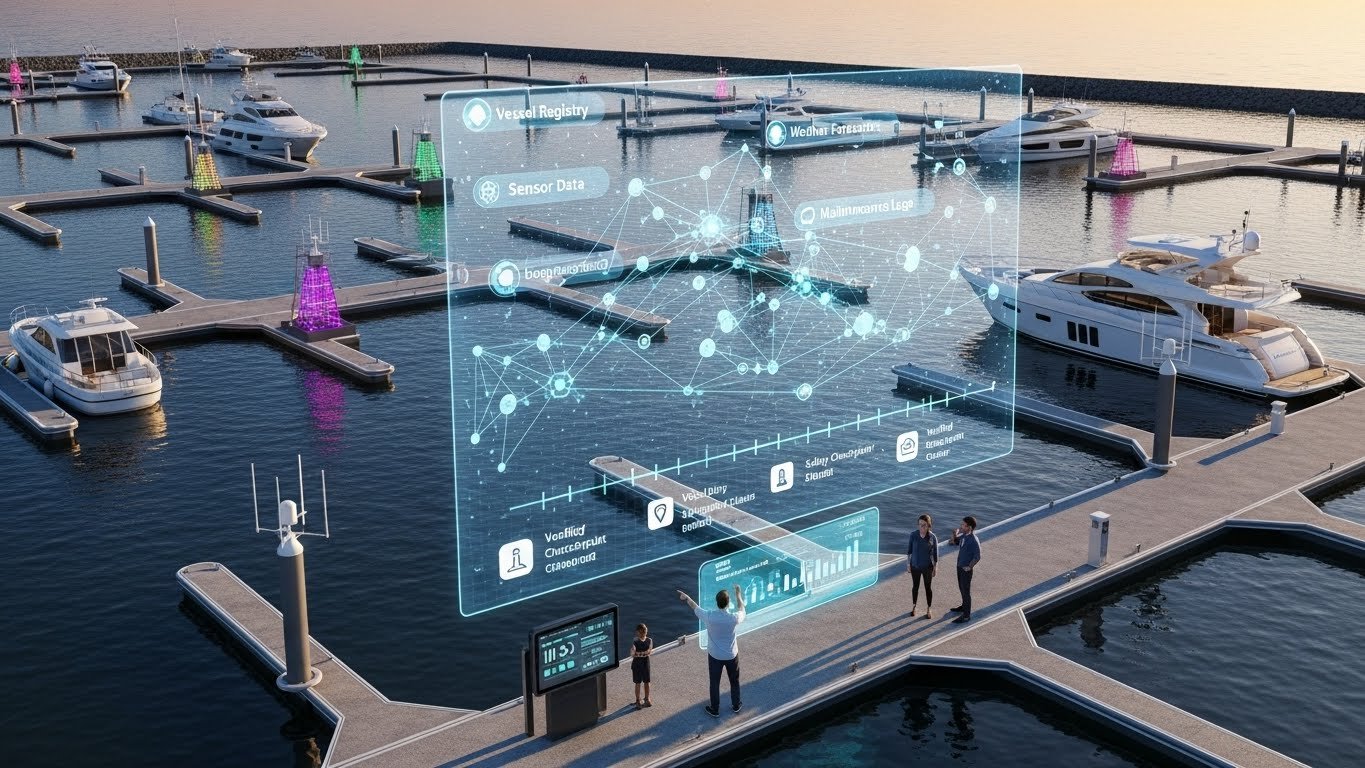
Over time, blockchain can connect with other systems such as IoT sensors, automated access controls, and maritime traffic management platforms. For example, a marina gate could automatically verify a vessel’s identity and safety compliance before allowing entry. This combination of automation and verification reduces human error and improves overall safety outcomes.
Strengthening Vessel Identity and Ownership Verification
One of the most immediate safety improvements comes from stronger identity verification. Unauthorized vessels entering restricted areas can pose significant security threats and safety hazards. Traditional identity checks often depend on visible registration numbers and manual checks, which can be forged or misread. Blockchain makes vessel identity more resilient because registration details are stored as secure, verifiable records.
When a marina adopts blockchain technology, it can create digital identity profiles for vessels, complete with ownership history and operational permissions. This reduces the risk of fraud, stolen vessels, and unauthorized docking. It also improves incident response because marina staff can quickly confirm a vessel’s identity and contact the right stakeholders.
This is especially valuable when marinas support transient docking, where vessels arrive from different regions with different documentation standards. Blockchain-based verification ensures consistency, which strengthens maritime security and reduces administrative delays.
Improving Maintenance Records and Safety Compliance
Maintenance is not just a matter of efficiency—it is a matter of life and safety. Equipment failures in maritime settings can cause fires, flooding, engine malfunctions, and collisions. Yet maintenance logs are often vulnerable to human error or deliberate manipulation. In some cases, logs may be incomplete or lost, leaving marina operators unsure about a vessel’s condition.
Blockchain solves this by creating immutable maintenance histories. Once maintenance events and inspection results are recorded on a blockchain, they cannot be edited or erased without detection. This builds trust and reliability around safety compliance. When a marina adopts blockchain technology, it gains the ability to confirm whether a vessel’s safety systems—like bilge pumps, navigation lights, or fire extinguishers—are properly maintained.
Moreover, blockchain helps schedule preventative maintenance more effectively. Because records are easily accessible, maintenance providers and vessel owners can coordinate proactively instead of reacting after a failure. Over time, this reduces incidents and supports a safer marina environment.
Enhancing Incident Reporting and Emergency Response
In emergencies, speed and accuracy save lives. Whether responding to a fuel spill, vessel collision, or onboard fire, marina teams need instant access to reliable information. This includes vessel details, hazardous material records, insurance data, and safety inspection results. If this information is scattered across different systems, response coordination becomes difficult.
By using blockchain, incident reports become more transparent and verifiable. When an incident occurs, key details can be recorded immediately, time-stamped, and shared with authorized parties such as coast guards, insurers, and regulators. This reduces disputes and ensures that investigation data remains accurate.
A marina that adopts blockchain technology can also integrate emergency response protocols into smart contracts—automated rules that trigger actions when certain conditions occur. For example, if a fuel leak sensor detects a spill above a specific threshold, a blockchain-based system could automatically log the incident, alert emergency contacts, and initiate containment procedures. This creates a more intelligent safety infrastructure.
Securing Data Sharing Between Stakeholders
Maritime safety depends on cooperation. Vessel owners, marina operators, maintenance providers, coast guards, insurers, and regulators all play a role. Yet data sharing is often limited by trust issues and incompatible systems. Some stakeholders may hesitate to share records because of privacy concerns, while others may struggle with outdated technology.
A permissioned blockchain network solves this by enabling secure and controlled access. Stakeholders can share exactly what is necessary without exposing sensitive information to everyone. For example, an insurance provider might verify a vessel’s compliance status without seeing the full operational history. This balances transparency with confidentiality.
This is why blockchain technology is increasingly associated with secure data sharing and maritime compliance management. When a marina adopts blockchain technology, it becomes a hub of trusted collaboration rather than a silo of isolated data.
Reducing Fraud and Improving Maritime Security
Fraud in maritime environments is more common than many people realize. It can involve forged inspection reports, falsified insurance documents, or manipulated maintenance logs. Fraud directly impacts safety because it allows unsafe vessels to operate without proper oversight. Blockchain reduces fraud risk because records are cryptographically secured and verifiable.
When a marina adopts blockchain technology, it creates a verifiable trail of safety-related information. This trail is especially valuable during audits and investigations. Regulators can confirm whether safety inspections were performed properly. Marina operators can ensure compliance without relying entirely on paper documentation. Vessel owners benefit too, because a transparent record can increase trust with insurers and improve resale value.
In essence, blockchain reinforces a safety-first environment where transparency discourages misconduct.
Integrating Blockchain with Smart Marina Systems
Modern marinas are evolving into “smart marinas” through connected devices and advanced monitoring systems. These often include berth management systems, access control gates, surveillance cameras, weather monitoring stations, and IoT sensors for water quality or fuel leak detection. Blockchain can complement these systems by providing secure and verifiable data handling.
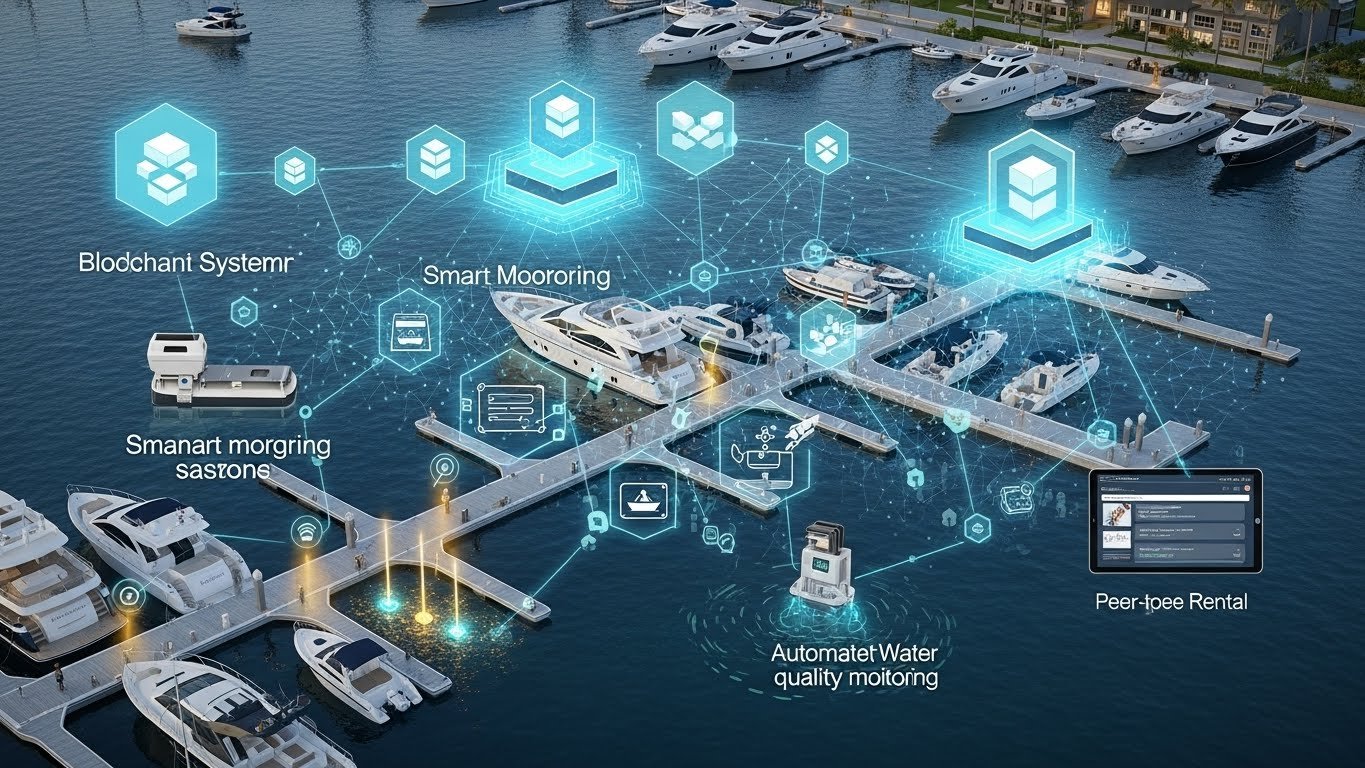
For example, IoT sensors can feed environmental data into a blockchain ledger, creating immutable records of water conditions or pollution events. If a marina is responsible for reporting environmental compliance, blockchain-backed data can strengthen reporting credibility. Similarly, access control systems can use blockchain to verify whether vessels and crew members are authorized for specific zones.
This combination of smart marina technology and blockchain-based verification creates a more resilient operational environment. It reduces dependency on manual checks and improves the reliability of safety decisions.
Addressing Challenges in Blockchain Adoption at Marinas
Despite the benefits, blockchain adoption is not without challenges. Implementing blockchain requires technical expertise, investment, and stakeholder coordination. Some marina operators may worry about costs, staff training, or system compatibility. Others may hesitate because they associate blockchain primarily with cryptocurrency, which can create misconceptions about its purpose.
The key is understanding that blockchain for maritime safety is not about volatile digital currencies. It is about secure records, trusted verification, and process transparency. A permissioned blockchain network is typically tailored for business operations and governed by authorized stakeholders, making it far more stable and practical for maritime use.
Integration challenges can also arise when marinas must connect blockchain systems with existing databases, hardware devices, or regulatory reporting platforms. To succeed, marinas often start with small pilot programs, focusing on one use case such as maintenance tracking or vessel identity verification. Once the pilot delivers measurable safety improvements, the blockchain system can expand across broader operations.
Future of Blockchain Technology in Maritime Safety
As maritime industries continue to modernize, blockchain adoption is likely to grow beyond marinas into ports, shipping companies, and global logistics networks. In the future, marinas could become critical nodes in larger maritime blockchain ecosystems, sharing safety and compliance data seamlessly with international authorities.
Advanced applications may include blockchain-based crew credential verification, automated customs documentation, and real-time tracking of hazardous cargo. These improvements will contribute to safer and more efficient maritime transportation worldwide.
The headline Marina Adopts Blockchain Technology may soon become common across the industry, representing a shift toward data-driven safety and accountability. As more marinas adopt blockchain technology, we can expect improved standardization, reduced incidents, and stronger stakeholder trust.
Conclusion
When a marina adopts blockchain technology for enhanced maritime safety, it takes a major step toward modernizing safety management, strengthening compliance, and improving operational trust. Blockchain provides secure and immutable records, ensuring that vessel identities, maintenance logs, safety inspections, and incident reports remain accurate and verifiable. Beyond recordkeeping, blockchain empowers collaboration through secure data sharing and supports integration with smart marina systems like IoT sensors and automated access controls.
In a world where maritime operations are becoming more complex and safety expectations continue to rise, blockchain offers marinas a future-ready solution. It reduces fraud, improves emergency response, strengthens accountability, and creates a reliable digital foundation for long-term safety success. As more marinas embrace blockchain technology, the maritime sector is poised to become safer, smarter, and more resilient than ever before.
FAQs
Q: How does blockchain technology improve maritime safety at a marina?
Blockchain improves maritime safety by creating tamper-proof records for vessel registration, inspections, maintenance logs, and incident reports, ensuring faster verification and more reliable decision-making.
Q: Is blockchain in marinas the same as cryptocurrency?
No. While cryptocurrency uses blockchain, marinas typically use permissioned blockchain systems focused on secure recordkeeping, compliance tracking, and trusted data sharing—not digital currency.
Q: Can blockchain help prevent unauthorized vessels from docking?
Yes. When a marina adopts blockchain technology, vessel identity verification becomes stronger, reducing fraud and preventing unauthorized access through secure, verifiable digital profiles.
Q: What maritime records are best suited for blockchain storage?
Records such as ownership documents, safety inspection certificates, maintenance histories, insurance verification, crew credentials, and incident reports are ideal for blockchain because they benefit from immutability and traceability.
Q: What are the biggest challenges of blockchain adoption in marinas?
Common challenges include integration with existing systems, training staff, initial implementation costs, and coordinating data standards among stakeholders. However, starting with pilot programs can reduce risks and ensure smooth adoption.
Also Read: Altcoin News Alerts for Traders Real-Time Crypto Signals
