



For a while, it felt like DeFi credit markets had slipped from center stage. The excitement that once surrounded on-chain borrowing and lending cooled into caution as volatility, forced deleveraging, and risk-off sentiment tightened the entire crypto economy. Many participants who once used DeFi credit markets daily—whether to borrow stablecoins, earn yield, or hedge positions—reduced activity or exited altogether. What followed was not a single dramatic collapse, but a prolonged slump: muted borrowing demand, thinner liquidity, and a collective shift toward capital preservation.
Now, the tone is changing. Instead of the boom-era obsession with headline yields, a quieter story is taking shape—one that looks a lot like stabilization. In practical terms, stabilization means DeFi credit markets are beginning to behave less like a fragile leverage machine and more like durable financial infrastructure. Lenders are increasingly focused on risk-adjusted yield rather than incentives. Borrowers are becoming more selective about leverage and collateral quality. Protocols are refining their parameters, strengthening liquidation pathways, and improving how they manage oracle security and market shocks.
This doesn’t mean the next phase will be calm. Crypto remains volatile by nature, and DeFi credit markets will always sit close to that volatility because they are built around collateral values and automated liquidation rules. But a stabilizing market isn’t defined by the absence of risk. It’s defined by better pricing of risk, more resilient design choices, and a healthier relationship between credit demand and available liquidity.
In this article, you’ll learn what DeFi credit markets are, what caused the long slump, and which signals suggest the environment is stabilizing. We’ll also explore the rising role of real-world assets (RWAs), the importance of sustainable collateral, and how modern on-chain lending is evolving into a more disciplined credit system.
What Are DeFi Credit Markets and How Do They Work?
At their core, DeFi credit markets are decentralized systems that match capital supply and demand through smart contracts. Lenders deposit assets into lending pools and earn interest. Borrowers lock up collateral and borrow assets—most often stablecoins—against that collateral. The system enforces rules automatically: if collateral falls below a safety threshold, positions can be liquidated to protect lenders.
Most large DeFi credit markets rely on overcollateralized loans, meaning borrowers must post more value than they borrow. This design is crucial because it reduces default risk without relying on identity-based underwriting. Instead of evaluating a borrower’s income or credit score, smart contracts evaluate collateral health.
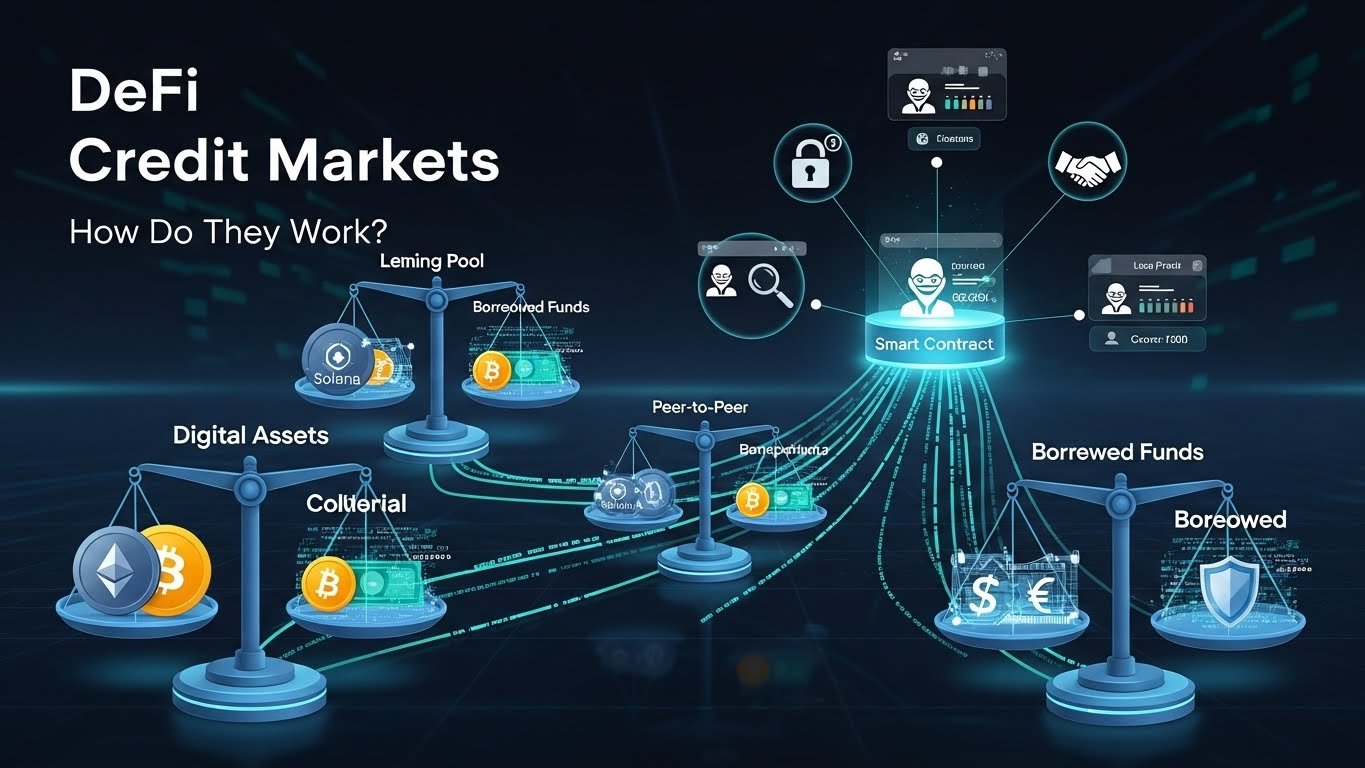
This model works best when three conditions hold. First, collateral assets need sufficient liquidity so they can be sold during a liquidation without huge slippage. Second, pricing must be reliable, making oracle security a cornerstone of credit safety. Third, protocol parameters—like collateral factors, liquidation thresholds, and interest rate curves—must be calibrated to survive extreme volatility. When these conditions weaken, DeFi credit markets can spiral into cascading liquidations and lender panic.
Even in their simplest form, DeFi credit markets aren’t just about borrowing and lending. They also support hedging strategies, treasury management, market making, and liquidity operations. That diversity of use cases is one reason stabilization matters: when credit markets function smoothly, the entire on-chain economy becomes more efficient.
What Caused the Prolonged Slump in DeFi Credit Markets?
The slump in DeFi credit markets came from multiple overlapping pressures rather than a single failure. Understanding those pressures helps clarify why today’s stabilization signals are meaningful.
The Leverage Hangover and Forced Deleveraging
During the boom, leverage became the primary fuel for activity. Borrowers used DeFi credit markets to loop collateral, chase yield, and amplify directional bets. When prices reversed, those strategies unwound rapidly. Automated liquidations turned market drops into liquidity shocks, and many users learned—painfully—that leverage can vanish faster than it appears.
Once deleveraging begins, it tends to continue for a long time. Borrowers remain cautious, lenders demand higher compensation for risk, and protocols tighten parameters. That’s a recipe for a slump: fewer loans, lower utilization, and subdued organic demand.
Trust and Risk Repricing
Even though DeFi credit markets are transparent, the broader crypto environment influences behavior. When confidence drops, participants price risk more aggressively. In practice, that means lower willingness to lend at thin spreads, reduced appetite for volatile collateral, and a preference for the most battle-tested venues.
During a risk repricing period, “yield” becomes suspicious unless it has a clear source. This is where many DeFi credit markets struggled: yields that depended on incentives or reflexive leverage could not persist once the speculative cycle ended.
Collateral Correlation and Liquidity Fragility
A core challenge for DeFi credit markets is that collateral assets often move together. In market stress, correlation increases, liquidity thins, and liquidations become more damaging. When collateral sells into a falling market, it can deepen drawdowns and trigger more liquidations—creating a self-reinforcing loop.
Stabilization requires breaking that loop, either by improving collateral quality, strengthening liquidation mechanics, or expanding the range of yield sources beyond purely crypto-native feedback cycles.
The Biggest Signs DeFi Credit Markets Are Stabilizing
Stabilization isn’t one metric. It’s a pattern of improvements across participation, collateral composition, protocol design, and the nature of yield itself. Here are the clearest signs the market is steadier.
Healthier Collateral and More Conservative Borrowing
One of the most important signals is a shift toward more resilient collateral. When users borrow against assets with deeper liquidity and clearer risk characteristics, the system becomes less fragile. In stabilizing DeFi credit markets, borrowers are more likely to maintain buffers rather than ride liquidation thresholds. That changes the market’s posture from “max leverage” to “managed exposure.”
This also shows up in behavior around refinancing and position management. As tooling improves and transaction costs fall, borrowers can actively adjust collateral and repay debt during volatility, reducing the chance of abrupt liquidations.
More Sustainable Yield Dynamics
In a hype phase, yields often come from incentives and leverage loops. In a stabilizing phase, yields increasingly come from real borrowing demand. That matters because lender returns become tied to genuine credit activity rather than emissions schedules.
When DeFi credit markets stabilize, you typically see a healthier relationship between borrow rates and utilization. Rates rise when demand increases and ease when demand falls, creating a more natural equilibrium. This is a subtle but powerful sign that credit is being priced rather than subsidized.
Protocol Design Maturing Into Risk Engineering
Modern DeFi credit markets are treating risk management as a product, not a footnote. That includes tighter onboarding for new collateral types, better caps and isolation frameworks, more robust liquidation incentives, and continuous monitoring of systemic exposures.
Maturity also means acknowledging that not every asset belongs in the same pool. Segmented risk, conservative parameters for long-tail tokens, and flexible controls for volatile periods can reduce systemic spillover. This is the kind of engineering that supports stabilization because it reduces the chance that one market shock takes down everything.
The Role of RWAs in Stabilizing DeFi Credit Markets
A major structural development is the expansion of real-world assets (RWAs), including tokenized treasuries and other yield-bearing instruments. RWAs matter because they introduce yield sources that are less dependent on crypto’s internal leverage cycle.
In practical terms, tokenized treasuries can provide yield linked to external interest rates rather than speculative borrowing demand. That can make DeFi credit markets more attractive to conservative lenders who want clearer yield drivers. It can also diversify collateral profiles, especially when protocols carefully manage liquidity and redemption mechanisms.
However, RWAs are not a magic shield. They introduce their own risks: custody, legal enforceability, issuer reliability, and operational dependencies that do not exist for purely on-chain assets. Stabilization comes from integrating RWAs thoughtfully, with transparent disclosures and risk frameworks that match the realities of off-chain instruments.
When done well, RWAs can help DeFi credit markets shift from a purely speculative credit system into a broader financial layer where crypto-native assets and external yield streams coexist.
Why Stabilization Doesn’t Require a New Bubble
It’s easy to assume that if DeFi credit markets are healthy, they must be exploding upward. In reality, stabilization often looks like steadier growth and better survival during volatility rather than nonstop expansion.
Stronger Systems Look Boring on Good Days
A market that can handle stress is not always dramatic during calm periods. In a mature credit environment, you want fewer surprises. You want liquidity that doesn’t vanish instantly, collateral that doesn’t implode from minor moves, and liquidations that happen efficiently rather than catastrophically.
When DeFi credit markets stabilize, the most valuable improvements are often invisible: better pricing feeds, smarter liquidation routing, and more conservative collateral factors. These changes may reduce headline yields, but they increase long-term survivability.
A Better Borrower Mix
Another stabilizing factor is the mix of borrowers. In a boom, many borrowers are chasing leverage. In a steadier phase, more borrowers come for strategic reasons: hedging exposure, managing liquidity, or financing operational needs. That shift supports sustainable utilization, which supports sustainable yield for lenders.
As borrower intent becomes less purely speculative, DeFi credit markets begin to resemble functional credit infrastructure rather than a leverage carnival.
Risk Factors That Still Matter in DeFi Credit Markets
Even with stabilization, risk remains real. Anyone participating in DeFi credit markets should understand the hazards that can still cause disruption.
Smart Contract and Upgrade Risk
A protocol can be widely used and still vulnerable. Smart contracts can contain bugs, upgrades can introduce new issues, and governance processes can create unexpected outcomes. In credit systems, these risks are amplified because leverage concentrates exposure.
Oracle Security and Price Integrity
Because loan health is determined by price feeds, oracle security is foundational. If prices are wrong, liquidations can become unfair, and debt can become unbacked. Stabilized DeFi credit markets invest heavily in resilient oracle design, but users should still treat oracle risk as non-negotiable.
Stablecoin and Liquidity Risks
Many DeFi credit markets revolve around stablecoins. If a stablecoin loses its peg or liquidity fragments across venues, credit conditions can tighten instantly. Borrowers may scramble to repay, lenders may pull liquidity, and rates can spike.
Correlated Collateral and Macro Volatility
Crypto markets can shift rapidly due to macro shocks, regulatory headlines, or sudden liquidity events. Correlation often rises during stress, which can overwhelm collateral buffers. Stabilization reduces fragility, but it doesn’t change crypto’s volatility reality.
What to Watch Next in DeFi Credit Markets
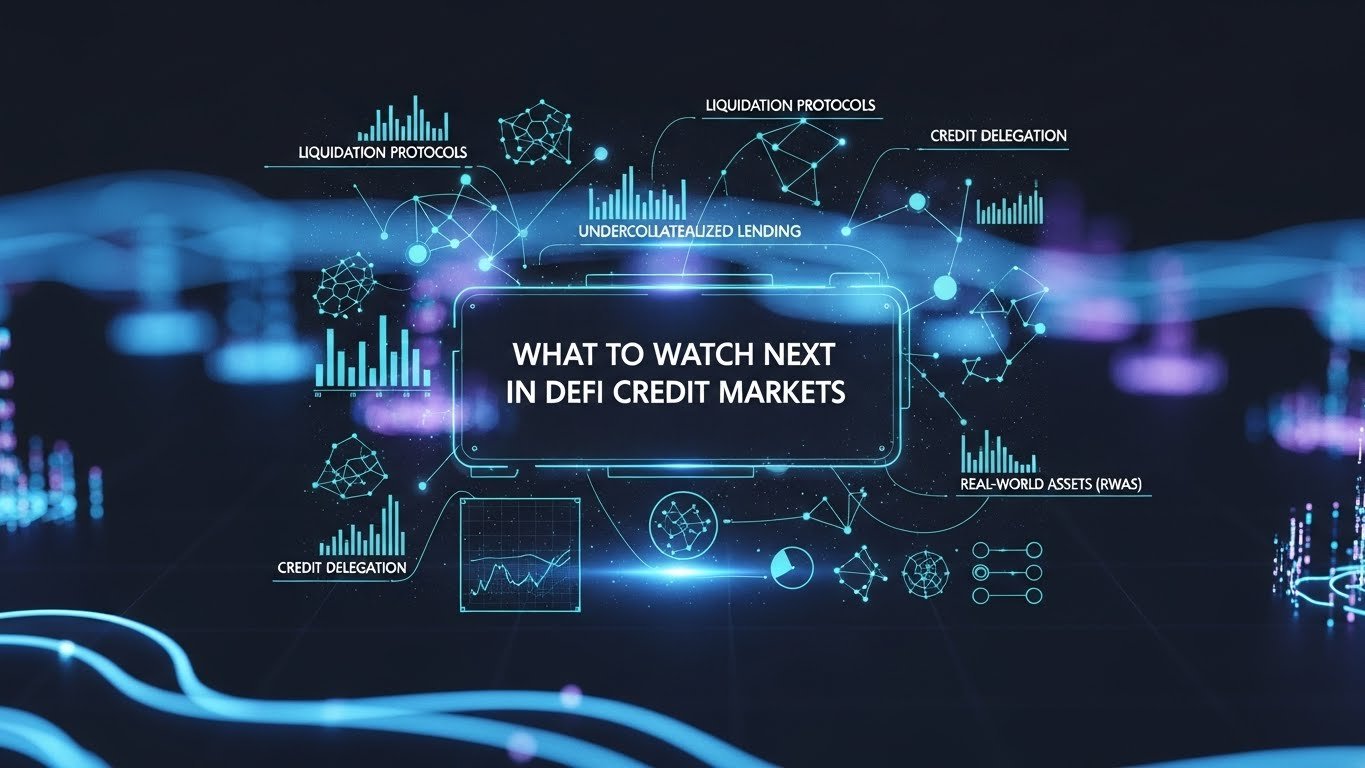
If you’re trying to judge whether DeFi credit markets will keep stabilizing, focus on indicators that reflect system health rather than hype.
Borrow Utilization and Rate Behavior
Healthy utilization suggests organic demand. Watch whether borrow rates move in a way that aligns with utilization and market conditions, rather than being artificially held up by incentives.
Liquidation Quality
Liquidations are inevitable in on-chain lending, but the quality matters. Efficient liquidation design reduces bad debt and slippage. A stabilizing environment often shows fewer cascading events and more orderly liquidation outcomes.
Collateral Composition and Concentration
Stability improves when collateral is diversified and not overly concentrated in the most volatile assets. Concentration risk can make DeFi credit markets fragile even if headline TVL looks strong.
Protocol Revenue Sustainability
Protocols that generate revenue from real borrowing demand tend to be more durable than those relying on emissions. A revenue profile that holds up across market regimes is a strong stabilization signal.
How Users Can Benefit From Stabilizing DeFi Credit Markets
Stabilization creates opportunities for both lenders and borrowers—especially those who prioritize longevity over quick wins.
For lenders, stabilizing DeFi credit markets can offer a more predictable experience. Instead of chasing unstable yields, lenders can focus on venues with strong risk management, conservative collateral policies, and transparent parameter updates. Returns may be lower than in peak mania, but consistency can be more valuable than sporadic spikes.
For borrowers, stabilization can mean more reliable liquidity and more rational borrowing costs. Borrowers who manage collateral carefully can use DeFi credit markets for strategic purposes: hedging exposure, smoothing cash flow, and accessing stablecoin liquidity without relying on centralized intermediaries.
For builders, a stabilizing cycle is often the best time to innovate. Product design improves when it’s not distorted by speculative excess. This is when better liquidation systems, improved interest rate curves, and more advanced credit underwriting experiments can move from theory into production.
Conclusion
After a prolonged slump, DeFi credit markets are showing meaningful signs of stabilization. The most important changes aren’t just higher activity numbers, but improved collateral discipline, more sustainable yield dynamics, and a stronger emphasis on risk management and resilient design. The growing influence of real-world assets (RWAs) and tokenized treasuries is also helping diversify yield sources and reduce dependence on purely reflexive leverage.
Stabilization doesn’t mean risk is gone. It means the ecosystem is learning—pricing risk more honestly, engineering around known failure modes, and building credit infrastructure that can survive volatility. If these trends continue, DeFi credit markets may be entering a healthier era where on-chain credit becomes less about short-term hype and more about long-term financial utility.
FAQs
Q: What does “stabilization” mean for DeFi credit markets?
Stabilization in DeFi credit markets means credit activity is returning with healthier risk behavior—stronger collateral buffers, more sustainable yields, and fewer disorderly liquidation cascades.
Q: Are DeFi credit markets mainly for traders?
No. While traders use DeFi credit markets for leverage and hedging, they’re also used for treasury liquidity, operational financing, and yield strategies built around on-chain lending.
Q: Why are RWAs important for DeFi credit markets?
Real-world assets (RWAs) can introduce yield tied to external cash flows, such as tokenized treasuries, which may reduce dependence on speculative leverage for returns in DeFi credit markets.
Q: What is the biggest risk in DeFi credit markets today?
Key risks include smart contract vulnerabilities, oracle security failures, stablecoin depegs, and correlated collateral crashes that can trigger rapid liquidations.
Q: How can I participate in DeFi credit markets more safely?
Use conservative leverage, maintain strong collateral buffers, favor protocols with transparent risk management, and prioritize assets with deep liquidity and robust pricing mechanisms.
Also More: Missed DeFi Boom? This $0.04 Crypto Could Outrun ADA
