


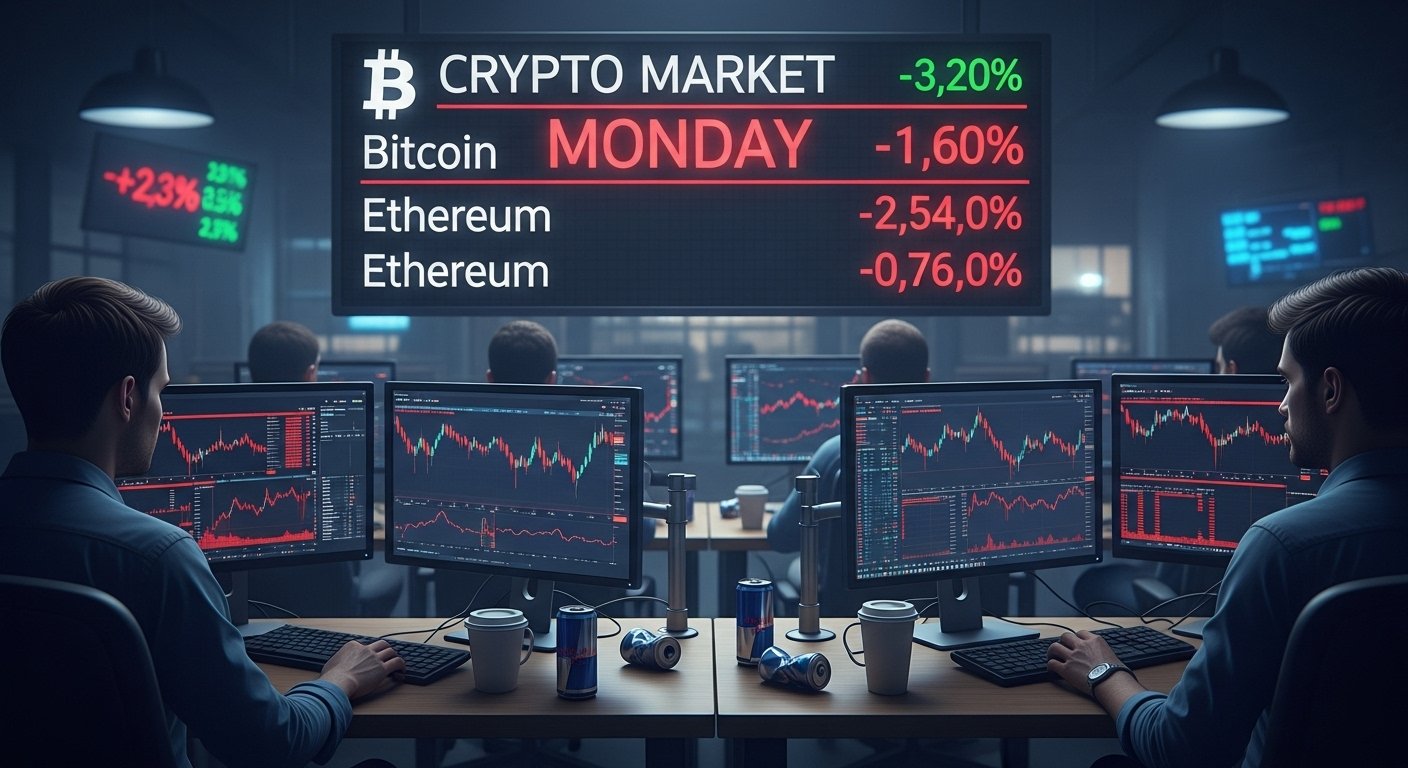
Crypto market is no stranger to political uncertainty, but a U.S. government shutdown often brings a unique mix of volatility, speculation, and emotional trading. When traditional markets pause or limit activity over the weekend, crypto continues to trade non-stop, absorbing sentiment that may not fully express itself elsewhere until Monday. This makes the first trading day after a shutdown especially critical for understanding short-term price direction and broader market psychology.
As traders prepare for Monday following a U.S. shutdown, questions naturally arise. Will the crypto market sell off due to rising uncertainty, or will digital assets benefit from a renewed “alternative store of value” narrative? Could Bitcoin outperform traditional markets, or will altcoins suffer the brunt of risk-off behavior? The answers depend on several interconnected factors, including liquidity, macro sentiment, leverage, and expectations around how long the shutdown may last.
This article explores how the crypto market could react on Monday after the U.S. shutdown, breaking down likely scenarios, asset-specific behavior, and the signals traders and investors should watch closely. Rather than focusing on speculation alone, we analyze how similar macro disruptions tend to influence crypto market dynamics and what makes this moment particularly important.
Why a U.S. Shutdown Matters to the Crypto Market
A U.S. government shutdown is more than a political event; it represents uncertainty in governance, fiscal stability, and institutional functionality. Markets generally dislike uncertainty, and the crypto market, despite its independence from traditional systems, is not immune to shifts in global risk sentiment.
Crypto assets are often categorized as high-risk investments. When investors grow uneasy about macroeconomic stability, they tend to reduce exposure to volatile assets first. This is why shutdown-related fear can pressure the crypto market, especially when combined with thin weekend liquidity and elevated leverage.

At the same time, a shutdown can also fuel narratives that benefit crypto. Bitcoin, in particular, is sometimes framed as a hedge against political dysfunction and centralized decision-making. These competing narratives—risk-off fear versus decentralized resilience—often collide on Monday when liquidity and participation increase.
The Importance of Monday in Crypto Trading
Even though the crypto market operates 24 hours a day, Monday remains a pivotal point in the weekly cycle. Institutional traders, hedge funds, and large market participants often reduce activity over the weekend. When they return on Monday, they reassess risk based on new information and rebalance positions accordingly.
This makes Monday the moment when weekend price action either gets confirmed or completely reversed. A U.S. shutdown adds fuel to this process, as traders respond not just to the fact of the shutdown but to political signals about its potential duration.
If the shutdown appears likely to end quickly, Monday could bring relief buying. If it looks drawn out or contentious, selling pressure may intensify. The crypto market’s reaction in the first few hours can shape sentiment for the entire week.
How the Crypto Market Could React on Monday
A Short-Term Risk-Off Sell-Off
One of the most common reactions to macro uncertainty is a quick sell-off. If traders wake up Monday to unresolved shutdown headlines and no clear political progress, the crypto market could experience a sharp drop, particularly in high-beta assets.
In this scenario, leveraged positions are often flushed out first. Liquidations accelerate downside momentum, creating rapid moves that feel dramatic but may be short-lived. Bitcoin typically holds up better than altcoins during these periods, acting as a relative safe zone within the crypto market. If selling pressure slows after the initial drop and buyers step in near key technical levels, it may signal that the market is pricing in only temporary disruption rather than systemic risk.
Volatility and Whipsaw Price Action
Another likely outcome is intense volatility without a clear trend. Shutdown-related news tends to evolve quickly, and conflicting statements from policymakers can trigger sudden reversals. This type of environment is difficult for traders because both bullish and bearish positions can be punished in quick succession. Sharp candles, long wicks, and erratic funding rates are common signs of this behavior.
When the crypto market behaves this way, it often means participants are reacting emotionally rather than strategically. Until a clearer narrative emerges, price action may remain unstable.
A Relief Rally if Resolution Appears Likely
If Monday brings strong signals that the shutdown will end soon, the crypto market could respond positively. Relief rallies are driven by short covering, renewed confidence, and improved liquidity conditions. Bitcoin often leads these rallies, followed by Ethereum and then altcoins. The speed at which capital rotates into riskier tokens can reveal how confident traders are in the broader recovery.
A relief rally does not necessarily mean the shutdown is bullish for crypto in the long term, but it does suggest that uncertainty was already priced in and is now being unwound.
Bitcoin Strength on Safe-Haven Narratives
In some cases, Bitcoin may strengthen even if the broader crypto market struggles. This usually happens when investors frame Bitcoin as a hedge against political instability and institutional failure. While Bitcoin is not a traditional safe haven like gold, perception matters in markets. If traders seek alternatives to government-linked systems, Bitcoin can benefit disproportionately.

When this occurs, the crypto market may become internally divided. Bitcoin holds firm, Ethereum remains stable, and altcoins underperform. This structure often reflects cautious optimism rather than outright risk-on behavior.
Key Factors Driving the Crypto Market Reaction
Liquidity and Leverage
Liquidity conditions play a crucial role in determining how violent Monday’s move may be. Thin liquidity exaggerates price swings, while deeper liquidity helps absorb shocks. Leverage is equally important. If funding rates were elevated going into the shutdown, the crypto market becomes more vulnerable to liquidation cascades. Once leverage is cleared, price action often stabilizes.
Macro Correlations
During periods of political stress, crypto tends to correlate more strongly with traditional risk assets. Movements in the U.S. dollar, bond yields, and equity futures can influence crypto market sentiment. If the shutdown strengthens the dollar and pushes yields higher, crypto may face headwinds. If it weakens confidence in centralized systems and eases financial conditions, crypto could benefit.
Regulatory Uncertainty
A shutdown can slow regulatory processes and increase ambiguity around enforcement and policy decisions. This can weigh on sentiment, especially for projects heavily tied to U.S. regulation. While this effect may not immediately move prices, it can reduce risk appetite over time and limit upside potential until clarity returns.
Asset-Specific Expectations
Bitcoin
Bitcoin is likely to remain the focal point of the crypto market reaction. Its relative stability, liquidity, and narrative strength make it the preferred asset during uncertainty. If Bitcoin holds key support levels on Monday, it may signal resilience and encourage broader market stabilization. If it breaks down decisively, sentiment could deteriorate quickly.
Ethereum
Ethereum typically shows higher volatility than Bitcoin in macro-driven events. DeFi exposure, staking dynamics, and derivatives activity can amplify moves. A stable Ethereum relative to Bitcoin suggests confidence in the crypto market. Sharp underperformance may indicate risk aversion and capital rotation into Bitcoin.
Altcoins
Altcoins are usually the most sensitive to shutdown-driven fear. Smaller market caps, thinner liquidity, and speculative positioning make them vulnerable during uncertainty. If altcoins collapse while Bitcoin remains stable, it suggests selective risk reduction rather than systemic panic. If everything sells off together, the crypto market may be entering a broader risk-off phase.
How to Interpret the First Few Hours of Trading
The opening hours of Monday often provide the clearest signals. Traders should focus less on price alone and more on how price behaves. A fast drop followed by consolidation may indicate exhaustion selling. A slow grind lower with increasing volume may signal deeper fear. Strong rebounds with expanding volume often confirm relief-driven buying. Market breadth is also critical. Healthy markets show differentiation, while stressed markets move in unison.
What a Prolonged Shutdown Could Mean for Crypto
If the shutdown extends beyond a few days, the crypto market may need to reprice expectations. Prolonged political dysfunction can dampen risk appetite and increase volatility. However, longer shutdowns can also strengthen decentralized narratives over time. As confidence in traditional systems erodes, interest in alternative financial structures can grow. Whether this benefits crypto prices depends on broader liquidity conditions and global economic trends. Crypto does not exist in isolation, even if its ideology suggests independence.
Conclusion
The crypto market could react on Monday after the U.S. shutdown in several ways, ranging from sharp sell-offs to volatile consolidation or even relief-driven rallies. The outcome will depend largely on political signals, liquidity conditions, and trader positioning rather than the shutdown itself. Bitcoin is likely to remain the anchor asset, with Ethereum and altcoins reflecting broader risk sentiment. The most important takeaway is not to overreact to the first move, but to observe how the market digests information over time. Monday will set the tone, but the crypto market’s true direction will depend on whether uncertainty fades or intensifies in the days that follow.
FAQs
Q: Will the crypto market crash after a U.S. shutdown?
A shutdown increases volatility, but it does not guarantee a crash. The crypto market often reacts emotionally at first and then stabilizes once uncertainty is better understood.
Q: Is Bitcoin a hedge against political instability?
Bitcoin is sometimes viewed as a hedge against centralized systems, but it remains volatile. Its performance depends on broader market conditions and investor perception.
Q: Why is Monday so important for crypto markets?
Monday brings higher liquidity and institutional participation, which often confirms or reverses weekend price action.
Q: How does a shutdown affect altcoins?
Altcoins are generally more sensitive to uncertainty and may underperform during shutdown-driven risk-off periods.
Q: What should traders watch most closely?
Watch volume, leverage liquidations, and how Bitcoin performs relative to the rest of the crypto market. These signals often matter more than headlines alone.
See More: Altseason in Sight? Key Patterns Signal an Altcoin Run
