


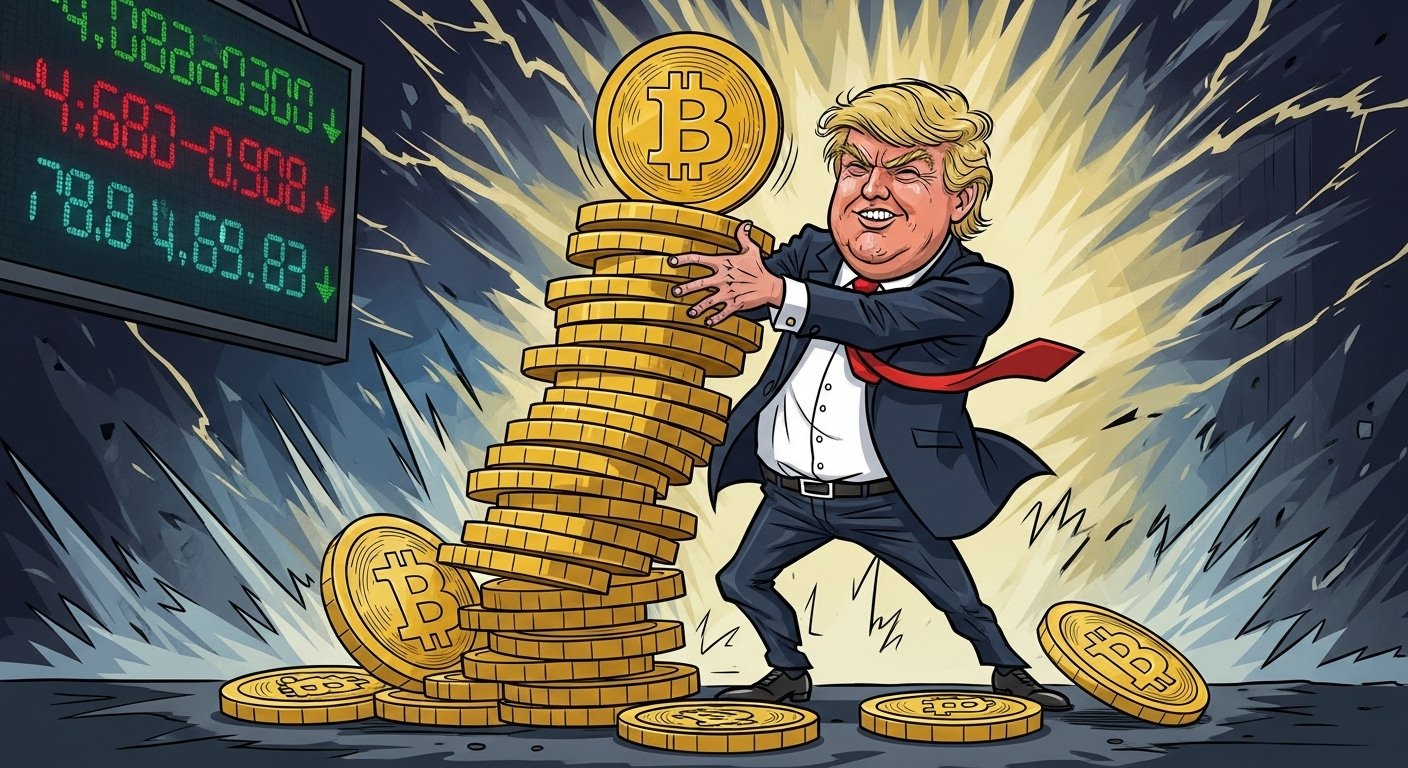
Bitcoin rarely needs a “crypto-only” reason to swing. In today’s hyper-connected markets, a political headline can ripple through currencies, commodities, equities, and—within minutes—into the crypto market. That’s why the phrase Bitcoin unstable as Trump tries for Greenland has caught attention: it captures a moment where geopolitics, risk appetite, and digital assets collide in real time. One minute traders are focused on inflation expectations and interest-rate paths; the next, a territorial ambition and an Arctic power play becomes the dominant narrative. When uncertainty spikes, Bitcoin often turns unstable because it sits at the intersection of speculation, liquidity, and global sentiment.
The idea of U.S. interest in Greenland is not simply a quirky talking point. Greenland carries strategic significance in the Arctic, where shipping lanes, military posture, and resource access are increasingly important. When a major political figure pushes a controversial initiative—especially one that strains diplomatic relationships—markets start pricing in broader consequences: trade friction, alliance tension, policy shocks, and heightened uncertainty. Those consequences influence how investors allocate capital across risky assets, and Bitcoin—highly liquid, globally traded, and open 24/7—becomes one of the fastest-moving barometers.
This article explains why Bitcoin unstable as Trump tries for Greenland resonates with traders and investors, how geopolitical headlines translate into Bitcoin volatility, and what the broader macro backdrop means for price action. You’ll also see how to interpret these swings without getting trapped by overreaction or narrative whiplash. Throughout, we’ll naturally incorporate related phrases like crypto market volatility, geopolitical uncertainty, risk-on sentiment, risk-off flows, digital gold, and safe-haven narrative, while keeping the discussion smooth, human, and grounded.
Understanding the Headline: Why Bitcoin Turns Unstable
When people see “Bitcoin unstable,” they often assume something broke inside crypto. In reality, the most common driver is not a technical issue; it’s changing expectations about the world. Bitcoin behaves like a global liquidity asset—it reacts quickly to shifts in confidence, fear, and perceived stability. A geopolitical storyline, especially one involving U.S. foreign policy and strategic territories, can push markets into a more cautious posture almost instantly.
The phrase Bitcoin unstable as Trump tries for Greenland signals that investors are paying attention to political uncertainty as a market force. Whether the outcome is realistic is less important than the market’s perception of risk. If traders believe diplomatic friction could escalate or trigger economic responses, they start adjusting exposure. That adjustment can create short-term turbulence: faster selling, sharper rebounds, and bigger intraday ranges.

A key point is that Bitcoin trades continuously. Traditional markets have closing bells and weekend pauses, but Bitcoin never sleeps. That constant access means political news—late-night statements, sudden press coverage, unexpected diplomatic reactions—can spark immediate price movement. As a result, Bitcoin can look unstable even when other markets are still waiting to open.
Greenland as a Symbol of Arctic Power and Market Anxiety
Greenland is often discussed as a strategic asset in Arctic geopolitics. The Arctic is increasingly relevant for security, resource development, and shipping routes. When a high-profile political figure is framed as “trying for Greenland,” markets read it as more than a real estate fantasy; they read it as a signal of assertiveness and potential friction with allies.
This matters because markets do not like surprises. Surprise is the raw material of volatility. When a geopolitical storyline introduces uncertainty—particularly around alliances, military posture, or economic policy—volatility tends to rise across risk assets. Bitcoin, being highly responsive and widely traded, often becomes unstable as traders reposition.
From Curiosity to Catalyst: How Narratives Move Price
Narratives move markets because they change behavior. A headline can attract new attention, and attention can increase trading volume. Higher volume can be healthy when it’s balanced, but during uncertainty it often comes with leverage shifts and emotional decisions. In crypto, leverage is common. When Bitcoin becomes unstable, liquidation cascades can exaggerate moves, creating those dramatic red candles and sudden V-shaped recoveries.
That doesn’t mean the narrative is “true” in a literal sense; it means the narrative is powerful enough to change positioning. In the short run, positioning is price.
How Geopolitical Uncertainty Translates Into Bitcoin Volatility
To understand why Bitcoin unstable becomes a headline so quickly, it helps to look at the transmission mechanism. Geopolitical developments rarely impact Bitcoin through a single direct channel. Instead, they shape global sentiment, and sentiment shapes capital flows.
When geopolitics heats up, investors may reduce risk. That shift can appear as selling in speculative assets, tightening of credit conditions, and stronger demand for cash or short-term safe instruments. In crypto, it can trigger a wave of de-leveraging that pushes Bitcoin down quickly. But geopolitics can also create the opposite response: renewed interest in Bitcoin as a non-sovereign asset and censorship-resistant store of value. The tug-of-war between these interpretations makes Bitcoin unstable.
Risk-Off Flows and the De-Leveraging Effect
“Risk-off” describes moments when investors prefer safety over return. During risk-off episodes, traders often close leveraged positions. In Bitcoin markets, that can be amplified by perpetual futures and high leverage. If Bitcoin price starts slipping, liquidations can accelerate the decline. That’s one reason Bitcoin can look unstable during headline-driven periods.
But it doesn’t stop there. After de-leveraging, the market can rebound sharply because the forced selling ends. When sellers are exhausted, even modest buying can push price up quickly. The same mechanics that create violent drops can also create sudden recoveries, feeding the sense that Bitcoin is unstable.
The Safe-Haven Narrative vs. High-Beta Reality
Bitcoin has two personalities in market conversation. One is digital gold, a hedge against long-term instability. The other is a high-beta speculative asset that rises when liquidity is abundant and falls when liquidity tightens.
Geopolitical stress can activate either personality depending on what investors fear most. If the fear is systemic instability or long-term distrust in institutions, some investors rotate into Bitcoin. If the fear is immediate market turbulence and tighter financial conditions, they sell Bitcoin first. That shifting identity is why Bitcoin becomes unstable in politically charged moments: the market can’t agree on what Bitcoin represents, so price swings become the debate.
Why the Macro Backdrop Makes Bitcoin More Sensitive
Even dramatic geopolitical news doesn’t operate in isolation. Bitcoin’s biggest moves often happen when geopolitics collides with macroeconomic uncertainty. If markets are already tense about inflation, economic growth, or interest rates, then a political shock can push traders over the edge.
In periods when rate expectations are shifting, Bitcoin becomes unstable more easily because liquidity is uncertain. Bitcoin is deeply sensitive to liquidity conditions. When liquidity is plentiful, Bitcoin tends to trend higher. When liquidity tightens, Bitcoin often struggles. If the Greenland storyline adds another layer of uncertainty to an already fragile macro environment, volatility can rise quickly.
Interest Rates, Liquidity, and the “Everything Asset” Effect
Bitcoin increasingly trades like an “everything asset,” reacting to multiple inputs: rates, the dollar, risk sentiment, and geopolitical headlines. When interest rates are expected to stay high or rise, investors may reduce exposure to speculative assets. That can pressure Bitcoin. If geopolitical stress strengthens the dollar or increases demand for traditional safe havens, Bitcoin can face additional headwinds.
At the same time, the long-term narrative can remain bullish even during short-term weakness. Many investors see Bitcoin as a hedge against monetary expansion over the long run. The market’s short-term behavior, however, can be dominated by positioning and liquidity. That mismatch between long-term thesis and short-term trading is exactly why Bitcoin can look unstable.
Crypto Market Structure Amplifies Headlines
Bitcoin’s market structure is unique. It trades around the clock, across many venues, with a heavy derivatives footprint. During uncertain news cycles, thin liquidity periods—late nights, weekends, and early mornings—can magnify price moves. A relatively small amount of market buying or selling can produce a larger-than-expected price swing.
That structure means a headline like Bitcoin unstable as Trump tries for Greenland can become self-reinforcing. Volatility attracts attention, attention attracts trading, trading increases volatility. This loop can continue until a new narrative replaces the old one or traders reach a consensus direction.
What Trump’s Greenland Push Signals to Markets
Markets don’t just react to events; they react to signals about future policy behavior. A renewed Greenland push signals assertiveness and potential diplomatic strain, which can translate into uncertainty around trade policy, alliance relationships, and geopolitical positioning.
Even if the idea doesn’t materialize into a tangible outcome, the signaling effect can still be meaningful. Traders price probability distributions, not certainties. If the distribution of possible outcomes becomes wider—more unexpected moves, more conflict scenarios—markets demand a higher risk premium. A higher risk premium often means more volatility.
Alliance Tension and the Uncertainty Premium
Alliance relationships influence global stability. When investors sense strain between allies, they worry about coordination on trade, security, and economic policy. Those worries can show up in currency markets, commodities, and risk assets. Bitcoin can become unstable because it’s a quick vehicle for expressing macro fear or macro optimism.
This doesn’t mean Bitcoin is “caused” by politics. It means Bitcoin is a liquid instrument through which global sentiment is expressed. In that sense, Bitcoin volatility can be a reflection of the market’s anxiety rather than a reflection of crypto fundamentals.
Trade Friction, Tariff Talk, and Policy Shocks
One of the fastest ways politics hits markets is through trade policy. Even the possibility of tariffs, sanctions, or retaliatory economic measures can push investors into caution. If traders believe political tension could spill into economic pressure, they may reduce exposure to high-volatility assets. That can make Bitcoin unstable quickly.
What matters most in the short run is not whether policy shocks occur, but whether investors believe they might. The market is always pricing a future that hasn’t happened yet.
How Long Could Bitcoin Stay Unstable?
Bitcoin can stay unstable as long as uncertainty remains elevated and traders remain reactive. Some volatility bursts fade within days, especially if news flow slows and the market becomes desensitized. Other times volatility persists if headlines keep coming or if macro events overlap with geopolitical stress.
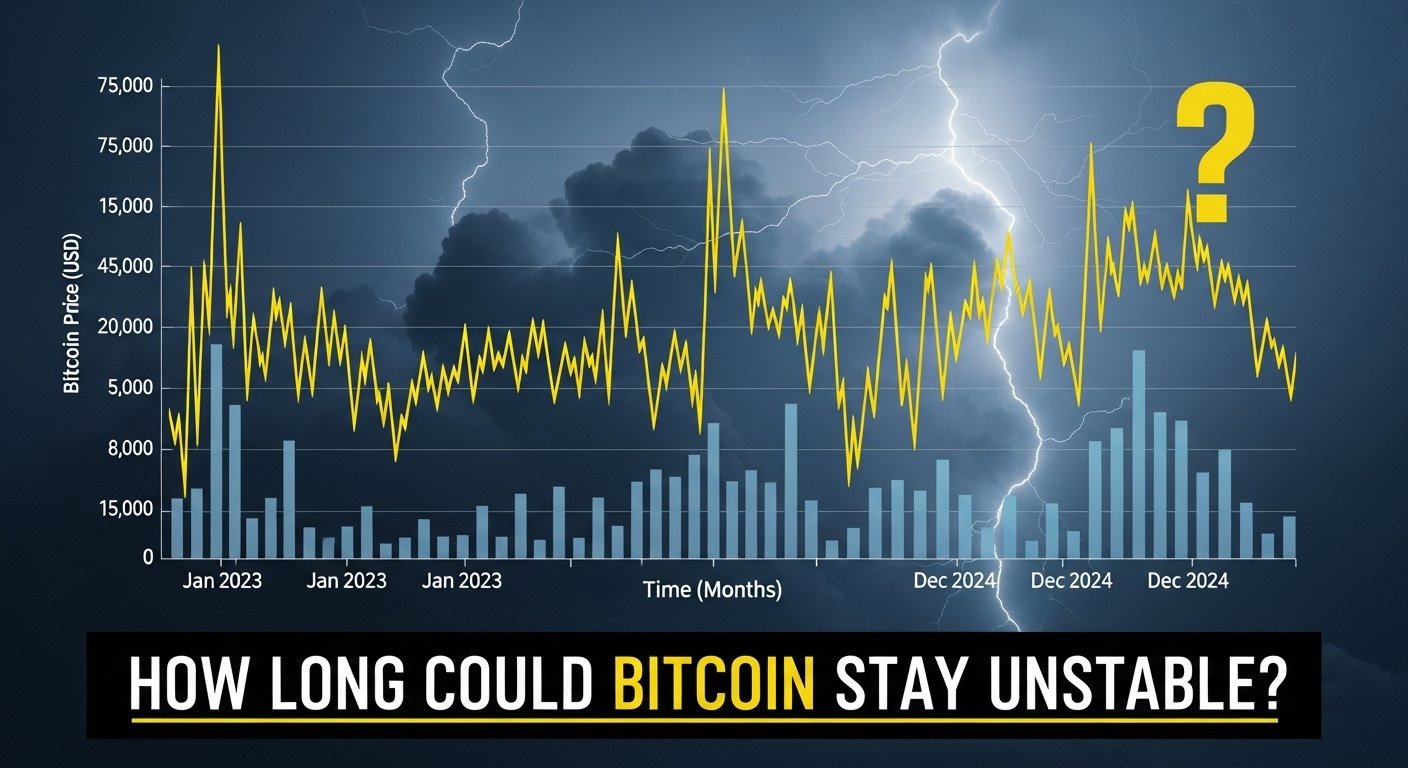
In many cases, Bitcoin volatility has a “memory” effect. After a sharp move, traders adjust behavior. They reduce leverage, tighten risk limits, and trade more defensively. That can keep Bitcoin unstable for longer because the market becomes jumpier and more prone to quick reversals.
Volatility Regimes and Market Fatigue
Markets move in regimes. In calm regimes, trends are smoother and pullbacks are smaller. In unstable regimes, swings are wider and fakeouts are common. A geopolitical storyline can push Bitcoin into an unstable regime by increasing uncertainty and encouraging short-term trading.
Eventually, fatigue can set in. When the market gets tired of reacting, volatility can compress. But fatigue doesn’t always mean stability; it can also mean sudden bursts when a new headline re-energizes the narrative. That’s why Bitcoin can alternate between quiet periods and sharp spikes.
The Catalyst Stack: When Data and Politics Collide
Bitcoin is most unstable when multiple catalysts arrive at once. If political headlines land near major economic data releases or central bank commentary, traders can become more aggressive. They don’t know which factor will dominate, so they hedge quickly and often. That hedging can add to volatility.
When Bitcoin volatility rises, it’s helpful to zoom out. Often the market is not responding to one thing but to a stack of uncertainties: geopolitics, rates, growth, and sentiment all at once.
What This Means for Bitcoin Investors
Investors and traders should approach “Bitcoin unstable” moments with clarity about time horizon. Short-term volatility can be noise for long-term investors, but it can also be a stress test for position sizing. If a portfolio can’t handle a major drawdown without panic selling, the position may be too large.
Long-term investors often benefit from focusing on fundamentals: adoption trends, network resilience, institutional participation, and the long-run monetary thesis. Those factors don’t change because of a headline. But price can still swing violently. The goal is to design an approach that survives volatility rather than trying to predict every move.
Long-Term Perspective: Thesis Over Headlines
If your thesis is that Bitcoin is a long-term store of value or a hedge against monetary debasement, short-term geopolitical headlines are unlikely to change the core argument. What headlines do change is market timing and volatility. Bitcoin can be unstable even in a long-term uptrend.
A stable plan—such as disciplined accumulation, periodic rebalancing, or holding through cycles—can reduce emotional decision-making. The biggest risk during unstable periods is not volatility itself; it’s abandoning a strategy at the worst moment.
Risk Management: The Difference Between Survival and Regret
For those actively trading, unstable markets demand humility. When Bitcoin becomes unstable, moves can exceed expectations. Stops can slip. Reversals can be fast. The priority shifts from maximizing profit to avoiding catastrophic loss.
A practical mindset is to treat unstable periods as high-risk environments. Smaller position sizes and tighter attention to market conditions can help. The goal is to remain in the game long enough to benefit from the next clearer trend.
What This Means for Short-Term Traders
Short-term traders thrive on volatility, but volatility can also trap them. When Bitcoin is unstable, it’s common to see sharp intraday spikes that reverse quickly. That environment rewards patience and punishes overconfidence.
Traders often underestimate how quickly the narrative can change. A market can shift from fear to relief in hours, especially if new statements calm the situation or if traders decide the initial reaction was overdone. In such conditions, flexibility is more valuable than being “right.”
Reading Sentiment Without Getting Whiplash
When headlines dominate, sentiment can swing rapidly. Social media and news cycles intensify emotional reactions, which can pull traders into impulsive entries. The better approach is to observe how price reacts after the initial surge. Does selling continue, or does it fade? Does buying persist, or does it evaporate?
Bitcoin instability often reflects uncertainty in conviction. When conviction is low, the market is more likely to chop.
Volatility as Information
High volatility can be informative. It suggests the market is re-evaluating risk and repricing probability distributions. Instead of trying to interpret every candle as a verdict, it can be more useful to treat volatility as a signal that the market is in discovery mode.
During discovery mode, it’s common for Bitcoin to overshoot and then mean-revert. That overshoot is not “irrational”; it’s the market testing boundaries under uncertainty.
The Bigger Picture: Bitcoin’s Growth Doesn’t Remove Volatility
Bitcoin has matured significantly compared to earlier years. Participation is broader, infrastructure is stronger, and Bitcoin is more integrated into global finance. But maturation doesn’t eliminate volatility. In some ways, it increases responsiveness because Bitcoin is now watched and traded like a macro asset.
That integration means Bitcoin can become unstable when the world becomes unstable. Geopolitics, policy uncertainty, and macro shifts all feed into the same pricing machine. The network itself remains steady—blocks keep coming, transactions keep clearing—but the price reflects human behavior in a world that feels increasingly unpredictable.
In that sense, the headline Bitcoin unstable as Trump tries for Greenland is a snapshot of a broader reality: Bitcoin is a global asset, and global assets absorb global anxiety.
Conclusion
Bitcoin unstable as Trump tries for Greenland isn’t just a catchy phrase—it highlights how modern crypto markets respond to geopolitical narratives. Greenland-related tension can raise the uncertainty premium, trigger risk-off flows, and intensify de-leveraging, making Bitcoin unstable in the short run. At the same time, the same uncertainty can strengthen Bitcoin’s long-term appeal as a non-sovereign asset and a form of digital scarcity.
For investors, the key is matching strategy to time horizon and ensuring position sizing can survive volatility. For traders, the key is respecting headline risk, staying flexible, and focusing on risk management. Bitcoin volatility is not a flaw in the protocol; it’s the market translating uncertainty into price in real time. When geopolitics heats up, Bitcoin often turns unstable—because it’s liquid, global, and always open.
FAQs
Q: Why does Bitcoin become unstable during geopolitical headlines?
Bitcoin becomes unstable because geopolitical uncertainty changes risk appetite. Traders reduce leverage, shift exposure, and react quickly to perceived policy shocks, which increases volatility.
Q: Is Greenland really important for the Bitcoin market?
Greenland matters less for Bitcoin’s technology and more for what the story signals: diplomatic tension and uncertainty. Markets price uncertainty, and Bitcoin often reflects that pricing quickly.
Q: Does Bitcoin act like digital gold in political crises?
Sometimes. Bitcoin can behave like digital gold when investors focus on long-term instability. But it can also trade like a high-beta risk asset during short-term risk-off episodes, which is why it can look unstable.
Q: How can investors handle Bitcoin volatility when headlines drive moves?
Investors can handle volatility by aligning position size with risk tolerance and sticking to a disciplined plan. Volatility is easier to endure when the strategy is designed for it.
Q: Will Bitcoin stay unstable as long as the Greenland story continues?
Bitcoin may remain unstable as long as uncertainty persists and traders keep repricing risk. If headlines slow and markets regain confidence, volatility can compress, but sudden spikes can still occur if new catalysts appear.
See More: Bitcoin Digital Gold Narrative Shaken by Greenland Tensions
