


Bitcoin has entered a period of hesitation, and the timing is no coincidence. After sliding in the aftermath of the latest Federal Open Market Committee meeting, Bitcoin stalls after post-FOMC slide as inflation data looms over December, according to analysts watching both crypto markets and macroeconomic signals. Instead of a sharp rebound or a deeper sell-off, price action has flattened, suggesting traders are waiting for clarity before making their next big move.
This kind of pause is common when monetary policy uncertainty meets a high-volatility asset like Bitcoin. The FOMC meeting reset expectations around interest rates, liquidity, and the pace of potential cuts in 2026. While the decision itself may have been largely expected, the tone of the Fed’s messaging forced markets to reassess risk. Bitcoin reacted first with a pullback, then with something more subtle: indecision.
Now, attention has shifted to upcoming inflation data, which could determine whether Bitcoin finds support, resumes its broader uptrend, or faces renewed pressure. For traders and long-term investors alike, this moment matters. Bitcoin does not trade in isolation. It trades at the intersection of crypto-specific narratives and global macro forces, and December’s inflation prints sit right at that crossroads.
This article explains why Bitcoin stalled after the post-FOMC slide, how inflation expectations are shaping December sentiment, what analysts are watching in price structure and on-chain behavior, and how this pause fits into the larger crypto market cycle. The goal is clarity, not hype, so you can understand what’s happening and why it matters.
What Happened After the FOMC Meeting
The most recent FOMC meeting delivered a message that markets interpreted as cautious rather than aggressively dovish. While the Fed did not dramatically change rates, its language around inflation progress and future policy paths reminded investors that cuts are not guaranteed on a fixed timeline. For risk assets, that reminder matters.
Bitcoin reacted the way it often does when liquidity expectations tighten. It sold off quickly after the meeting, reflecting reduced enthusiasm for speculative positions. This post-FOMC slide was not unique to crypto. Equities and other risk-sensitive assets also showed signs of pressure as traders recalibrated expectations.
What stands out, however, is what happened next. Instead of continuing to fall, Bitcoin began to move sideways. That stalling behavior is what analysts are now focused on. It suggests the market is not panicking, but it is also not confident enough to push higher without more information.
Why Bitcoin Is Stalling Instead of Bouncing
When analysts say Bitcoin stalls after post-FOMC slide as inflation data looms over December, they are pointing to a balance of forces rather than a single trigger. On one side, there is still underlying demand for Bitcoin, driven by long-term adoption narratives, institutional interest, and limited supply dynamics. On the other side, there is macro uncertainty that discourages aggressive buying.
In practical terms, this means buyers and sellers are temporarily evenly matched. Short-term traders who wanted to sell after the Fed have largely done so. Long-term holders are not rushing to exit based on one policy meeting. As a result, price compresses.
This type of consolidation often reflects caution rather than weakness. Markets tend to pause when a major data release is approaching, especially one as influential as inflation numbers. Traders prefer to wait rather than place large bets just before a potential volatility event.
The Role of Inflation Data in December
Inflation data has become one of the most important drivers of global markets, and Bitcoin is no exception. December inflation prints will influence expectations about whether the Fed can ease policy in the coming months or whether it must remain restrictive for longer.
If inflation shows continued cooling, markets may interpret that as supportive for risk assets. In that scenario, Bitcoin could benefit from renewed optimism around future liquidity conditions. If inflation surprises to the upside, however, it could reinforce the idea that rates will stay higher for longer, which typically pressures assets like Bitcoin.
This is why inflation data looms over December so heavily. Bitcoin’s current stalling pattern reflects uncertainty about which direction this data will push sentiment. Until those numbers are released and digested, many participants prefer to stay on the sidelines.
How Macroeconomic Expectations Shape Bitcoin Price Action
Bitcoin is often described as an alternative asset or a hedge, but in recent years it has traded more like a high-beta risk asset during periods of macro stress. That means it tends to amplify broader market moves rather than ignore them.
After the FOMC meeting, expectations around interest rates shifted slightly toward caution. That shift reduced risk appetite, and Bitcoin responded accordingly. Now, inflation expectations are the next variable. If markets believe inflation is under control, they may feel more comfortable taking risk again. If not, caution could persist.
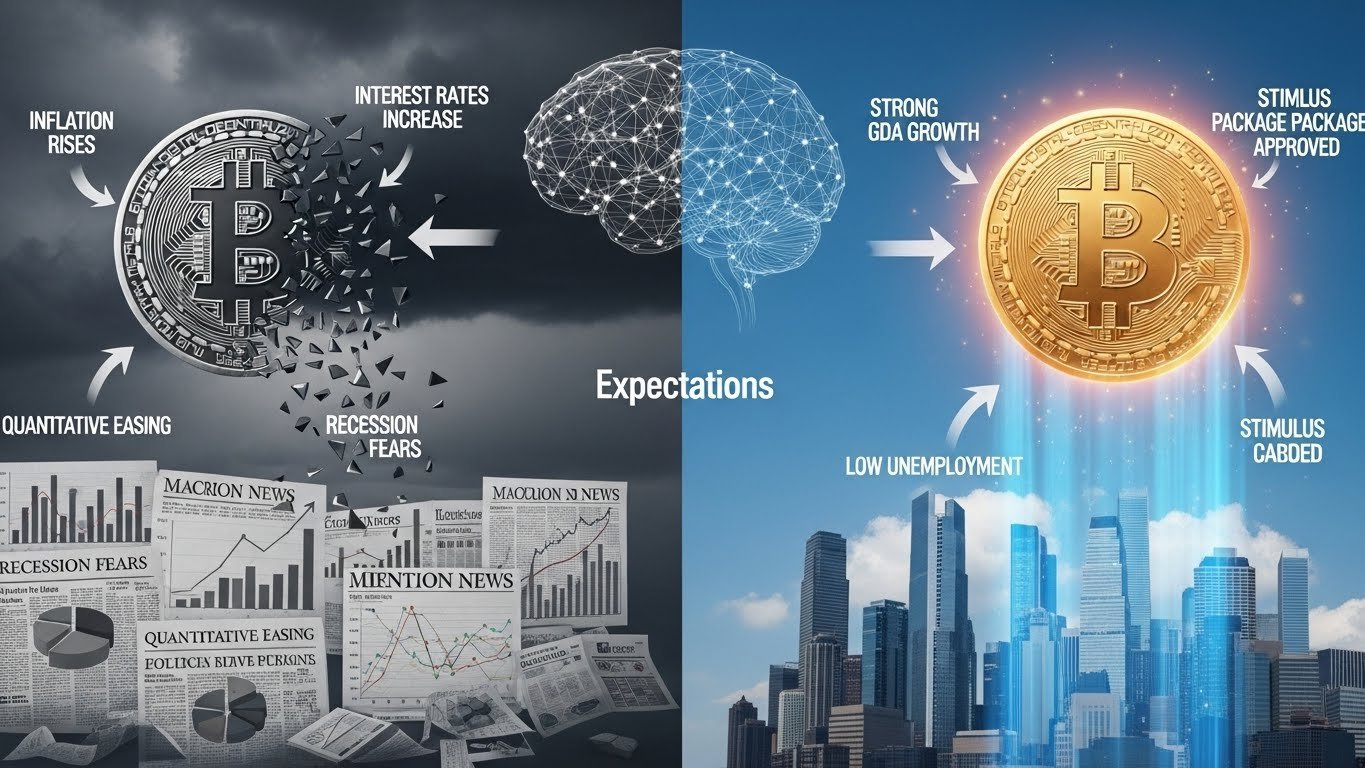
Analysts watching Bitcoin emphasize that this does not invalidate the long-term thesis. Instead, it highlights how short-term price action is often dominated by macro narratives, even for assets with strong independent fundamentals.
Technical Perspective: What the Charts Are Saying
From a technical standpoint, Bitcoin’s stalling behavior after the post-FOMC slide appears as a consolidation range. Price is moving within a relatively narrow band, with neither bulls nor bears able to assert control.
Analysts often view this kind of structure as neutral. It can resolve in either direction, depending on what catalyst arrives next. In this case, the likely catalyst is inflation data. A decisive move above resistance could signal renewed bullish momentum. A break below support could indicate that sellers have regained control.
What matters most is not the exact level, but the context. Bitcoin is consolidating after a pullback, not after a parabolic rise. That distinction suggests the market is digesting information rather than exhausting itself.
Volume and Volatility Trends
One notable feature of this stall is reduced volatility. Trading volumes have cooled compared to the immediate post-FOMC reaction. This often happens when traders wait for confirmation before acting.
Lower volatility is not inherently bearish. In many cases, it precedes a larger move. Analysts watching these patterns are less concerned about the stall itself and more focused on what breaks the stalemate.
Support and Resistance in a Waiting Market
In a stalling market, support and resistance levels gain importance. Buyers tend to step in near perceived value zones, while sellers emerge near recent highs. These zones act like pressure points.
If inflation data supports a risk-on narrative, resistance may give way. If it reinforces caution, support could be tested. Either way, the current range reflects a market preparing for new information.
On-Chain Signals During the Stall
On-chain data provides another lens through which analysts assess Bitcoin’s stalling phase. Metrics related to long-term holders suggest that many are not distributing aggressively. This aligns with the idea that the sell-off was driven more by short-term positioning than by a loss of conviction.
Exchange balances have not shown dramatic spikes, indicating that holders are not rushing to move coins to sell. This supports the view that the market is pausing rather than breaking down.
At the same time, new demand has slowed, which is typical during periods of macro uncertainty. On-chain activity often mirrors sentiment, and right now sentiment is cautious but not fearful.
Institutional Perspective: Why Big Players Are Waiting
Institutional investors tend to be especially sensitive to macro data. For them, inflation numbers and Fed guidance directly affect portfolio construction decisions. When analysts say Bitcoin stalls after post-FOMC slide as inflation data looms over December, this institutional hesitation is a big part of the story.
Large players often reduce activity ahead of key data releases to avoid unnecessary volatility. They prefer to react once the data is out and the market’s interpretation becomes clearer. This can drain liquidity temporarily, contributing to sideways price action.
From this perspective, the stall is less about weakness and more about discipline. Institutions are waiting for confirmation before committing capital.
How This Fits Into the Broader Crypto Market
Bitcoin’s stalling behavior has implications for the broader crypto market. Altcoins often take their cue from Bitcoin. When Bitcoin is uncertain, altcoins typically struggle to find sustained momentum.
However, this does not mean the entire market is frozen. Some sectors may still see selective interest, especially where project-specific developments or narratives are in play. But broad-based rallies usually require Bitcoin to lead with conviction.
Analysts watching the market emphasize that Bitcoin’s role as a bellwether remains intact. Once Bitcoin resolves its current range, the rest of the market is likely to follow.
December Seasonality and Market Psychology
December is an interesting month for financial markets. On one hand, there is often reduced liquidity due to holidays. On the other, there can be bursts of volatility as traders reposition for the new year.
This seasonal dynamic adds another layer to why Bitcoin stalls after post-FOMC slide as inflation data looms over December. With fewer participants active, price moves can be exaggerated, but conviction can also be lower.
Market psychology during this period tends to be cautious. Many investors prefer to wait until January, when new capital allocations and clearer macro signals emerge. That mindset reinforces the current pause.
What Analysts Are Watching Next
Analysts are focused on three main factors as December unfolds. The first is inflation data and how it compares to expectations. The second is how Bitcoin reacts immediately after that data is released. The third is whether volume returns alongside any directional move.
A strong reaction with high volume would suggest conviction. A muted reaction could mean the market needs additional catalysts. Either way, the current stall is seen as a setup rather than an endpoint.
Importantly, analysts caution against overreacting to short-term moves. Bitcoin has a history of consolidating after macro shocks before resuming longer-term trends.
Risk and Opportunity in a Stalling Market
For traders, a stalling market can feel frustrating. Opportunities seem limited, and false breakouts are common. For longer-term investors, however, these periods can offer chances to reassess strategy without emotional pressure.
Risk remains present, especially if inflation data surprises negatively. But opportunity also exists if the market has already priced in much of the bad news. Understanding this balance is key to navigating December.
The central idea is patience. Bitcoin stalling does not mean Bitcoin failing. It means the market is waiting.
Conclusion
Bitcoin stalls after post-FOMC slide as inflation data looms over December, and that stall tells a story of uncertainty rather than collapse. The Fed’s messaging reminded markets that liquidity is not guaranteed, prompting an initial sell-off. Since then, Bitcoin has entered a holding pattern as traders and institutions wait for inflation data to clarify the path forward.
This pause reflects a market weighing competing narratives: long-term confidence in Bitcoin versus short-term macro risk. The resolution will likely come from inflation numbers and how they shape expectations for monetary policy in the months ahead.
Until then, Bitcoin’s sideways movement is not a sign of weakness, but a sign of a market gathering information. In crypto, those pauses often matter just as much as the moves that follow.
FAQs
Q: Why did Bitcoin fall after the FOMC meeting?
Bitcoin fell because the Fed’s cautious tone reduced risk appetite, leading traders to trim speculative positions.
Q: Why is Bitcoin stalling now instead of continuing to fall?
The market is waiting for key inflation data. Buyers and sellers are balanced, leading to sideways price action.
Q: How important is December inflation data for Bitcoin?
Inflation data influences expectations about future interest rates, which directly affects risk assets like Bitcoin.
Q: Does this stall mean the bull market is over?
Not necessarily. Stalling often happens during consolidation phases and does not automatically signal a trend reversal.
Q: What should investors watch next?
Investors should watch inflation data releases, Bitcoin’s reaction to that data, and whether trading volume confirms the next move.
See More: Standard Chartered Extends Bitcoin’s $500K Timeline
