


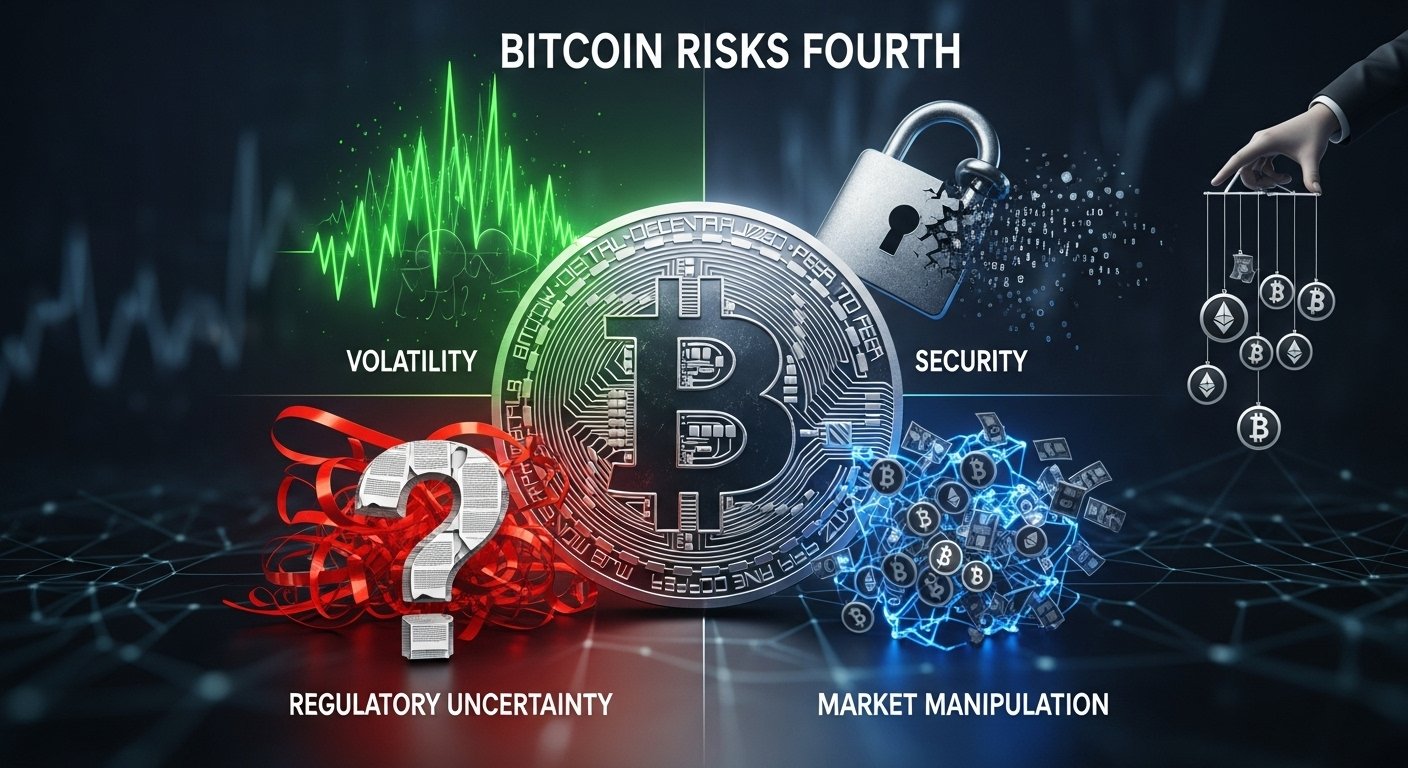
Bitcoin is once again facing a critical test of resilience. As global markets navigate economic uncertainty, tightening financial conditions, and shifting investor sentiment, Bitcoin risks fourth straight monthly loss, a scenario that has not occurred since the prolonged crypto winter of 2018. For long-term holders, traders, and newcomers alike, this moment feels uncomfortably familiar. Back-to-back declines are not unusual in volatile markets, but a four-month losing streak raises deeper questions about market structure, macroeconomic pressure, and the evolving role of Bitcoin in the global financial system.
The current downturn is not driven by a single event. Instead, it reflects a complex intersection of macroeconomic headwinds, regulatory pressure, reduced liquidity, and changing risk appetite across global markets. Unlike earlier cycles dominated by retail speculation, today’s Bitcoin market is increasingly influenced by institutional behavior, central bank policy, and correlations with traditional assets. This makes the current streak particularly significant, as it may signal a broader structural shift rather than a temporary correction.
In this article, we explore why Bitcoin risks fourth straight monthly loss, why this streak has not been seen since 2018, and what it could mean for the months ahead. We will examine historical context, market psychology, on-chain data, macroeconomic influences, and possible future scenarios, providing a comprehensive and human-centered analysis designed to help readers understand where Bitcoin stands today.
Understanding the historical context of Bitcoin’s losing streaks
The significance of 2018 in Bitcoin history
To understand why analysts are paying close attention as Bitcoin risks fourth straight monthly loss, it is essential to revisit 2018. That year marked the end of Bitcoin’s first mainstream speculative boom. After reaching nearly $20,000 in late 2017, Bitcoin entered a prolonged bear market that erased more than 80% of its value over the following year. The four-month losing streak in 2018 symbolized more than just price weakness; it represented the collapse of speculative excess and unrealistic expectations.
During that period, Bitcoin lacked the institutional infrastructure it has today. Futures markets were in their infancy, custody solutions were limited, and regulatory clarity was nearly nonexistent. As a result, price declines were amplified by fear, illiquidity, and a lack of long-term conviction among investors.
Today’s environment is very different, which makes the comparison both compelling and concerning. While Bitcoin has matured significantly, the fact that it risks replicating a pattern not seen since 2018 suggests that even a more developed market is not immune to sustained downside pressure.
How rare is a four-month losing streak for Bitcoin?
Historically, extended losing streaks in Bitcoin are relatively uncommon. Bitcoin’s long-term price action is characterized by sharp rallies followed by deep but often short-lived corrections. Monthly charts usually reflect strong rebounds after two or three consecutive declines. This is why the current situation stands out. If Bitcoin risks fourth straight monthly loss, it would place the asset in a rare statistical category that historically coincides with periods of deep uncertainty and market reset.
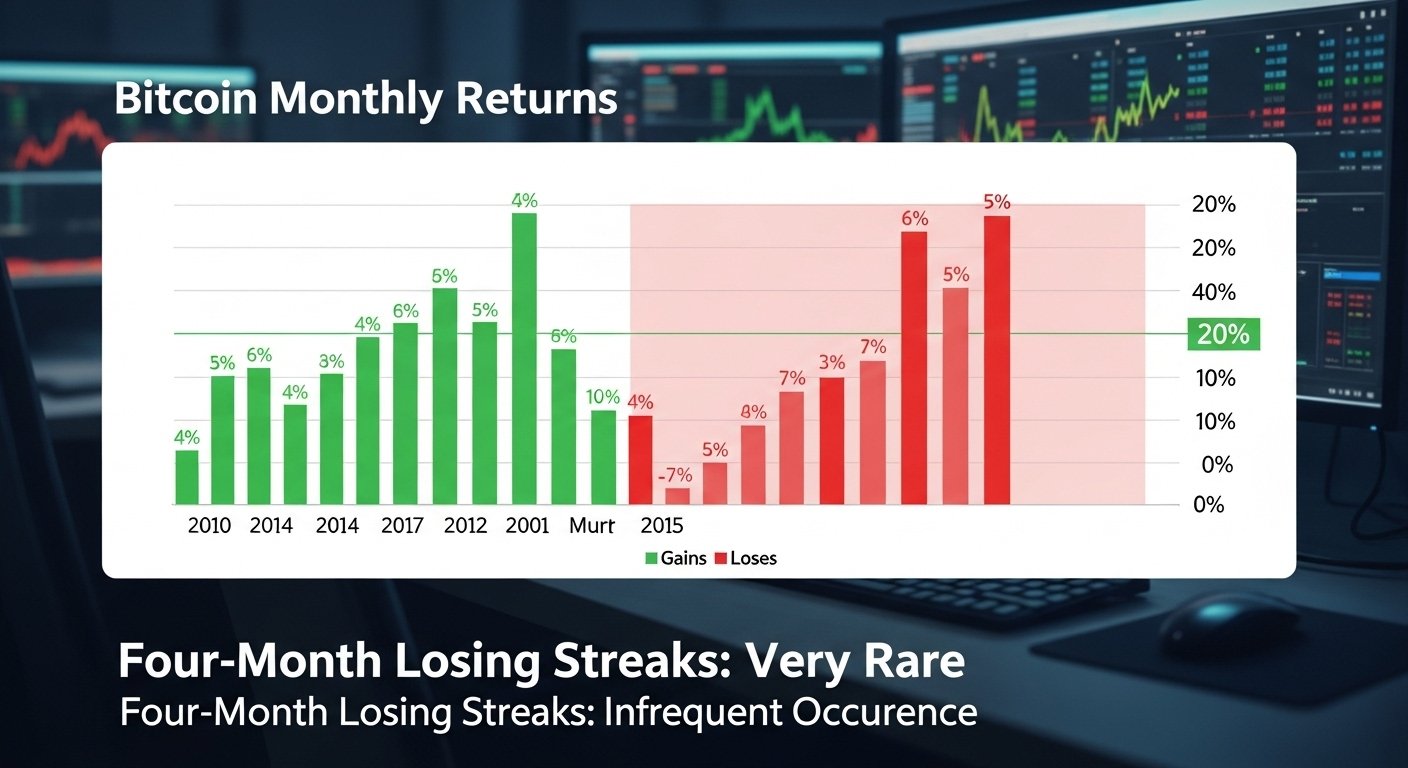
Such streaks often occur during transitions between market cycles, when bullish narratives lose momentum and new demand has yet to emerge. They tend to coincide with declining trading volumes, reduced retail participation, and cautious institutional positioning, all of which are visible in the current market structure.
Macroeconomic pressures weighing on Bitcoin
Interest rates and central bank policy
One of the most significant factors contributing to why Bitcoin risks fourth straight monthly loss is the global macroeconomic environment. Central banks, particularly the U.S. Federal Reserve, have maintained restrictive monetary policies to combat persistent inflation. Higher interest rates reduce liquidity and make risk-free assets such as government bonds more attractive relative to volatile investments like Bitcoin.
In previous cycles, Bitcoin thrived in low-interest-rate environments where excess liquidity flowed into speculative assets. Today, that tailwind has reversed. As borrowing costs remain elevated, speculative capital is more cautious, leading to reduced inflows into crypto markets. This shift has placed sustained downward pressure on Bitcoin prices over consecutive months.
Inflation, recession fears, and risk appetite
Although inflation has cooled from peak levels, it remains a key concern for global markets. At the same time, fears of economic slowdown or recession continue to influence investor behavior. In this environment, capital preservation often takes priority over growth, reducing demand for assets perceived as high risk.
Bitcoin’s narrative as a hedge against inflation has faced challenges during this period. While long-term believers still view Bitcoin as digital gold, short-term price action has shown increased correlation with risk assets like technology stocks. This correlation has weakened Bitcoin’s appeal as a safe haven, reinforcing the conditions under which Bitcoin risks fourth straight monthly loss.
Market sentiment and investor psychology
Fear, uncertainty, and the psychology of consecutive losses
Market psychology plays a powerful role in shaping price trends. When Bitcoin posts consecutive monthly losses, confidence erodes gradually. The first decline is often dismissed as a correction, the second as consolidation, and the third as cautionary. By the fourth, sentiment can shift decisively toward pessimism.
This psychological progression is critical in understanding why sustained losing streaks can become self-reinforcing. As Bitcoin risks fourth straight monthly loss, some investors choose to exit positions preemptively, fearing a deeper drawdown. This behavior reduces buying pressure and increases volatility, making it harder for the market to stabilize.
Institutional behavior and reduced speculative activity
Unlike earlier cycles dominated by retail traders, today’s Bitcoin market includes hedge funds, asset managers, and corporate participants. These players often operate under stricter risk management frameworks. When trends turn negative over multiple months, institutions may reduce exposure, rebalance portfolios, or hedge positions.
This shift in behavior can contribute to prolonged weakness. While institutional participation adds long-term legitimacy to Bitcoin, it can also lead to more disciplined selling during unfavorable conditions. As a result, the fact that Bitcoin risks fourth straight monthly loss reflects not only fear but also calculated decision-making by sophisticated market participants.
On-chain data and network fundamentals
What on-chain metrics reveal about the current downturn
Despite negative price action, on-chain data provides a more nuanced picture of Bitcoin’s health. Metrics such as long-term holder supply, network hash rate, and active addresses suggest that the underlying network remains robust. Long-term holders continue to accumulate Bitcoin, indicating confidence beyond short-term price fluctuations.

However, transactional activity has slowed, reflecting reduced speculative trading. This divergence between strong fundamentals and weak price action is not unusual during extended downturns. In fact, similar patterns were observed in 2018, reinforcing the comparison as Bitcoin risks fourth straight monthly loss.
Miner behavior and its impact on price
Bitcoin miners play a crucial role in market dynamics. During periods of sustained price weakness, miners with higher operating costs may be forced to sell reserves to cover expenses. This additional selling pressure can weigh on prices, particularly when demand is already subdued.
While today’s mining industry is more efficient and capitalized than in 2018, rising energy costs and tighter margins remain concerns. If Bitcoin continues to struggle, miner capitulation could become a contributing factor to extended downside, further explaining why this streak is drawing so much attention.
Regulatory uncertainty and global policy shifts
Evolving regulations and market confidence
Regulatory developments continue to influence Bitcoin’s price trajectory. Governments around the world are refining their approach to digital assets, balancing innovation with consumer protection. While regulatory clarity is often positive in the long term, short-term uncertainty can deter investment.
In recent months, enforcement actions, policy debates, and shifting regulatory narratives have contributed to cautious sentiment. Investors may delay new positions until rules become clearer, reducing inflows and reinforcing conditions under which Bitcoin risks fourth straight monthly loss.
Geopolitical factors and global adoption trends
Beyond regulation, geopolitical events also shape market dynamics. Currency instability, capital controls, and geopolitical tensions can drive interest in Bitcoin as an alternative financial system. However, these factors do not always translate into immediate price appreciation, especially when global risk appetite is low.
The current environment reflects a tension between Bitcoin’s long-term adoption story and short-term macro pressures. This disconnect helps explain why prices remain under pressure despite continued global interest in blockchain technology.
Technical analysis and key price levels
Long-term support and resistance zones
From a technical perspective, Bitcoin’s monthly chart reveals critical support zones that have historically attracted buyers. As Bitcoin risks fourth straight monthly loss, analysts are closely monitoring whether these levels hold. A sustained break below long-term support could signal a deeper correction, while stabilization could mark the formation of a long-term bottom.
Technical indicators such as moving averages and momentum oscillators suggest that Bitcoin is approaching oversold territory on higher time frames. While this does not guarantee an immediate rebound, it increases the likelihood of consolidation or relief rallies.
Comparing current patterns with previous cycles
Technical patterns observed today share similarities with past market bottoms. In both 2018 and subsequent downturns, prolonged periods of low volatility and declining volume preceded major trend reversals. The challenge lies in timing. While historical comparisons provide context, each cycle unfolds under unique conditions.
The fact that Bitcoin risks fourth straight monthly loss does not necessarily imply a repeat of 2018’s severity, but it does suggest that patience and risk management are essential during this phase.
What this means for traders and long-term investors
Short-term volatility versus long-term conviction
For traders, consecutive monthly losses often translate into increased volatility and fewer clear trends. Range-bound conditions become more common, requiring adaptive strategies. For long-term investors, however, periods when Bitcoin risks fourth straight monthly loss may represent accumulation opportunities rather than reasons to exit.
Historically, some of the strongest long-term returns have followed periods of widespread pessimism. This does not mean that bottoms are easy to identify, but it underscores the importance of aligning investment decisions with time horizons.
Portfolio diversification and risk management
Bitcoin’s current performance highlights the importance of diversification. As correlations with traditional markets increase, relying solely on Bitcoin as a hedge may prove insufficient. Balanced portfolios that account for macroeconomic risk are better positioned to weather extended downturns.
Understanding why Bitcoin risks fourth straight monthly loss helps investors contextualize price movements within a broader economic framework, reducing emotional decision-making.
Potential scenarios for the months ahead
A prolonged consolidation phase
One possible outcome is an extended period of consolidation, where Bitcoin trades within a broad range as markets digest macroeconomic signals. This scenario would resemble post-2018 conditions, where price stability gradually returned before a new uptrend emerged.
In such a case, the fourth monthly loss would mark a transitional phase rather than the beginning of a deeper collapse.
A macro-driven recovery or renewed downside
Alternatively, shifts in monetary policy, improving economic data, or renewed institutional interest could spark a recovery. Conversely, further tightening, regulatory shocks, or global economic stress could extend the downturn.
The key takeaway is that while Bitcoin risks fourth straight monthly loss, the outcome remains highly dependent on external variables rather than internal network weakness.
Conclusion
Bitcoin stands at a crossroads. As Bitcoin risks fourth straight monthly loss, a streak not seen since 2018, investors are forced to confront uncomfortable questions about market cycles, macroeconomic influence, and the evolving nature of digital assets. While the comparison to 2018 evokes memories of deep losses, it is important to recognize how much the ecosystem has matured since then.
Strong network fundamentals, institutional infrastructure, and global adoption provide a foundation that did not exist in earlier cycles. At the same time, macroeconomic pressures and cautious sentiment cannot be ignored. Understanding this balance is essential for navigating the current environment.
Whether this streak marks the end of a corrective phase or the continuation of broader weakness will depend on factors beyond Bitcoin itself. For now, patience, perspective, and informed decision-making remain the most valuable tools for anyone watching this historic moment unfold.
FAQs
Q: Why is Bitcoin facing consecutive monthly losses?
Bitcoin is under pressure due to a combination of high interest rates, reduced liquidity, cautious investor sentiment, and macroeconomic uncertainty, all of which have limited demand.
Q: Why is a fourth straight monthly loss significant?
A four-month losing streak is rare for Bitcoin and has not occurred since 2018, a year associated with a major bear market and market reset.
Q: Does this mean Bitcoin will crash like in 2018?
Not necessarily. While the comparison highlights risk, today’s market is more mature, with stronger infrastructure and broader adoption that could limit downside severity.
Q: Are long-term holders selling during this downturn?
On-chain data suggests that long-term holders are largely maintaining or increasing their positions, indicating confidence beyond short-term price action.
Q: What should investors watch next?
Key factors include central bank policy changes, regulatory developments, on-chain metrics, and whether Bitcoin can hold critical long-term support levels.
Also More: Bitcoin Holders Slip Into Losses as Bear Signals Emerge
