


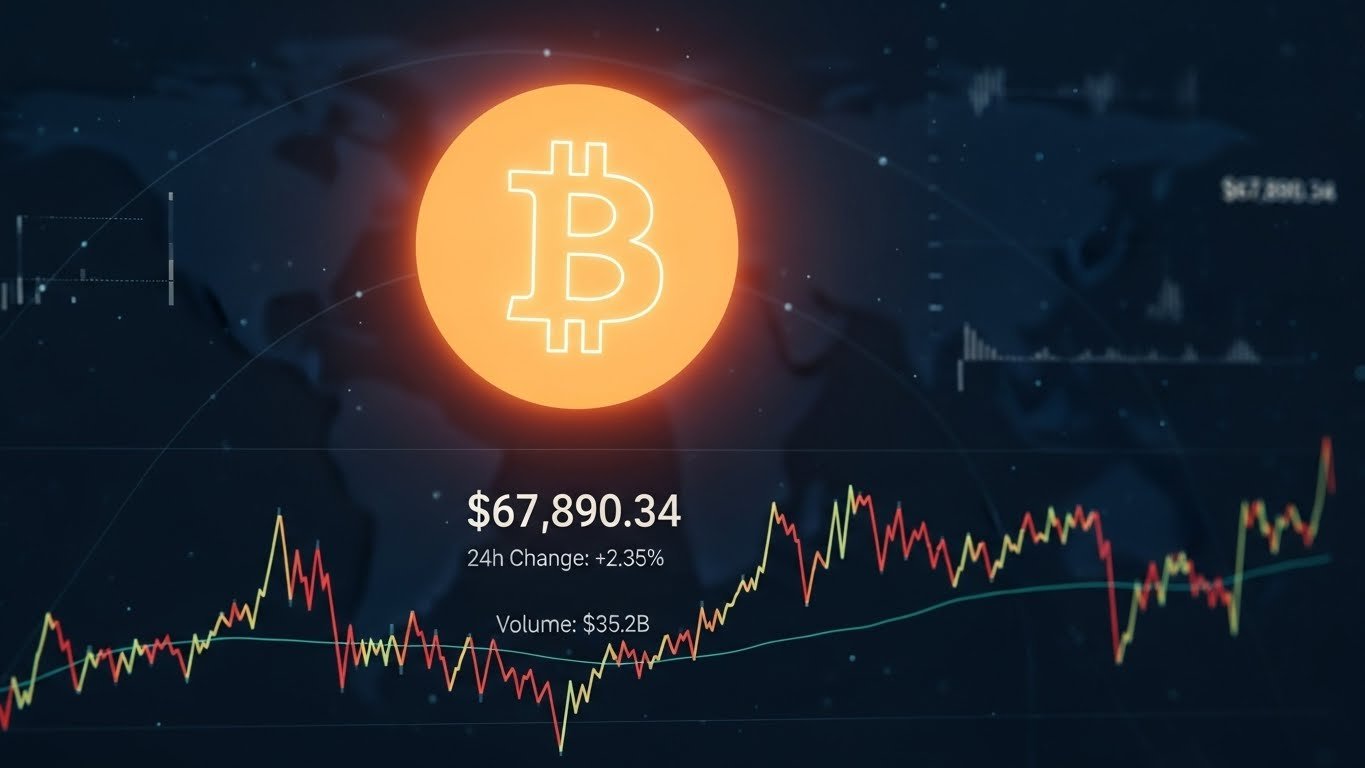
The Bitcoin price today is doing something that always makes traders nervous and excited at the same time: it is holding steady near $93,000 after a very sharp rebound. Barely a week ago, BTC price was flirting with the low 80,000 dollar zone after one of its worst monthly drops in recent memory. A wave of liquidations, risk-off sentiment and ETF outflows dragged Bitcoin down more than twenty percent from its October highs above 120,000 dollars.
Now, the picture has flipped again. Bitcoin has bounced roughly fifteen percent off those lows and is trading in the low 90,000s, with intraday moves repeatedly tagging the 93,000 to 94,000 dollar range. What changed. The simple answer is that the market has shifted its attention toward a potential Federal Reserve interest rate cut in December.
A run of softer U.S. economic data, dovish Fed commentary and updated research from banks like Bank of America has pushed rate-cut probabilities sharply higher, and that has breathed new life into risk assets, including Bitcoin. In this article, we take a closer look at the Bitcoin price today: steadies near $93K after sharp rebound, Fed cut bets in focus. We will unpack what drove the rebound, why Fed policy suddenly matters so much, which levels traders are watching, and what could come next for BTC as the crucial December Fed meeting approaches.
Bitcoin Price Today Near $93K: From Panic To Rebound
The current Bitcoin price today only makes sense when you remember how rough November was. Through much of the month, Bitcoin bled lower as ETF outflows accelerated and leveraged traders were forced out of positions. By late November, BTC briefly plunged toward 80,000 dollars, its weakest level since April.
From November Slump To December Bounce
At the bottom, sentiment was ugly. Headlines focused on “two-month lows” and “deepest monthly fall in years,” while analysts talked about the possibility of a more serious bear phase. The crypto market felt heavy, and for a few days, each attempt at a bounce faded quickly.
Then, the tone began to change. Toward the end of November and into the first days of December, a run of weaker U.S. economic prints and softer labor data sparked a rapid repricing in interest-rate expectations. Traders using the CME FedWatch tool began to assign a much higher probability to a Fed rate cut at the December meeting, with some measures jumping from around forty percent to over eighty percent within days.
As those Fed cut bets rose, Bitcoin price started to climb. Reports from multiple outlets describe how BTC rebounded from around 80,000 to above 91,000 dollars in just a few sessions, helped by a shift back into risk assets. By the end of the week, Bitcoin was trading above 93,000 dollars, up more than fifteen percent from the panic lows.
Short Squeeze And ETF Inflows Add Fuel
The sharp rebound was not driven by macro shifts alone. It also had a classic crypto ingredient: a short squeeze. Data cited by Investors Business Daily shows that over 400 million dollars worth of short positions were liquidated as Bitcoin’s price ripped higher, including more than 230 million in BTC shorts. This forced buying helped propel BTC above 93,000 dollars in the space of a couple of days.
At the same time, the ETF picture began to improve. After heavy outflows through most of November, spot Bitcoin ETFs flipped back to net inflows, with about 58.5 million dollars entering on Monday and a five-day streak totaling nearly 290 million dollars by midweek. Those inflows signaled that institutions and larger investors were starting to buy the dip, not just run away from volatility. Taken together, a macro pivot toward rate-cut expectations, a wave of forced short covering and returning ETF demand pushed the Bitcoin price today back into the low 90,000s and, at times, right up against the 93,000 to 94,000 dollar band.
Fed Cut Bets In Focus: Why They Matter For Bitcoin
Right now the phrase “Fed cut bets in focus” is not just a tagline. It is one of the main reasons the BTC price today is holding up as well as it is.
How Rate-Cut Expectations Support Bitcoin
Bitcoin has evolved into a kind of barometer for global risk sentiment and liquidity. When traders expect the Federal Reserve to cut rates, they also expect financial conditions to loosen. Lower borrowing costs and easier liquidity tend to support demand for riskier assets, from tech stocks to high-yield credit and, of course, cryptocurrencies.
Over the past week, that link has been on full display. Articles from market outlets like Coindesk, Analytics Insight and Investing.com explicitly connect Bitcoin’s climb back above 91,000 and then 93,000 dollars to a sharp rise in Fed rate-cut odds. The logic is straightforward. If the Fed is about to move from tight policy toward easing, future cash flows become more valuable, speculative positions look less costly to hold, and investors are more willing to rotate into digital assets.
Bank of America’s latest research adds weight to this view. The bank now expects a 25 basis-point rate cut at the December meeting, followed by two more cuts in 2026. It explicitly notes that traders are pricing in an almost 88 percent probability of a December cut, a dramatic swing from expectations only a few weeks ago. For Bitcoin price today, this matters because it gives bulls a clear narrative. The rebound is not just a random bounce. It is, in part, a bet that the next big macro move will be easing, not tightening.
Lessons From Past Fed Moves
At the same time, Fed policy is not a one-way street for Bitcoin. History shows that the actual reaction to a rate cut can be more complicated than the reaction to expectations. In 2024, when the Fed delivered a cut that many saw as too cautious and paired it with a hawkish inflation forecast, Bitcoin’s price actually fell, dropping to around 100,300 dollars despite the move to lower rates. Markets had hoped for a more aggressive easing path and were disappointed.
That episode is a useful reminder that Bitcoin price prediction based solely on “cut or no cut” is too simplistic. Guidance, projections and the overall tone of the Fed press conference matter just as much. That is why the Bitcoin price today is caught in a sort of holding pattern around 93,000 dollars. Traders are willing to buy on anticipation of a dovish pivot, but they are also cautious. If the Fed cuts but sounds worried about inflation, BTC could easily swing lower again.
Technical Picture: Key Levels Around $93,000
Beyond macro and policy, the technical setup around 93,000 dollars is an important part of the story.
Immediate Support And Resistance
Several recent analyses highlight 93,000 to 95,000 dollars as a key resistance zone for the Bitcoin price today. Cointelegraph notes that earlier attempts to break higher in this area have run into selling, with rejections around 93,000 dollars triggering mean-reversion drops amid thin liquidity and hesitant spot buying.
On the downside, support appears clustered in the high 80,000s to low 90,000s. Articles tracking the rebound point out that BTC has repeatedly found buyers near 90,000 dollars and, more recently, held above 91,000 despite intraday dips, suggesting that this region is becoming a short-term floor as long as Fed cut bets remain intact.
Analysts watching the daily chart frequently mention a simplified roadmap. Holding above 90,000 to 91,000 dollars keeps the rebound structure alive. Clearing and then holding above 95,000 opens the door back toward psychological resistance at 100,000 dollars. Losing 90,000 decisively, especially on heavy volume, would raise the risk of a retest of the 82,000 to 84,000 dollar lows.
Momentum And Spot Demand
Momentum indicators like RSI and MACD are not at extreme levels right now, which actually fits the “steady near 93K” theme. After the violent plunge earlier in November, they have cooled off from oversold conditions but have not yet flashed the kind of overbought readings seen near prior tops. That suggests the Bitcoin price today is in a consolidation phase rather than a blow-off or capitulation phase.
However, the quality of the bounce still worries some analysts. Cointelegraph, among others, has warned that spot buying remains “sheepish,” with much of the move driven by short covering and derivatives rather than strong, organic demand from long-term buyers. If that read is correct, the stability around 93,000 dollars could be fragile.
The bottom line is that the technical picture around 93K is constructive but not bulletproof. Bitcoin has room to push higher if fresh spot demand appears and the Fed leans dovish, but it is also vulnerable if macro headlines sour or if ETF flows turn negative again.
On-Chain Signals And Institutional Flows
While price and charts tell one story, on-chain data and institutional flows tell another, more structural one.
From ETF Outflows To Inflows
One of the main reasons Bitcoin’s November slide was so sharp was the behavior of spot ETFs. After months of heavy buying, they flipped to heavy selling, with net outflows running into the billions. That steady drip of supply weighed on Bitcoin price even when other metrics looked stable. In the last week, that pattern has begun to reverse.
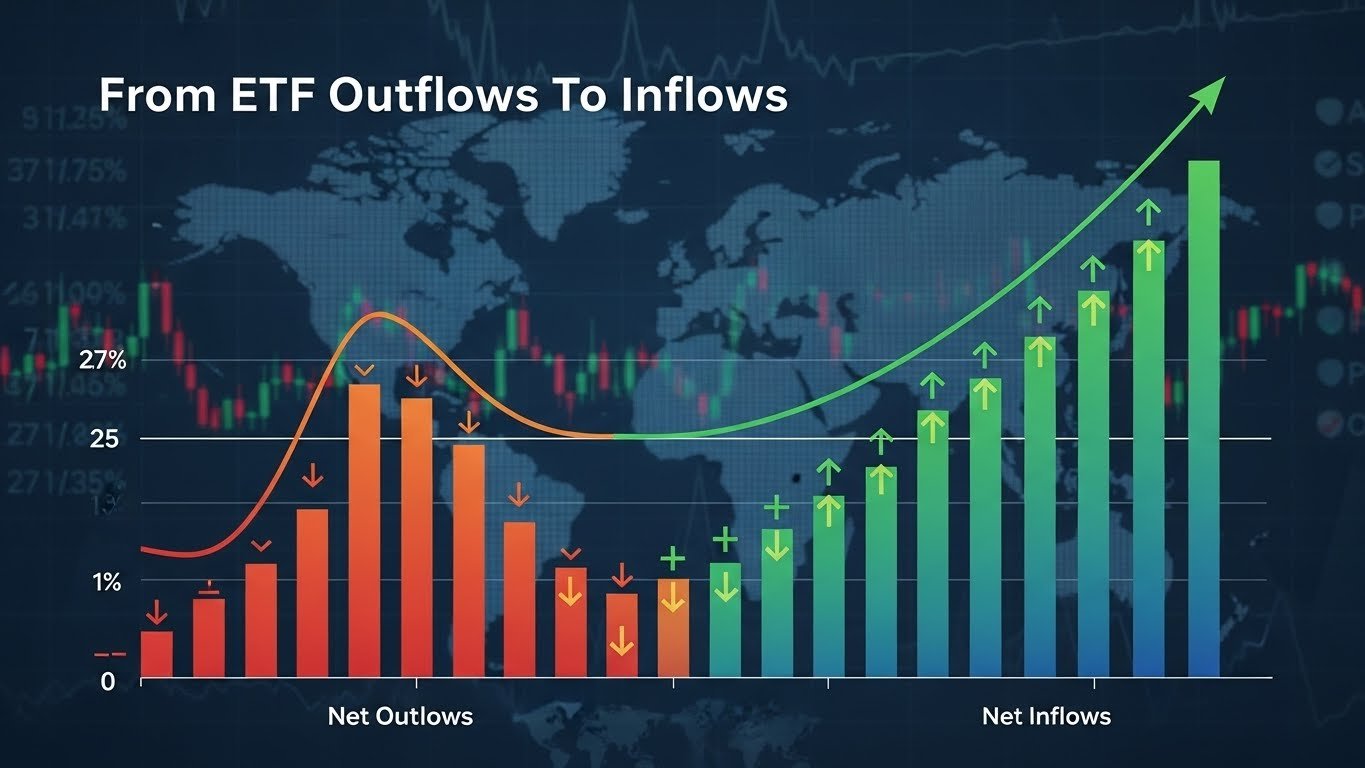
As noted earlier, ETF data now shows a modest but important run of net inflows, with more than 280 million dollars added over a five-day period. That shift reduces one of the biggest structural headwinds and helps explain why the Bitcoin price today is holding near 93,000 rather than sliding straight back down. It also suggests that some institutional investors view the recent dip as an opportunity to increase BTC exposure at more attractive levels, especially with Fed policy appearing to tilt toward easing.
Whales, Accumulation And Production Cost
Beyond ETFs, on-chain reports highlight a modest return of “smart money” interest. Analytics pieces from late November mention whales accumulating near and just above 90,000 dollars after largely staying on the sidelines during the earlier parts of the crash. The idea is that big holders prefer to buy fear rather than chase highs. Meanwhile, JPMorgan has pointed to an estimated Bitcoin production cost around 90,000 dollars, given the current hash rate and mining difficulty.
The bank describes this cost level as a “soft floor” that often attracts dip buyers, because it is seen as a region where miner economics begin to look stretched. With the Bitcoin price today hovering slightly above that estimated cost, it is not surprising to see some accumulation appear. Combined, these factors give the 90,000 to 93,000 zone a bit more structural backing than a random price band. It is where rate-cut hopes, ETF inflows, whale interest and miner economics all overlap.
Scenarios Ahead: How Fed Decisions Could Move Bitcoin
With the Bitcoin price today balanced near 93,000 dollars and Fed cut bets in focus, the obvious question is what comes next. While nobody can give a precise Bitcoin price prediction, we can outline a few broad scenarios.
Scenario One: Dovish Cut, Clear Easing Path
In the most bullish near-term scenario, the Fed delivers a 25 basis-point cut in December and pairs it with guidance that suggests more cuts are likely in 2026, in line with forecasts from Bank of America and similar research houses. If the tone is clearly dovish and markets feel that the Fed is “getting ahead” of economic weakness, risk assets could rally.
In that case, the Bitcoin price today might treat the 93,000 area as a launchpad. A convincing break above 95,000 followed by a push to retest 100,000 dollars would not be surprising in such an environment. Derivatives positioning and renewed ETF inflows could amplify the move.
Scenario Two: Cut, But With Hawkish Messaging
A more complicated scenario is one where the Fed cuts but sounds worried about inflation, or signals that further cuts will be slow and data-dependent. As the 2024 example showed, markets can react negatively if they feel the Fed is doing “too little, too late” or might even reverse course. Under that outcome, the Bitcoin price today could initially spike on the headline, then fade as investors digest the details. A slide back toward 90,000 dollars or even a retest of the 82,000 to 84,000 lows would be possible if risk sentiment turns sour again.
Scenario Three: No Cut, Market Disappointment
Finally, there is always the chance, however small, that the Fed decides not to cut at all in December despite market pricing. Some banks, such as Morgan Stanley and Standard Chartered, still think the Fed might keep rates on hold. If the Fed stays put and sounds hawkish, there could be a sharp unwind of rate-cut trades, including Bitcoin’s rebound.
In such a case, the support near 90,000 dollars would be in real danger. Without the rate-cut narrative, traders might focus again on previous ETF outflows and macro risk, making the “soft floor” at 90,000 look less solid. The Bitcoin price today could fall back into the high 80,000s or lower until a new equilibrium is found.
What Traders And Investors Should Watch Next
Given all of this, what should you pay attention to beyond the Bitcoin price today. The first thing is obvious: data that influences the Fed. That means U.S. jobs reports, inflation prints and key activity surveys. Weak data tends to strengthen Fed cut bets, while strong data can push them back and pressure BTC. The second is ETF and on-chain flow data. If the recent streak of ETF inflows continues and whale accumulation grows, it will add credibility to the rebound.
If inflows stall or reverse, the stability near 93,000 dollars may not last. The third is broader risk sentiment. Equity markets, credit spreads and the U.S. dollar index often move in ways that either support or undermine crypto. A calm, slightly risk-on environment is usually the best backdrop for Bitcoin to extend a recovery. Above all, it is important to remember that Bitcoin price today is just a snapshot in a long and very volatile story. The drivers behind this week’s stability near 93K will evolve, and so will the narrative around Fed policy.
Conclusion
The headline “Bitcoin price today: steadies near $93K after sharp rebound, Fed cut bets in focus” sums up a market that is both relieved and uneasy. On the one hand, Bitcoin has staged an impressive comeback from lows near 80,000 dollars, powered by rising Fed rate-cut expectations, a brutal short squeeze and early signs of renewed ETF and whale demand. Today’s BTC price near 93,000 dollars reflects a belief that the worst of the November selloff is over and that a more supportive macro backdrop might be on the way.
On the other hand, Bitcoin price today also sits at a crossroads. The 93,000 area is still resistance as much as it is support. Much of the rebound has been driven by expectations, not facts. If the Fed disappoints, if ETF inflows fade or if macro data turns against risk assets, Bitcoin could quickly find itself retesting lower levels.
For now, traders and long-term investors alike are watching a tight cluster of variables: rate-cut odds, economic data, ETF flows and key technical levels. The more these variables line up in Bitcoin’s favor, the stronger the case that this consolidation near 93,000 dollars is a base for the next leg higher rather than a resting point on the way back down.
