


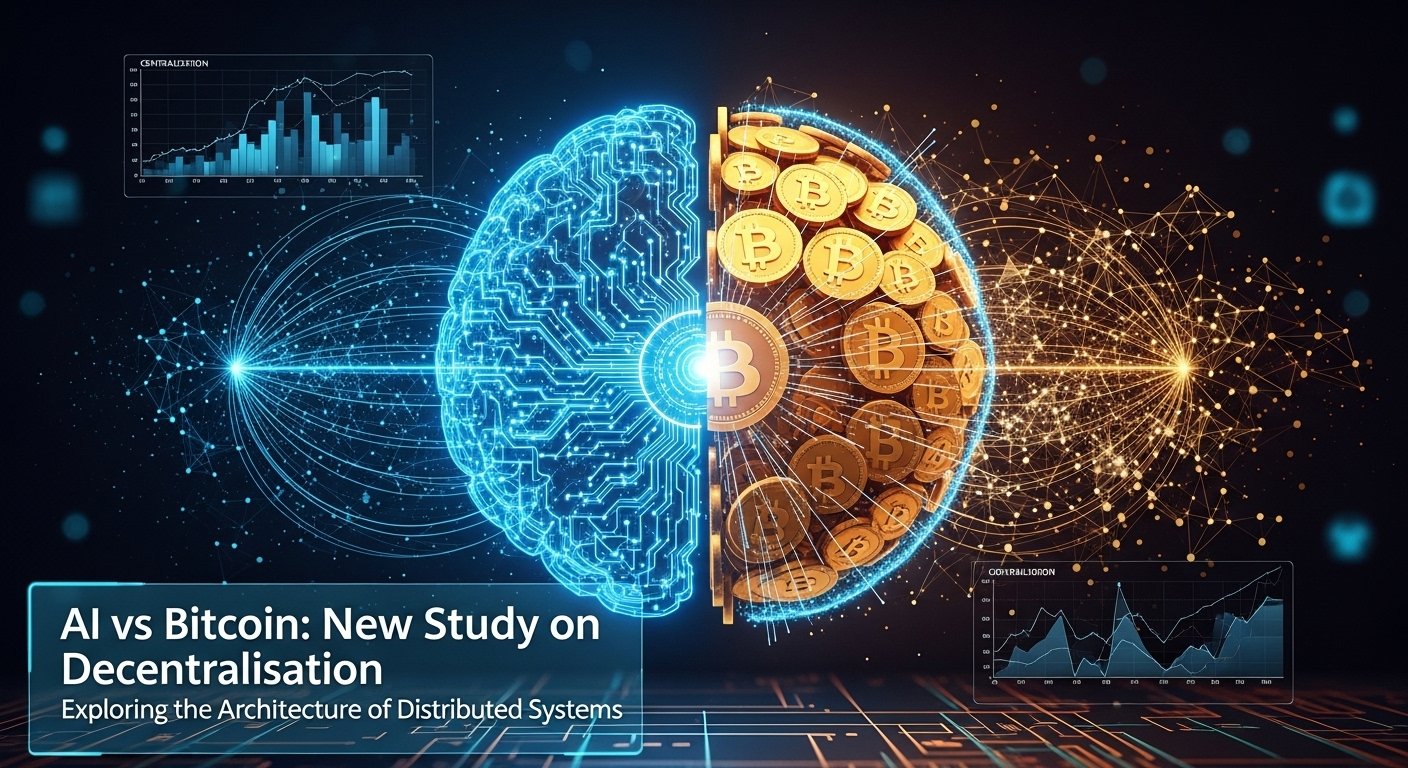
Decentralisation is rapidly reshaping modern technology, particularly in areas like finance, governance, and digital infrastructure, where the need for transparency and reduced reliance on central authorities continues to grow. For years, Bitcoin has been widely regarded as the benchmark for decentralisation, offering a peer-to-peer network that eliminates intermediaries and empowers users with direct control over their transactions. However, emerging research now suggests that artificial intelligence (AI) could go even further by extending decentralisation beyond financial systems into the realm of computation and decision-making itself.
Unlike Bitcoin, which primarily decentralizes transactional data through a distributed ledger, AI introduces the concept of distributed intelligence, where data processing, learning, and decision-making can occur across a vast network of devices and systems. This shift challenges traditional assumptions, as AI has often been associated with centralized control by large tech companies, yet new approaches such as federated learning and edge computing are enabling more decentralized AI frameworks. As a result, AI is not only redefining how decentralisation is implemented but also expanding its scope, creating more dynamic, scalable, and inclusive digital ecosystems that have the potential to transform industries far beyond finance.
The Meaning of Decentralisation in Modern Technology
Decentralisation refers to the distribution of control and authority across a network rather than relying on a central entity. In the digital age, this concept has expanded far beyond its original scope, influencing industries such as finance, data management, and artificial intelligence. Bitcoin introduced decentralisation to the mainstream by allowing users to transact without relying on banks or governments. Its blockchain network ensures transparency and security through a distributed ledger maintained by thousands of nodes worldwide.
However, decentralisation is not absolute. It exists on a spectrum, and even systems that are considered decentralized may still have elements of central control. In Bitcoin’s case, mining power has gradually become concentrated in large mining pools, raising concerns about whether it remains truly decentralized. This evolving understanding of decentralisation sets the stage for comparing Bitcoin with newer technologies like AI.
How Artificial Intelligence Expands the Idea of Decentralisation
Artificial intelligence brings a fundamentally different approach to decentralisation. Unlike Bitcoin, which decentralizes financial transactions, AI has the potential to decentralize decision-making and computational processes.
Instead of processing data in one location, AI models can be trained and deployed across a network of devices, each contributing to the system’s overall functionality. This not only enhances efficiency but also reduces the risk of centralization.The study highlights that AI’s ability to distribute both data and decision-making processes gives it a unique advantage. While Bitcoin decentralizes financial control, AI decentralizes knowledge and computation, making it a broader and potentially more powerful form of decentralisation.
The Growing Importance of Decentralisation in a Digital World
Decentralisation is rapidly reshaping modern technology, particularly in areas like finance, governance, and digital infrastructure, where the need for transparency and reduced reliance on central authorities continues to grow. For years, Bitcoin has been widely regarded as the benchmark for decentralisation, offering a peer-to-peer network that eliminates intermediaries and empowers users with direct control over their transactions. However, emerging research now suggests that artificial intelligence (AI) could go. Even further by extending decentralisation beyond financial systems into the realm of computation and decision-making itself. Unlike Bitcoin, which primarily decentralizes transactional data through a distributed ledger,
AI introduces the concept of distributed intelligence, where data processing, learning, and decision-making can occur across a vast network of devices and systems. Comparing AI and Bitcoin in Modern Decentralisation
Rethinking Decentralisation with AI and Blockchain
Decentralisation refers to the distribution of control and authority across a network rather than relying on a central entity, and while Bitcoin brought this concept into the mainstream through its blockchain-based financial system, artificial intelligence is now redefining its boundaries. Bitcoin’s decentralized nature relies on a network of nodes that validate transactions and maintain transparency, yet over time, concerns have arisen due to the concentration of mining power and increasing technical barriers to participation. In contrast, AI expands decentralisation by distributing not just data but also intelligence and.
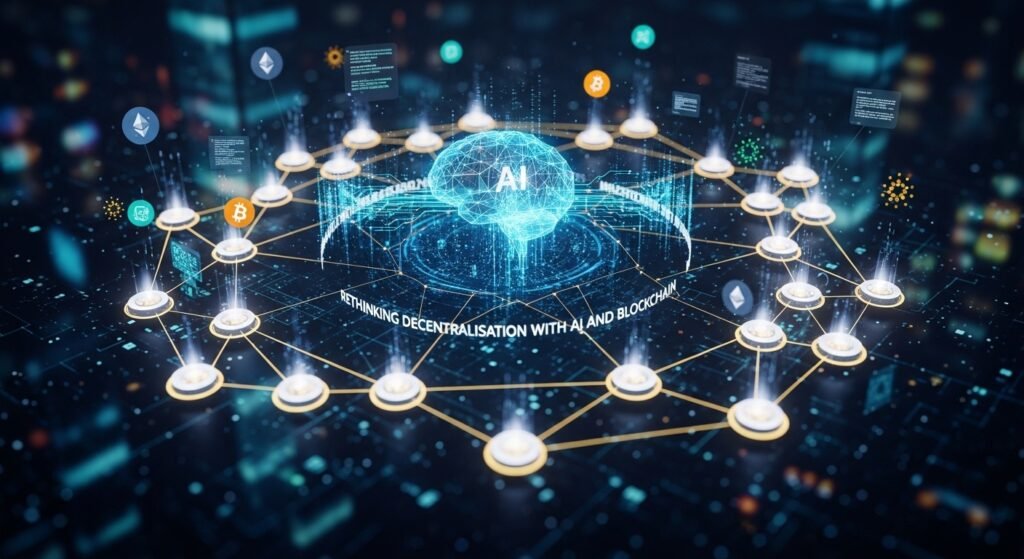 Decision-making processes across diverse systems, including smartphones, devices, and edge networks. This broader participation strengthens decentralisation by making systems more accessible and adaptive. Looking ahead, the integration of AI and blockchain could create powerful hybrid systems that combine secure data management with intelligent automation, ultimately shaping a future where decentralisation is more dynamic, efficient, and widely accessible than ever before.
Key Differences Between AI and Bitcoin in Decentralisation
When comparing AI and Bitcoin, several key differences emerge that highlight why AI may have an edge in decentralisation. Bitcoin relies on a relatively rigid infrastructure based on mining and consensus mechanisms. This structure, while secure, limits participation due to high energy costs and technical barriers. As a result, only a subset of users can actively contribute to maintaining the network.AI systems, on the other hand, can operate across a wide range of devices, including smartphones, personal computers,
And Internet of Things (IoT) devices. This accessibility significantly increases participation, allowing more users to be part of the network. Greater participation leads to a more distributed system, which strengthens decentralisation.Another major difference lies in adaptability. Bitcoin operates on a fixed protocol that changes slowly over time, whereas AI systems are dynamic and continuously evolving. This adaptability enables AI networks to respond to new challenges and opportunities, further enhancing their decentralized nature.
Challenges Preventing AI from Full Decentralisation
Despite its potential, AI is not without its challenges. One of the biggest obstacles is the centralization of AI development. This concentration of power raises concerns about whether AI can truly achieve decentralisation in practice. Another issue is data dependency.
This creates a bottleneck that can limit the decentralisation of AI networks. Additionally, ethical and regulatory concerns add another layer of complexity. The Future of Decentralisation with AI and Blockchain
The study’s findings suggest that the future of decentralisation may not be a competition. Between AI and Bitcoin but rather a collaboration between the two. Blockchain technology provides a secure and transparent framework for data storage and transactions, while AI enhances decision-making and efficiency. Together, these technologies could create hybrid systems that combine the strengths of both approaches.
As innovation continues, we may see the emergence of decentralized ecosystems where AI and blockchain work hand in hand. These systems could power everything from decentralized finance (DeFi) platforms to intelligent networks capable of autonomous decision-making. This convergence has the potential to redefine decentralisation and unlock new opportunities for innovation across industries.
Conclusion
The idea that AI may beat Bitcoin in decentralisation marks a significant shift in the technological landscape. While Bitcoin revolutionized the concept by decentralizing financial systems, AI is pushing the boundaries further by decentralizing intelligence itself. With its ability to distribute computation, adapt dynamically, and increase participation. AI presents a compelling case as the next evolution of decentralisation.The future of decentralisation will likely involve a combination of AI, blockchain, and other emerging technologies working together to create more open, efficient, and resilient systems.
