


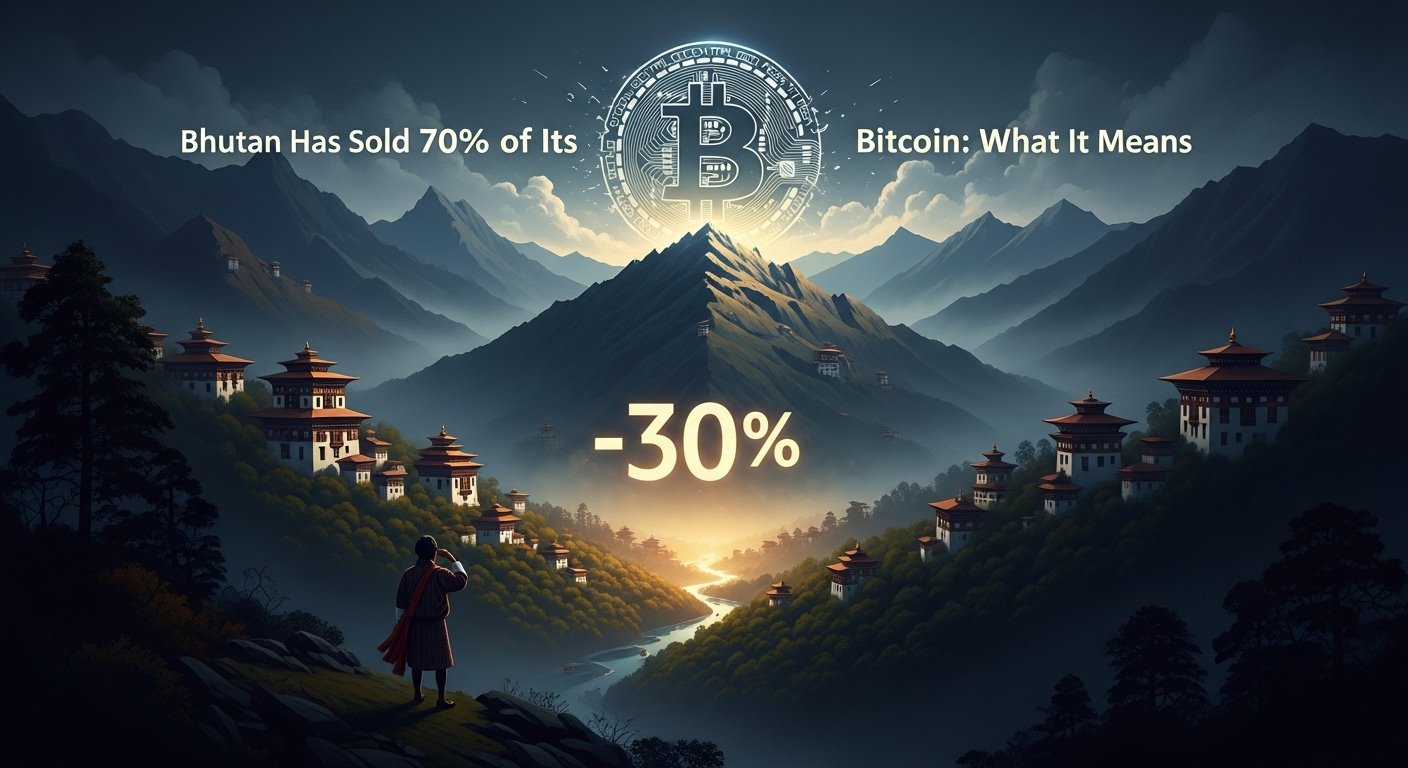

Bhutan has sold 70% of its bitcoin in the last 18 months, and this surprising move has caught the attention of the global crypto community. For a country once praised for its quiet but smart involvement in Bitcoin mining, this shift raises many questions. Why did Bhutan sell so much of its bitcoin? Has it really stopped mining BTC? And what does this mean for the future of crypto adoption?
In this blog post, we will break down everything in simple terms. Moreover, we will explore the reasons behind Bhutan’s decision, its impact on the crypto market, and what investors can learn from it.
Bhutan’s Bitcoin Strategy: A Quick Overview
Bhutan is a small Himalayan country known for its focus on happiness and sustainability. However, in recent years, it quietly entered the crypto space through Bitcoin mining.
Why Bhutan Invested in Bitcoin
Bhutan saw Bitcoin as an opportunity for economic growth. For example: It used its abundant hydropower to run mining operations. It aimed to diversify its economy beyond tourism and agriculture. It leveraged low-cost energy, which is ideal for mining. Therefore, Bitcoin mining seemed like a smart and sustainable move.
Bhutan Has Sold 70% of Its Bitcoin: What Happened?
Now comes the big question: why has Bhutan sold 70% of its bitcoin? Although the government has not fully explained its decision, several likely reasons stand out:
Profit-Taking Strategy
First, Bhutan may have sold its Bitcoin to lock in profits. Since Bitcoin prices have fluctuated over the past 18 months, selling at higher points could have helped the country secure gains.
Economic Needs
Additionally, Bhutan may have needed funds for development projects. Selling Bitcoin could provide quick liquidity for: Infrastructure development Public services Economic recovery efforts
Market Uncertainty
However, the crypto market is highly volatile. Therefore, Bhutan might have reduced its exposure to risk by selling a large portion of its holdings.
Regulatory Concerns
Moreover, global regulations around cryptocurrency are changing. Bhutan may have adjusted its strategy to avoid future legal or financial risks.
Has Bhutan Stopped Bitcoin Mining?
Another key part of the story is whether Bhutan has stopped mining Bitcoin altogether.
Signs That Mining May Have Slowed Down
There are several indicators suggesting this: Reduced Bitcoin reserves. Lack of recent mining activity reports. Shift in government focus toward other sectors. However, there is no official confirmation that mining has completely stopped.
Possible Reasons for Halting Mining
If Bhutan has paused or stopped mining, it could be due to High operational costs, especially during market downturns. Environmental concerns, despite using renewable energy. Better investment opportunities elsewhere. Therefore, the decision may be strategic rather than permanent.
Impact on the Global Crypto Market
 Market Sentiment
Firstly, such a move can influence investor confidence. When a country reduces its Bitcoin holdings, it may signal caution. However, it does not necessarily mean Bitcoin is failing. Additionally, large sell-offs can temporarily increase supply in the market. This may: Put downward pressure on prices Create buying opportunities for investors
Government Participation in Crypto
Moreover, Bhutan’s actions highlight how governments are experimenting with crypto. Some may follow Bhutan’s cautious approach, while others may continue investing.
Lessons for Crypto Investors
There are several important takeaways from Bhutan’s decision. Investors should not rely only on Bitcoin. Instead, they should spread their investments across different assets.
Timing Matters
Bhutan likely sold its Bitcoin at strategic times. Therefore, understanding market cycles can help investors make better decisions.
Risk Management is Essential
Crypto markets are unpredictable. However, managing risk through careful planning can reduce losses. Re-enter the market later If Bitcoin prices rise again, Bhutan may buy back in. Focus on other technologies. For example, it might invest in blockchain without mining. Bitcoin.Continue limited mining It may still mine Bitcoin on a smaller scale.A Strategic Pause? In conclusion, Bhutan’s move might not be an exit. Instead, it could be a pause to reassess its strategy.
Broader Implications for Crypto Adoption Bhutan’s actions reflect a larger trend.Governments Are Testing Crypto Countries around the world are experimenting with Bitcoin and blockchain. However, each nation is taking a different approach. Sustainability Matters Bhutan focused on renewable energy mining. Therefore, it shows that eco-friendly crypto solutions are possible. Regulation Will Shape the Future Moreover, government decisions will play a big role in how crypto evolves globally.
Conclusion
Bhutan has sold 70% of its bitcoin, and this decision marks a significant shift in its crypto journey. While the exact reasons remain unclear, several factors such as profit-taking, economic needs, and market uncertainty likely played a role. However, this does not mean Bhutan has abandoned Bitcoin entirely.
Instead, it may be adjusting its strategy to better manage risks and opportunities. For investors, the key lesson is clear: stay informed, diversify your portfolio, and always plan for uncertainty. In conclusion, Bhutan’s move is not just about one country—it reflects the evolving relationship between governments and cryptocurrency.
FAQs
1. Why did Bhutan sell 70% of its bitcoin?
Bhutan likely sold its Bitcoin to secure profits, meet economic needs, and reduce exposure to market volatility.
2. Has Bhutan completely stopped Bitcoin mining?
There is no official confirmation. However, signs suggest that mining activity may have slowed or paused.
3. Does Bhutan’s decision affect Bitcoin prices?
Large sell-offs can impact short-term prices. However, the overall market depends on many factors.
4. Is Bitcoin still a good investment?
Bitcoin can still be a good investment, but it carries risks. Therefore, investors should diversify and do proper research.
5. What can investors learn from Bhutan?
Investors can learn the importance of timing, diversification, and risk management in crypto markets.
See more: Best bitcoin mining companies in 2025 who leads and why
