


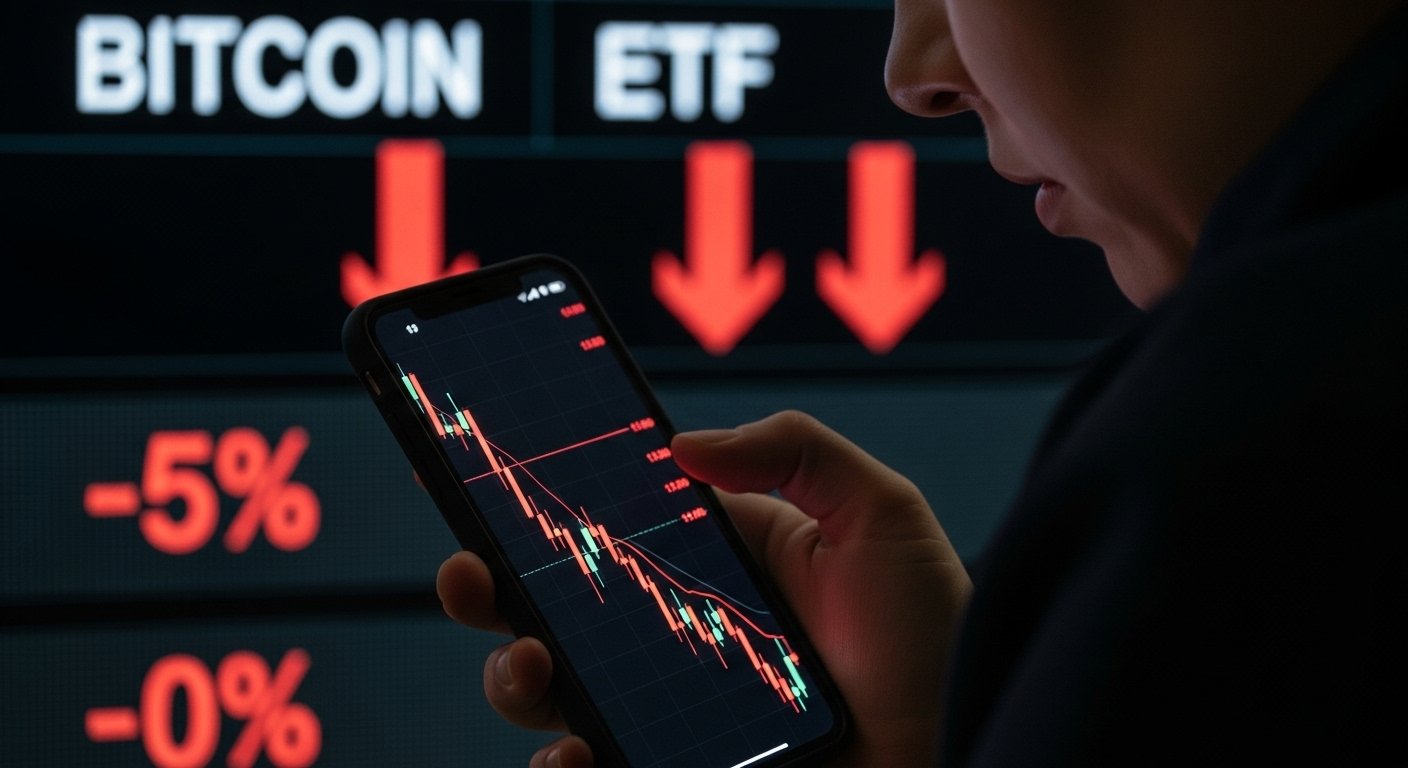
Bitcoin price has once again come under pressure as investors rapidly exit spot Bitcoin ETFs in a clear move to reduce risk exposure. What began as cautious repositioning quickly turned into a broader sell-off, pushing the market lower and reviving concerns about volatility, liquidity, and investor confidence. While Bitcoin has weathered countless drawdowns over the years, this latest slump highlights how deeply integrated crypto has become with traditional financial markets—and how sensitive it is to changes in investor sentiment.
Unlike previous cycles dominated by retail speculation, today’s Bitcoin market is heavily influenced by institutional investors, regulated investment products, and macroeconomic conditions. The rise of spot Bitcoin ETFs has made it easier than ever for large investors to gain or exit exposure quickly. When fear enters the market, that convenience can turn into a powerful force driving sharp price movements.
This article explores why the Bitcoin price slumped following rapid ETF cash-outs, how ETF flows impact the broader crypto market, what macroeconomic factors are amplifying risk aversion, and what investors should watch next. Whether you are a long-term holder or a short-term trader, understanding these dynamics is essential in navigating today’s evolving digital asset landscape.
Understanding the Recent Bitcoin Price Slump
The latest decline in the Bitcoin price did not happen in isolation. It unfolded alongside heightened uncertainty across global markets, prompting investors to shift into a defensive stance. As risk appetite faded, assets perceived as volatile—including cryptocurrencies—were among the first to be reduced.
Bitcoin ETFs played a central role in this move. As investors redeemed ETF shares at a rapid pace, selling pressure increased in the underlying spot market. This added to existing weakness and accelerated the downside move, especially during periods of lower liquidity.
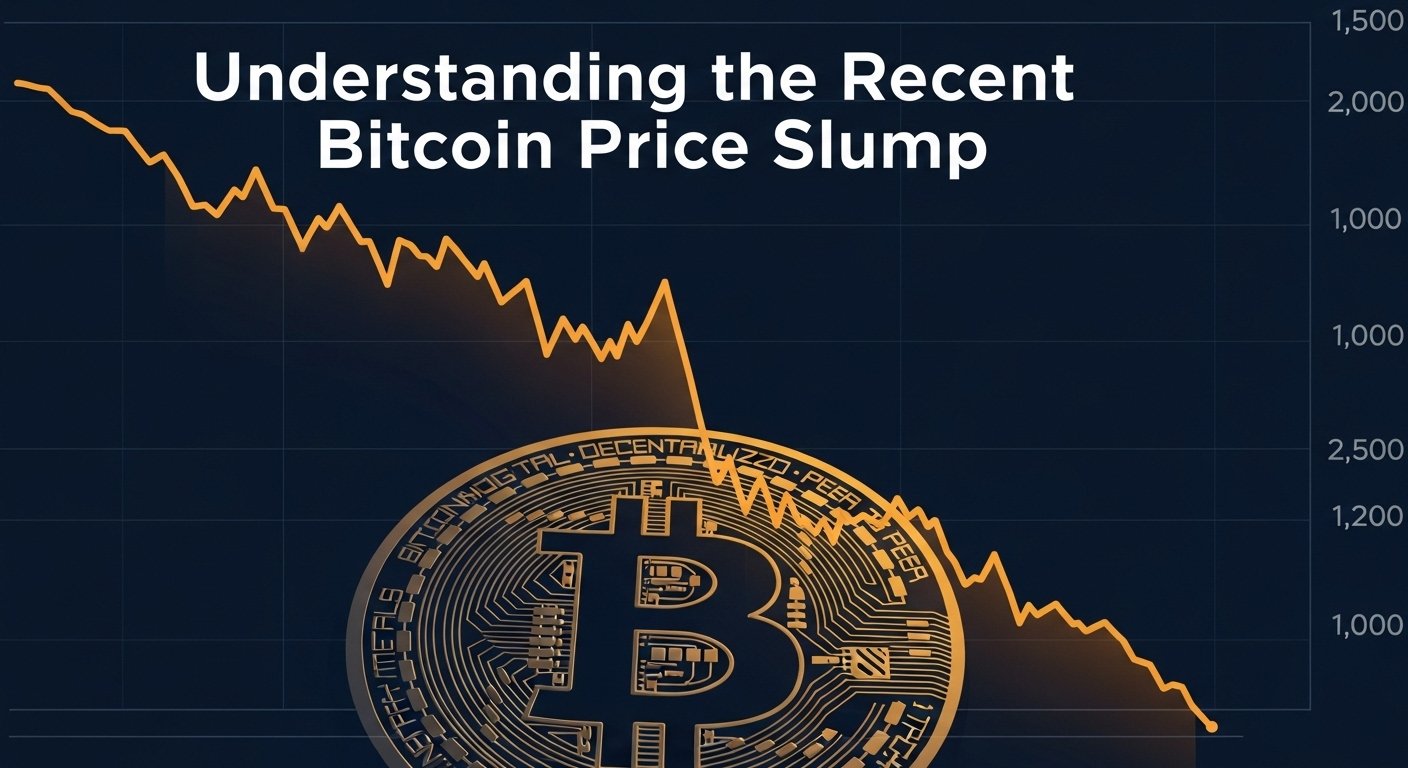
What makes this slump notable is not just the price drop itself, but the speed at which sentiment changed. Only weeks earlier, optimism around institutional adoption and long-term demand was driving bullish narratives. The sudden reversal underscores how quickly markets can transition from confidence to caution when risk perceptions shift.
Why Bitcoin ETFs Matter So Much to Price Action
Spot Bitcoin ETFs have fundamentally changed how Bitcoin trades. These products allow investors to gain direct exposure to Bitcoin through traditional brokerage accounts without dealing with wallets, custody, or exchanges. While this has expanded access, it has also tied Bitcoin more closely to traditional market behavior.
When ETF inflows are strong, they can support the Bitcoin price by driving consistent buying. Conversely, when outflows accelerate, ETFs can become a source of concentrated selling pressure. Because ETFs aggregate large amounts of capital, even modest changes in allocation decisions can have an outsized impact on the market.
ETF Redemptions and Market Mechanics
When investors cash out of a Bitcoin ETF, the fund may need to sell Bitcoin to meet those redemptions. In calm markets, this process is relatively smooth. However, during periods of stress, selling can overwhelm available liquidity, pushing prices lower quickly.
This mechanical relationship helps explain why ETF-driven sell-offs can feel sudden and intense. It is not simply sentiment changing—it is capital moving rapidly through structured financial products that directly interact with the spot market.
Risk-Off Sentiment and the Flight From Volatility
At the heart of the recent Bitcoin price slump is a broader risk-off environment. When investors become uncertain about economic growth, interest rates, or geopolitical stability, they tend to reduce exposure to assets with higher volatility.
Bitcoin, despite its growing maturity, is still widely viewed as a high-risk asset during periods of stress. As a result, it often experiences sharper declines than traditional markets when fear rises.
Bitcoin vs Safe-Haven Assets
During risk-off phases, capital often rotates into assets perceived as safer, such as cash or precious metals. This rotation reinforces selling pressure on Bitcoin and other digital assets. The contrast between Bitcoin’s decline and the stability of traditional havens reinforces the perception that Bitcoin behaves more like a speculative asset than a defensive one in the short term.
This perception plays a crucial role in shaping investor behavior and, ultimately, the Bitcoin price.
Institutional Behavior: What ETF Outflows Really Signal
It is easy to interpret ETF outflows as a sign that institutions have lost faith in Bitcoin. In reality, the motivations behind these moves are often more complex.
Institutional investors operate under strict risk management frameworks. When volatility increases or correlations across assets rise, they may reduce exposure not because they doubt the long-term value of Bitcoin, but because portfolio constraints require them to do so.
Tactical De-Risking vs Long-Term Conviction
Many ETF investors are engaging in tactical de-risking rather than abandoning Bitcoin altogether. They may plan to re-enter once volatility subsides or macro conditions become clearer. This distinction is critical for understanding why ETF outflows can coincide with long-term bullish narratives.
The Bitcoin price reflects short-term supply and demand dynamics, not necessarily long-term belief.
Role of Leverage in Amplifying Price Moves
Leverage is another key factor behind the intensity of the recent Bitcoin price slump. As prices began to fall, leveraged positions in derivatives markets were forced to unwind. Liquidations added further selling pressure, creating a feedback loop that accelerated the decline.
This cascade effect is common in crypto markets, where leverage is widely used. Once prices cross certain thresholds, automated liquidations can overwhelm the market, pushing prices far beyond where fundamentals alone might suggest.
Liquidity Conditions and Market Fragility
Liquidity plays a crucial role in determining how the Bitcoin price reacts to selling pressure. During calm periods, deep liquidity can absorb large trades with minimal impact. During periods of uncertainty, liquidity often dries up as market participants step back.
Reduced liquidity means that each sell order has a larger effect on price. ETF-driven selling during such conditions can therefore have a disproportionate impact, even if total volumes are not historically extreme.
Key Psychological Levels and Market Sentiment
Bitcoin traders pay close attention to psychological price levels. These round-number thresholds often act as support or resistance zones where large amounts of trading activity cluster.
When the Bitcoin price falls below a widely watched level, it can trigger additional selling as confidence weakens. Conversely, reclaiming such levels can restore optimism and attract buyers back into the market.
In the current environment, market participants are closely watching whether Bitcoin can stabilize and build a base rather than continue sliding lower.
What Could Stabilize the Bitcoin Price

Stabilization does not require a sudden surge in buying. Often, the first sign of a bottom is simply a slowdown in selling pressure. If ETF outflows begin to ease and liquidation activity subsides, the market may find its footing.
Improved Macro Clarity
Greater clarity around economic conditions, interest rates, and global risks can help restore investor confidence. When uncertainty fades, risk appetite often returns, allowing assets like Bitcoin to recover.
Reduced Volatility
As volatility declines, risk management constraints become less binding. This can encourage investors to rebuild positions, supporting the Bitcoin price.
Long-Term Perspective: Volatility as a Feature, Not a Flaw
Bitcoin’s history is defined by volatility. Sharp drawdowns have occurred repeatedly, often followed by periods of consolidation and renewed growth. While ETF-driven selling adds a new dimension to market dynamics, it does not eliminate Bitcoin’s long-term adoption narrative.
For long-term investors, the key is distinguishing between structural changes and cyclical fluctuations. ETF outflows reflect short-term positioning, not necessarily a reversal of the broader trend toward institutional participation.
How Different Investors Can Respond
Long-Term Holders
For long-term holders, the priority is avoiding forced decisions during periods of stress. This means maintaining appropriate position sizes, managing risk carefully, and focusing on long-term fundamentals rather than daily price movements.
Active Traders
Active traders may view ETF flows and volatility as signals to adjust strategy. During risk-off phases, preserving capital and reducing leverage can be more important than chasing short-term gains.
Understanding how ETF flows influence the Bitcoin price can help traders identify shifts in market regime.
The Road Ahead for Bitcoin and ETFs
Bitcoin ETFs are here to stay, and their influence on price dynamics will likely grow over time. As the market matures, participants will become better at interpreting flows and separating noise from signal.
In the near term, uncertainty may continue to drive volatility. Over the longer term, deeper liquidity, improved infrastructure, and broader adoption could help smooth some of the extremes that characterize today’s market.
Conclusion
The recent Bitcoin price slump following rapid ETF cash-outs is a powerful reminder of how interconnected crypto has become with traditional financial systems. Spot Bitcoin ETFs offer convenience and access, but they also introduce new sources of volatility when investor sentiment shifts toward risk avoidance.
While fast cash-outs have intensified selling pressure, they do not define Bitcoin’s long-term trajectory. Markets move in cycles, and periods of fear often lay the groundwork for future opportunity. By understanding the mechanics behind ETF flows, leverage, liquidity, and macro sentiment, investors can navigate volatility with greater confidence and clarity.
FAQs
Q: Why does the Bitcoin price fall when ETF investors cash out?
When investors redeem shares in spot Bitcoin ETFs, funds may sell Bitcoin to meet redemptions. This selling pressure can push the Bitcoin price lower, especially during periods of low liquidity or high volatility.
Q: Are ETF outflows a sign that institutions are abandoning Bitcoin?
Not necessarily. Many ETF outflows reflect short-term risk management decisions rather than a loss of long-term confidence. Institutions often reduce exposure during uncertain periods and may re-enter later.
Q: Does a Bitcoin price slump mean the bull market is over?
A price slump alone does not signal the end of a broader trend. Bitcoin has experienced many significant drawdowns in past cycles while still achieving long-term growth.
Q: How long do ETF-driven sell-offs usually last?
The duration varies. Some sell-offs are brief and driven by temporary fear, while others last longer if macro uncertainty persists. Watching whether outflows slow can provide early clues about stabilization.
Q: What should investors watch next?
Key factors include ETF flow trends, overall market volatility, macroeconomic developments, and whether the Bitcoin price can stabilize above important psychological levels.
