



Global financial landscape is changing at a pace few investors could have predicted just a decade ago. Once considered experimental, exchange-traded funds have become the backbone of modern portfolio construction. At the center of this evolution stands Bitcoin ETFs, oscillating between explosive inflows and sudden pullbacks, creating what many analysts now call the Bitcoin ETFs rollercoaster. As 2026 begins with an “abnormally high” $46 billion surge into traditional finance ETFs, the contrast between stability and volatility has never been more striking.
Bitcoin ETFs now sit at the crossroads of crypto innovation and traditional finance credibility. Their daily inflows and outflows reflect not only investor sentiment toward Bitcoin itself but also broader macroeconomic forces shaping capital markets. Meanwhile, traditional finance ETFs, often referred to as TradFi ETFs, are experiencing record-breaking demand, suggesting a deeper transformation in how institutions and individuals deploy capital.
This article explores why Bitcoin ETFs remain volatile despite growing mainstream acceptance, what the massive $46B inflow into TradFi ETFs reveals about investor behavior in 2026, and how these two forces interact within a rapidly evolving financial ecosystem.
Understanding the Bitcoin ETFs Rollercoaster
Bitcoin ETFs were created to bridge the gap between decentralized digital assets and regulated investment markets. While they succeeded in making Bitcoin more accessible, they also introduced a new level of visibility and speed to Bitcoin-related capital flows. This has amplified price reactions and investor sentiment, contributing to the perception of constant turbulence.
The Bitcoin ETFs rollercoaster is driven by several interconnected dynamics. Bitcoin itself remains a high-volatility asset, influenced by macroeconomic data, regulatory signals, technological developments, and investor psychology. When Bitcoin is wrapped in an ETF structure, these fluctuations become easier to trade, easier to track, and far more visible to the public.
Unlike traditional crypto markets, ETF markets operate at institutional speed. Large asset managers can deploy or withdraw capital within minutes, leading to sudden inflows or outflows that reverberate across both Bitcoin prices and ETF valuations. This structural efficiency is a double-edged sword: it enhances legitimacy while intensifying short-term volatility.
Why Bitcoin ETFs Move Faster Than the Underlying Asset
Bitcoin ETFs trade on traditional exchanges, allowing investors to react instantly to global news, economic data, or market sentiment. This immediacy often results in sharper intraday moves than those seen in spot crypto markets. The ETF wrapper removes friction, enabling rapid allocation changes that would otherwise take hours or days in native crypto environments.
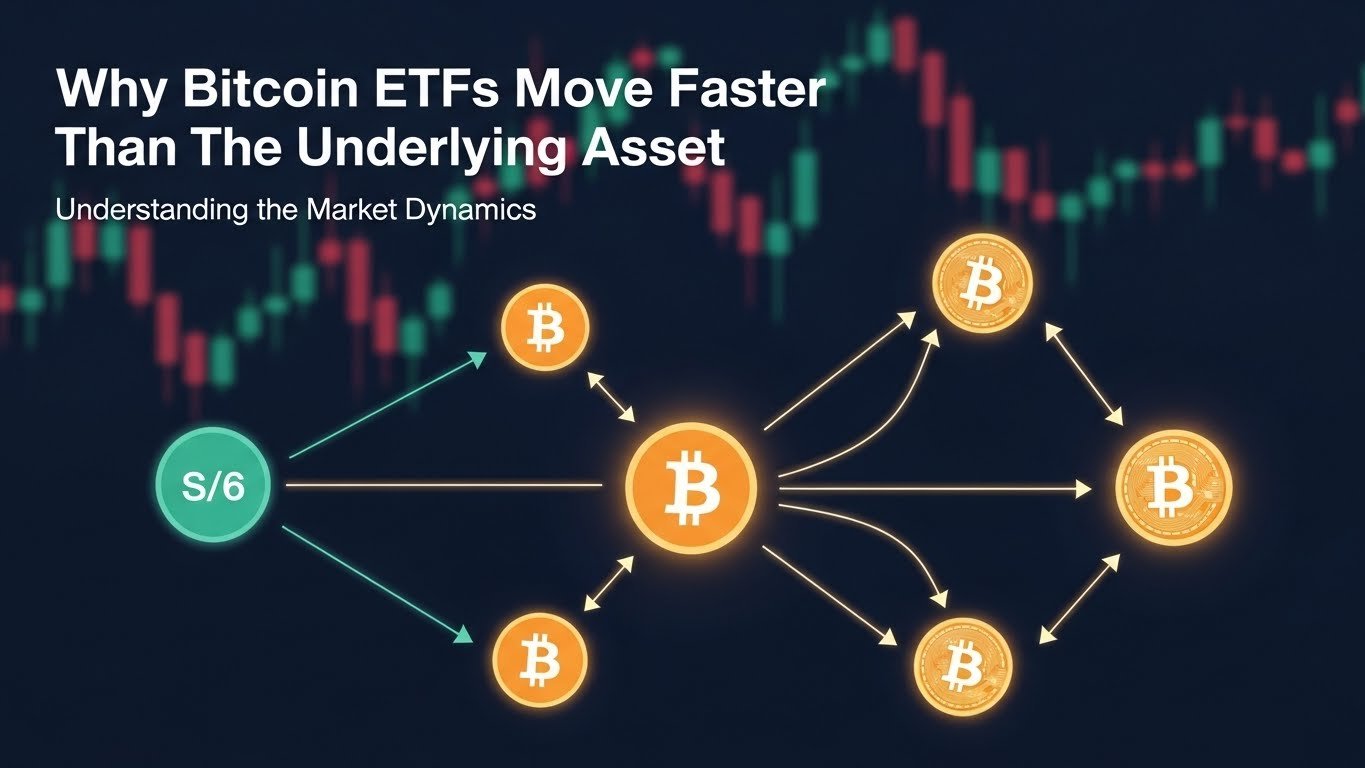
This speed means Bitcoin ETFs often behave like high-beta equity instruments rather than long-term stores of value. As a result, they are frequently used for tactical positioning rather than strategic holding, reinforcing the rollercoaster effect that defines their market behavior.
TradFi ETFs and the “Abnormally High” $46B Start to 2026
The opening weeks of 2026 delivered a surprise that caught even seasoned market observers off guard. TradFi ETFs recorded approximately $46 billion in inflows, a level widely described as “abnormally high” for such an early point in the year. This surge reflects more than seasonal portfolio rebalancing; it signals a structural shift in how capital is being deployed.
TradFi ETFs now serve as the default investment vehicle for exposure across equities, fixed income, commodities, and alternative strategies. Their growth underscores investor preference for liquidity, transparency, and flexibility, especially in uncertain macroeconomic environments.
This explosive inflow suggests that investors are prioritizing scalable, cost-efficient products capable of adapting quickly to changing market conditions. In this context, ETFs are not merely investment tools; they are infrastructure for modern finance.
What Makes the $46B Inflow So Unusual
Early-year ETF inflows are not uncommon, but the magnitude seen in 2026 stands out. Historically, such levels of demand appear over several months, not weeks. The speed of capital movement indicates heightened conviction, heightened caution, or a combination of both.
For many investors, ETFs offer a way to maintain market exposure while preserving optionality. They allow rapid repositioning without sacrificing diversification, making them particularly attractive during periods of economic transition.
How Bitcoin ETFs Fit Into the TradFi ETF Boom
At first glance, the surge in TradFi ETFs might suggest a calmer, more conservative investment climate, seemingly at odds with the volatility of Bitcoin ETFs. However, these trends are not contradictory. Instead, they reflect a market that is increasingly comfortable with complexity.
Bitcoin ETFs benefit indirectly from the broader ETF boom. As more capital flows into ETFs overall, investors become more familiar with using them for diverse exposures, including digital assets. Bitcoin ETFs are no longer fringe products; they are increasingly viewed as a legitimate component of diversified portfolios.
That said, Bitcoin ETFs remain distinct due to their volatility profile. While TradFi ETFs may absorb large inflows steadily, Bitcoin ETFs often experience episodic surges driven by momentum, fear of missing out, or macro catalysts.
Institutional Adoption and Portfolio Integration
Institutional investors rarely move all at once. Adoption typically begins with small allocations, often framed as experimental or opportunistic. Over time, these allocations can grow as comfort increases and performance data accumulates.
Bitcoin ETFs are following this pattern. Many institutions now include modest Bitcoin exposure via ETFs, treating it as a non-correlated asset with asymmetric upside potential. This incremental adoption contributes to long-term demand even as short-term volatility persists.
The Role of Macroeconomic Forces in ETF Volatility
Macroeconomic conditions play a decisive role in shaping ETF flows. Interest rates, inflation expectations, geopolitical tensions, and currency movements all influence investor risk appetite. Bitcoin ETFs are particularly sensitive to these forces because Bitcoin is often perceived as both a speculative asset and a hedge against systemic risk.
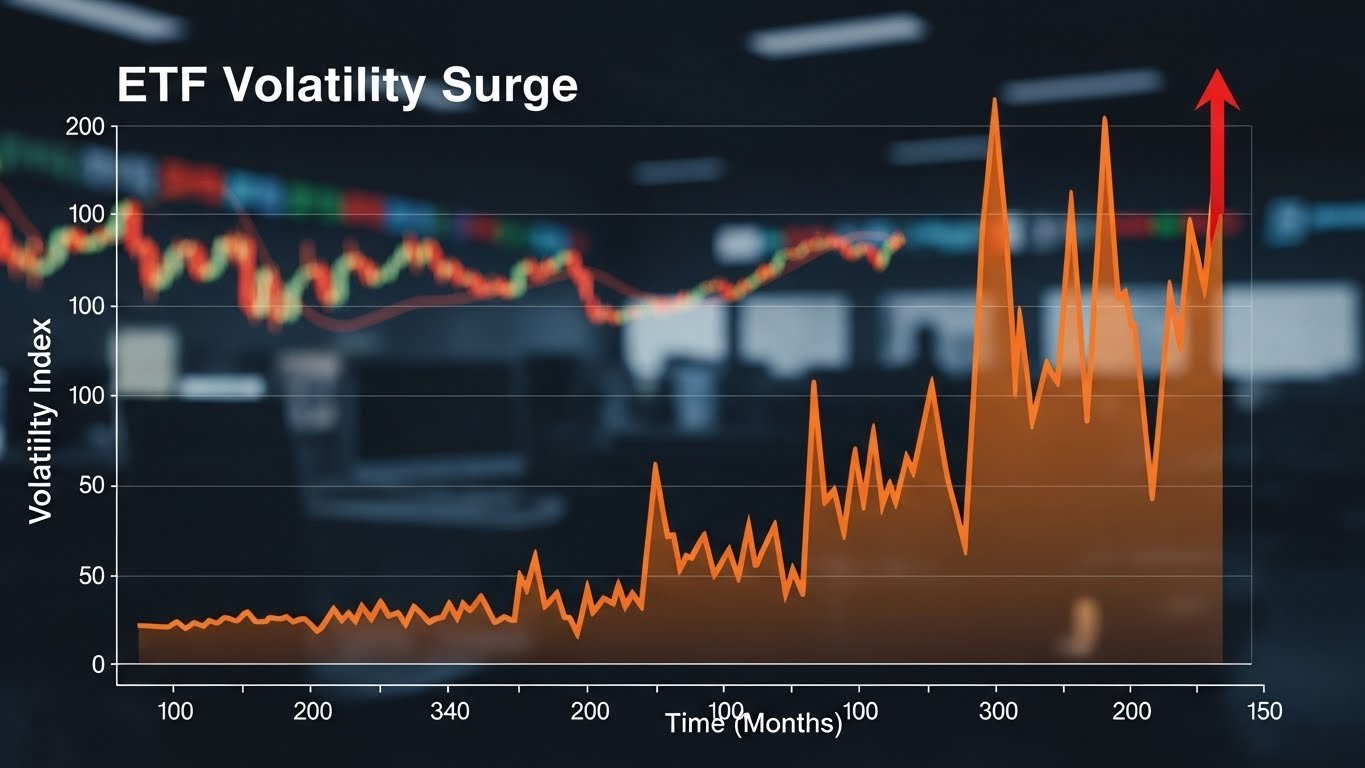
When real yields rise, investors may reduce exposure to volatile assets, leading to ETF outflows. Conversely, when liquidity conditions improve or confidence in fiat systems weakens, Bitcoin ETFs can attract significant inflows.
This dual identity creates a push-and-pull dynamic that defines the Bitcoin ETFs rollercoaster. Bitcoin ETFs respond not only to crypto-specific developments but also to the same macro signals that drive equity and bond markets.
Risk-On Versus Risk-Off Cycles
During risk-on periods, investors seek growth and innovation, often favoring assets like Bitcoin. Bitcoin ETFs tend to benefit from this environment, experiencing strong inflows and positive momentum. In risk-off phases, capital shifts toward perceived safety, and Bitcoin ETFs may see rapid outflows.
These cycles can unfold quickly, especially in an ETF-driven market where capital moves at unprecedented speed. Understanding this context is essential for interpreting Bitcoin ETF performance accurately.
Fee Competition and Market Maturity
As Bitcoin ETFs mature, competition among issuers intensifies. Expense ratios, liquidity, tracking efficiency, and brand trust all influence investor choice. Fee compression has already begun, signaling a transition from novelty to normalization.
Lower fees make Bitcoin ETFs more accessible, encouraging long-term holding rather than short-term speculation. However, they also enable easier switching between products, potentially increasing flow volatility as investors chase marginal advantages.
This dynamic mirrors the evolution of traditional ETF categories, where early volatility eventually gives way to stability as products consolidate and investor behavior matures.
Liquidity as a Competitive Advantage
Liquidity remains one of the most important differentiators among Bitcoin ETFs. High trading volume and tight spreads reduce transaction costs, making certain funds more attractive to large investors. Over time, liquidity tends to concentrate in a handful of dominant products, shaping flow patterns across the market.
As liquidity deepens, Bitcoin ETFs may become less volatile at the fund level, even if the underlying asset remains volatile.
Behavioral Finance and the ETF Narrative Cycle
Investor psychology plays a significant role in the Bitcoin ETFs rollercoaster. Headlines about inflows and outflows can influence sentiment, creating feedback loops that amplify market movements. Positive narratives attract capital, which reinforces optimism, while negative narratives can trigger fear-driven selling.
ETFs make these narratives more visible by publishing daily flow data, turning investor behavior into a public signal. This transparency is valuable, but it can also exaggerate short-term trends.
Recognizing the difference between narrative-driven noise and structural change is critical for anyone following Bitcoin ETFs closely.
Long-Term Outlook for Bitcoin ETFs in 2026 and Beyond
Despite short-term volatility, the long-term trajectory of Bitcoin ETFs appears constructive. Their integration into traditional finance infrastructure represents a milestone in the institutionalization of digital assets. As regulatory clarity improves and distribution channels expand, Bitcoin ETFs are likely to attract a broader investor base.
The $46B surge into TradFi ETFs underscores the growing dominance of ETFs as the preferred investment vehicle. Bitcoin ETFs stand to benefit from this shift, even as they continue to experience pronounced swings.
Ultimately, the Bitcoin ETFs rollercoaster may be less a sign of instability and more a reflection of growth. Volatility is often highest during periods of transition, and Bitcoin ETFs are still in the early stages of their mainstream journey.
Conclusion
The contrast between Bitcoin ETFs’ volatility and the “abnormally high” $46B inflow into TradFi ETFs reveals a financial system in transformation. ETFs have become the engine of modern investing, capable of channeling vast sums of capital with unprecedented speed and efficiency.
Bitcoin ETFs embody both the promise and the challenge of this evolution. They offer accessibility, legitimacy, and integration, but they also magnify the emotional and macroeconomic forces that drive markets. The Bitcoin ETFs rollercoaster is not a flaw; it is a feature of an asset class finding its place within traditional finance.
As 2026 unfolds, investors who understand the structural, macroeconomic, and behavioral factors shaping Bitcoin ETFs will be better positioned to navigate their volatility and recognize their long-term potential.
FAQs
Q: Why are Bitcoin ETFs so volatile compared to traditional ETFs?
Bitcoin ETFs track a highly volatile underlying asset and trade with the speed and liquidity of traditional markets, amplifying short-term price movements.
Q: What does the $46B inflow into TradFi ETFs indicate?
It suggests unusually strong investor demand for ETFs as a primary investment vehicle, reflecting a structural shift rather than a temporary anomaly.
Q: Are Bitcoin ETFs suitable for long-term investors?
They can be, especially as part of a diversified portfolio, but investors must be comfortable with higher volatility than traditional asset classes.
Q: How do macroeconomic conditions affect Bitcoin ETFs?
Interest rates, inflation, and liquidity conditions heavily influence investor appetite for Bitcoin ETFs, often driving rapid inflows or outflows.
Q: Will Bitcoin ETFs become more stable over time?
As the market matures, liquidity deepens, and institutional adoption grows, Bitcoin ETFs may experience reduced volatility at the fund level, even if Bitcoin itself remains volatile.
Also Read: Bitcoin ETFs Rollercoaster as TradFi Sees $46B Surge
