


The global crypto market has matured to the point where stablecoins are no longer a niche tool used by traders. Today, stablecoins have evolved into digital money that can move instantly across borders, power decentralized finance, support global remittances, and even act as a reserve asset for people who live in inflation-hit economies. That transformation is why governments are suddenly taking stablecoin regulation more seriously than ever. And few places highlight this shift better than South Korea.
South Korea is one of the most active crypto markets in the world. Its retail participation is massive, its exchanges handle large trading volumes, and its financial institutions are paying close attention to blockchain-based payments. That makes the current South Korea stablecoin fight extremely important—not just for local investors, but for the future balance of power in global digital finance.
Right now, a major internal disagreement has slowed down South Korea’s next wave of crypto regulations. Instead of rolling out stablecoin rules soon, the country’s key legal framework has been pushed back, with expectations that comprehensive rules may not arrive until 2026. This delay is not happening quietly; it reflects a serious dispute between different authorities over who should control stablecoins and how stablecoins should exist inside the national economy.
In the middle of this fight sits one big question: should stablecoins be treated like bank money, issued only by banks under strict control, or should non-bank companies—such as fintech firms and licensed crypto platforms—also be allowed to create won-backed stablecoins under regulatory supervision?
While South Korea wrestles with that dilemma, the United States is moving toward stronger stablecoin legislation and clearer rules that may encourage more stablecoin innovation within American markets. Since dollar-pegged stablecoins already dominate global crypto liquidity, South Korea’s delay could unintentionally widen the gap.
That’s why this topic matters so much. If South Korea stablecoin fight delays rules until 2026, does it create the perfect opening for the U.S. to dominate stablecoins even more? The answer is complex, but the direction is becoming clearer.
Understanding the South Korea Stablecoin Fight
The phrase South Korea stablecoin fight sounds dramatic, but it accurately describes what’s happening. This is not a small policy disagreement. It is a high-stakes battle over monetary influence, financial stability, innovation control, and the future of payments.

Stablecoins are not like typical cryptocurrencies. A Bitcoin price surge doesn’t directly threaten a country’s monetary system. Stablecoins do. They can act as cash-like assets, compete with bank deposits, shift liquidity, and give users a way to move value outside traditional financial rails. That makes stablecoins politically sensitive.
Why South Korea Is Struggling to Agree
South Korea’s government and financial regulators broadly agree that stablecoins need oversight. The dispute is about how strict that oversight should be, and who gets the right to issue stablecoins. One side argues that stablecoins should be issued only by banks because stablecoins essentially function like money. If they function like money, they should be supervised like money, and banks already have deposit rules, compliance systems, risk management, and reserve standards.
The other side argues that limiting stablecoin issuance to banks would suffocate innovation. They believe South Korea should allow licensed fintech companies and regulated private issuers to launch won-backed stablecoins while enforcing strict reserve rules and transparency. That disagreement is why stablecoin regulation has become the biggest obstacle in South Korea’s broader digital asset laws.
Why Stablecoins Matter More Than People Realize
To understand why the South Korea stablecoin fight is delaying rules until 2026, you must understand what stablecoins represent. Stablecoins are not just “crypto dollars.” They are becoming programmable money. Stablecoins can be used for global payments, trading, settlement, lending, and tokenized finance. They are simple in concept—digital tokens pegged to stable fiat value—but powerful in execution.
Stablecoins as the Payment Rail of the Internet
The internet has evolved through phases: information, social, commerce, and now value transfer. Stablecoins are now powering the value transfer layer. A stablecoin is faster than a bank wire, easier than international banking, and often cheaper than remittance networks. This is why stablecoin adoption keeps growing despite regulatory uncertainty. This is also why central banks are uneasy. Stablecoins can bypass traditional banking rails, shifting financial control away from traditional institutions.
What South Korea’s Delayed Rules Mean for the Crypto Industry
South Korea’s decision to delay stablecoin rules until 2026 affects more than just stablecoins. It impacts exchange development, institutional adoption, cross-border settlement projects, fintech innovation, and global competitiveness.
Regulatory Uncertainty Creates a Business Slowdown
When regulation is unclear, businesses hesitate. Financial institutions do not want to invest heavily in stablecoin infrastructure if rules are not finalized. Startups may pause development, investors may hesitate, and innovation may shift to other regions. This can become especially harmful because stablecoins are already accelerating worldwide. If South Korea spends two years debating while other nations implement frameworks, it risks losing leadership.
Korea’s Crypto Market Is Too Big to Ignore
South Korea is not a minor market. It is one of the most influential crypto economies globally. What South Korea does will shape how other Asian jurisdictions approach stablecoin licensing, reserve requirements, and enforcement standards. A delay until 2026 means the region may align more closely with other frameworks first, leaving Korea to catch up later.
Role of the Bank of Korea in the Stablecoin Debate
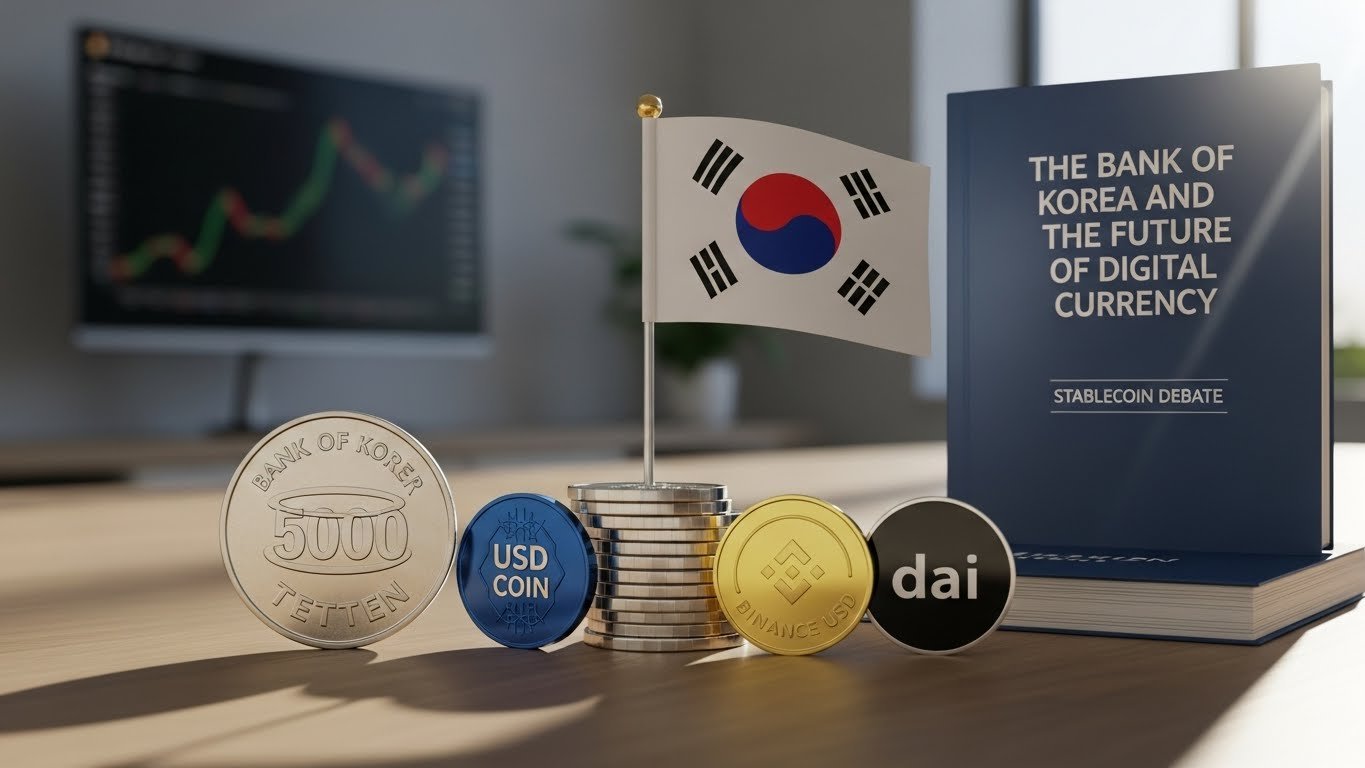
The Bank of Korea is central to the South Korea stablecoin fight. Central banks are naturally cautious because stablecoins can alter money circulation. The Bank of Korea’s position is largely shaped by three concerns: monetary policy, capital flows, and systemic financial stability.
Monetary Policy Concerns
Stablecoins can become widely used substitutes for bank deposits. If large volumes of money shift into stablecoins, it could affect how monetary policy transmission works. Central banks rely on controlling liquidity conditions and interest rates through the banking system. Stablecoins complicate that.
Capital Flow Risks
In crisis events, people could quickly move won into dollar stablecoins and then into other assets or offshore markets. That could accelerate capital outflows. For a country like South Korea, which is heavily integrated into global trade and financial markets, sudden capital movements can become disruptive.
Why Fintech Firms Want Won Stablecoins
The other side of the stablecoin fight is driven by fintech companies and innovation-focused regulators who want South Korea to remain competitive. A won stablecoin has massive potential. It could strengthen domestic fintech growth and reduce reliance on dollar stablecoins.
A Tool for Modern Payments
Fintech companies see stablecoins as a way to modernize settlement infrastructure. Instead of relying on slow banking rails, they can build real-time settlement systems that integrate with global on-chain finance.
Fighting Dollar Stablecoin Dominance
A major reason Korea wants won stablecoins is to counter the growing power of USD stablecoins. Right now, dollar-backed stablecoins dominate global liquidity, and they dominate many Asian crypto markets. A strong won stablecoin ecosystem could keep more domestic liquidity tied to the won rather than shifting into dollar stablecoins.
The U.S. Advantage: Why America Could Dominate Stablecoins
Now comes the key question: US To Dominate?
The U.S. is uniquely positioned to dominate stablecoins because it already dominates global finance. But stablecoins add a new layer: digital dollar dominance. Even without perfect regulation, dollar stablecoins have become the backbone of global crypto activity. They are widely used for trading, cross-border settlement, and digital savings.
The Network Effect of Dollar Stablecoins
Stablecoins benefit from network effects. The more people use a stablecoin, the more liquidity it has, the more exchanges support it, and the more businesses integrate it. USD stablecoins already have that network advantage. That makes it extremely difficult for other stablecoins—even well-regulated ones—to catch up quickly.
The Regulatory Momentum in the U.S.
American regulators and lawmakers have been moving toward clearer stablecoin and digital asset rules. While debates continue, the direction is shifting toward formalization. If the U.S. establishes strong legal clarity before 2026, it could accelerate stablecoin adoption and cement dollar stablecoins as the dominant global standard.
South Korea Stablecoin Fight: Why Delay Helps the Dollar
The longer South Korea delays stablecoin regulation, the more time USD stablecoins have to expand. This matters because stablecoin dominance is not just about who issues the token. It’s about where liquidity and trust accumulate.
More Time for USD Stablecoins to Grow in Asia
Asia is already a stablecoin-heavy region because of cross-border trade, crypto trading, and remittance flows. If South Korea delays won stablecoins, USD stablecoins may become even more embedded in Korean and Asian markets.
Korea’s Liquidity Continues to Shift
Without a strong won stablecoin alternative, Korean traders and institutions will likely keep using dollar stablecoins for many functions. This shifts value and influence away from domestic currency innovation.
What a South Korean Stablecoin Framework Could Look Like in 2026
Even though regulation is delayed, South Korea could still produce a strong framework by 2026. That framework may determine whether Korea becomes a stablecoin leader or falls behind.
Bank-Only Issuance Model
If stablecoins are limited to banks, the system may be safer but less innovative. Banks move slower and may not experiment as aggressively. However, bank-issued stablecoins may gain higher trust from institutions, making them useful for large-scale settlement and regulated finance.
Licensed Private Issuers With Strict Standards
If Korea allows private issuers under strict licensing rules, it could create a more competitive stablecoin ecosystem. This could drive innovation while still protecting consumers. This model would likely include strong reserve requirements, transparency mandates, and redemption guarantees.
A Hybrid Model
A hybrid model is also possible. Banks may be allowed first, followed by a gradual expansion to licensed fintech issuers under strict supervision. This could satisfy central bank concerns while still encouraging innovation long-term.
How Korea Can Compete With the U.S. Stablecoin System
Even if Korea delays until 2026, it can still compete if it builds a strategic stablecoin framework.
Strong Compliance and Transparency Standards
Global users and institutions will adopt stablecoins they trust. Korea can build trust through strict reserve rules, auditing, and clear redemption guarantees.
Integration With Domestic Payments
South Korea has advanced payments infrastructure. If won stablecoins can integrate with local digital wallets, merchant networks, and consumer apps, they can achieve adoption faster than many other stablecoins.
Innovation in Tokenized Finance
Stablecoins are not just for payments. They can support tokenized securities, tokenized deposits, and on-chain settlement of traditional financial assets. If Korea builds stablecoins into its broader financial modernization strategy, it could create a unique ecosystem advantage.
Global Stablecoin Race: Why 2026 Will Be a Turning Point
By 2026, stablecoins will likely play a major role in global trade settlement, consumer payments, and institutional finance. That’s why the South Korea stablecoin fight has global consequences. The nations that define stablecoin frameworks will influence the architecture of digital money. If Korea delays too long, the U.S. dollar stablecoin system could become even more entrenched. But if Korea uses this delay to design a world-class framework that balances innovation and stability, it could still become a leader in regulated digital currency infrastructure.
Conclusion
The South Korea stablecoin fight delaying rules until 2026 is a major event in the global digital asset economy. It signals that stablecoins have reached a point where they are treated as money, not just crypto tokens.
In the short term, this delay benefits the U.S. because dollar stablecoins already dominate global liquidity. The longer Korea waits, the more entrenched USD stablecoins become across trading, settlement, and cross-border finance.
However, South Korea still has time to respond. If it builds a strong stablecoin framework by 2026—one that supports compliance, innovation, and integration with domestic payments—it can still challenge dollar stablecoin dominance within its market and possibly become a leader in regulated stablecoin innovation in Asia. The battle is not simply Korea vs. the U.S. It is a battle over who defines the future of internet money.
FAQs
Q: Why is South Korea delaying stablecoin regulations until 2026?
South Korea is delaying stablecoin regulations because key institutions disagree on who should be allowed to issue stablecoins and how stablecoins should be supervised to prevent financial stability risks.
Q: What is the main conflict in the South Korea stablecoin fight?
The main conflict is between a bank-first approach supported by monetary authorities and a broader issuance model supported by innovation-focused regulators and fintech firms.
Q: Will the U.S. dominate stablecoins if Korea delays until 2026?
The U.S. is likely to strengthen stablecoin dominance because USD stablecoins already have major liquidity and global adoption, and Korea’s delay reduces competition from won-based stablecoins.
Q: Why do people prefer dollar stablecoins in crypto markets?
People prefer dollar stablecoins because they are widely accepted across exchanges, have deep liquidity, and are used globally for trading, saving, and transferring value.
Q: Can South Korea still compete in the stablecoin market after 2026?
Yes. South Korea can compete if it launches a strong regulatory framework, supports trusted won stablecoins, and integrates them into payments, fintech systems, and tokenized finance infrastructure.
Also More: Altcoin Comeback Signs of Life in Turmoil
