


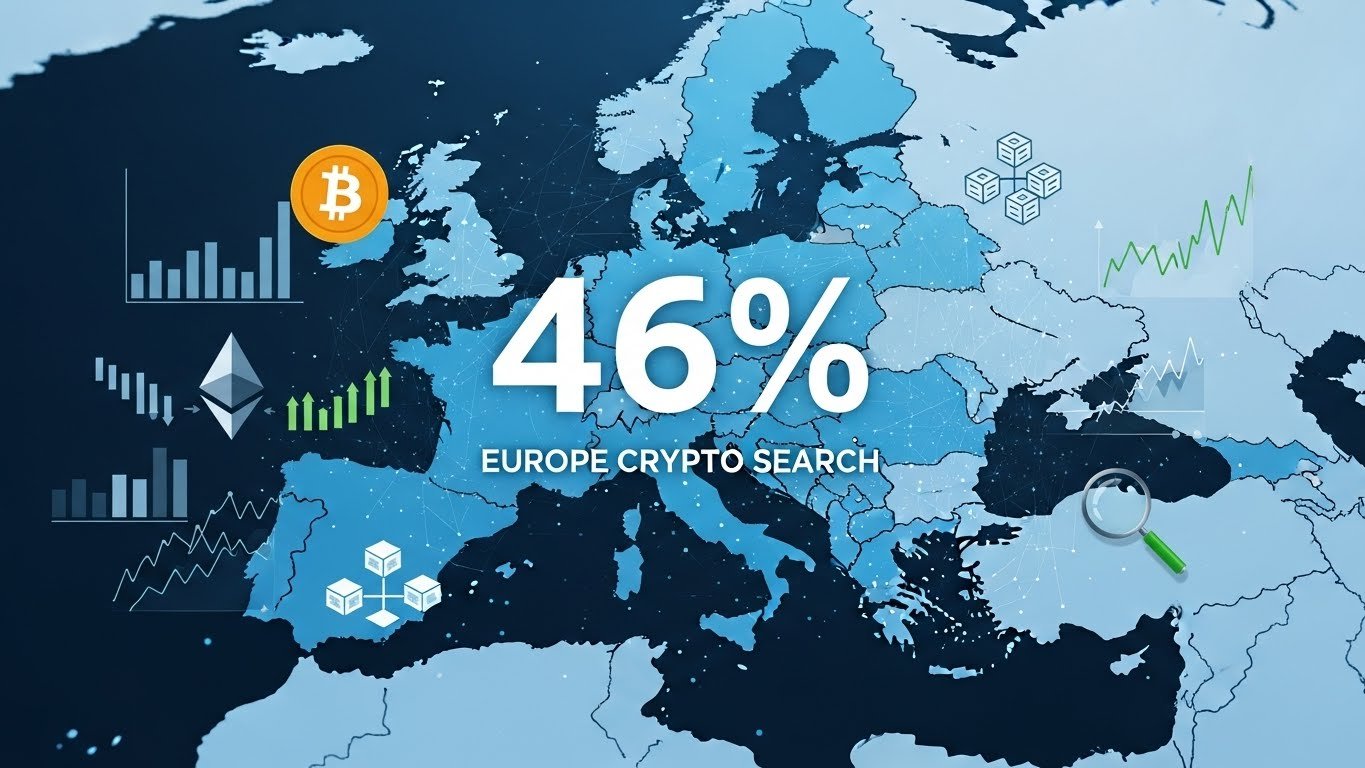
46% Europe Crypto Search noticed that finding reliable crypto information feels harder lately, you’re not imagining it. Across the continent, Europe’s crypto search reliance is climbing rapidly as online discovery becomes more fragmented. Whether it’s algorithm shifts, stricter platform policies, regional regulations, or the flood of low-quality content, everyday users are increasingly turning to search engines as their “safe” gateway into the crypto world. The phrase “46% Europe’s crypto search reliance” captures a growing reality: nearly half of European crypto discovery is now rooted in search-led behavior rather than social feeds or community-driven platforms.
This shift matters because the way people discover crypto shapes everything that follows—what exchanges they choose, which projects gain attention, how scams spread, and how regulators respond. In a region where policy decisions and consumer protection are taken seriously, Europe’s crypto search reliance reflects a more cautious, research-heavy mindset. But it also reveals a vulnerability: when discovery tightens, the winners are those who rank, those who optimize, and those who can dominate search visibility.
In this article, we’ll unpack what “46% Europe’s crypto search reliance” means, why discovery is tightening, how search behavior is changing across European markets, and what crypto businesses, creators, and investors should do next. You’ll also learn how SEO for crypto is evolving, how MiCA compliance influences content and marketing, and why trust signals are becoming the most valuable ranking currency in the crypto space.
Understanding the “46% Europe’s Crypto Search Reliance” Trend
The headline figure—46%—signals an important behavioral shift. Crypto users in Europe are increasingly using search engines as the primary method of discovery, due to reduced reach on social platforms and changing content moderation rules. In practical terms, Europe’s crypto search reliance means users are typing queries like “best crypto wallet in Germany,” “MiCA regulation explained,” “Bitcoin ETF Europe,” and “secure crypto exchange France” rather than relying on influencers or social trends.
This trend has two major implications. First, search engines become the gatekeepers for crypto education and onboarding. Second, ranking well becomes a competitive moat for crypto brands. When discovery tightens, search becomes the most stable channel because it’s intent-driven. People searching for crypto services often have a clear goal: buying, learning, comparing, or verifying.
At the same time, Europe’s crypto search reliance reflects higher caution. European users typically take regulation, data privacy, and security more seriously than some other regions. That translates into more research and verification—meaning search engines and trustworthy sources become the default.
Why Discovery Is Tightening Across Europe’s Crypto Ecosystem
Crypto discovery is tightening for several reasons, and they’re all reinforcing one another. As a result, Europe’s crypto search reliance rises naturally.
Platform Policy Shifts and Reduced Organic Reach
Many social platforms have tightened policies around crypto-related promotions and financial advertising. Even when content is educational, it can be flagged or limited. Algorithmic changes also reduce organic reach, making it harder for new projects to be discovered through feeds alone. With fewer reliable social entry points, users shift to search engines for direct answers. That change alone fuels Europe’s crypto search reliance.
Content Saturation and the “Information Smog” Problem
Crypto content is everywhere—but quality content is harder to find. Between AI-spun blogs, recycled press releases, and misleading “review sites,” users struggle to identify what is credible. Search remains a filtering tool because users can cross-check multiple sources. This is why Europe’s crypto search reliance becomes not just a trend but a survival tactic.
Rising Concern About Scams and Misinformation
Europe has seen its share of crypto scams, rug pulls, and phishing campaigns. As users become more cautious, they research more, especially before sending funds anywhere. This drives search-heavy behavior like “Is this exchange legit?” or “wallet address scam check.” That safety-first approach strengthens Europe’s crypto search reliance further.
Role of Regulation: How MiCA and Compliance Shape Search Behavior
One of the biggest forces behind Europe’s crypto search reliance is regulation—particularly the EU’s Markets in Crypto-Assets framework. When rules tighten and enforcement rises, users want clarity: what’s allowed, what’s safe, and which platforms are compliant.
People in Europe increasingly search for terms like “MiCA compliant exchange,” “regulated crypto platform,” “licensed crypto broker,” and “KYC crypto Europe.” These aren’t casual curiosity searches; they’re high-intent queries that signal the user is close to making a decision.
Trust Becomes the Core Discovery Signal
In a regulated region, trust isn’t a marketing bonus—it’s the foundation. Search engines also reflect this. They prioritize content that demonstrates credibility, expertise, and authority. That means crypto brands that want visibility must align content with E-E-A-T (Experience, Expertise, Authoritativeness, Trustworthiness). The outcome is obvious: as trustworthy content performs better, Europe’s crypto search reliance continues to rise.
Regulation Drives Educational Search Demand
As policies evolve, users search for explanations. They want plain-language breakdowns of what changes mean for their wallets, taxes, exchanges, and stablecoins. This creates a major opportunity for educational content to capture demand and build authority. The more complex the regulatory environment gets, the more Europe’s crypto search reliance grows.
Search Engines as the New Crypto Front Door in Europe
In earlier cycles, many users entered crypto through influencers, Telegram groups, or viral social content. Today, in Europe, the “front door” is increasingly Google and other search engines. This shift makes Europe’s crypto search reliance one of the most important market indicators for crypto onboarding.
Search-based discovery has a different psychology than social-based discovery. Social discovery is passive; search discovery is intentional. European users are increasingly intentional.
High-Intent Queries Are Dominating the Funnel
Crypto brands that understand this shift optimize for queries that match user intent, including:
“best crypto exchange Europe,” “crypto tax rules Spain,” “hardware wallet review,” “how to buy Bitcoin safely in Italy.”
These searches show decision readiness. The more the market matures, the more users move from hype to practicality—again reinforcing Europe’s crypto search reliance.
Local Language Search Is Becoming a Competitive Battlefield
Europe is not a single-language market. Search behavior differs drastically across Germany, France, Spain, Italy, Poland, and the Nordics. Projects that only publish English content lose visibility. This pushes crypto companies toward localized SEO strategies, multilingual content, and region-specific compliance messaging. It also deepens Europe’s crypto search reliance because users prefer searching in their native language for financial decisions.
How Crypto SEO Is Evolving in Europe
Because Europe’s crypto search reliance is rising, crypto SEO is no longer just about keywords and backlinks. It’s about credibility, compliance-aware content, and user-centric structure.
Quality Signals Matter More Than Aggressive Optimization
Google and other search engines are increasingly sensitive to low-quality and misleading financial content. Over-optimized pages with thin reviews or affiliate-heavy language are being filtered. That means crypto SEO winners in Europe will be those who publish genuinely useful content, cite data responsibly, and demonstrate expertise.
To succeed in the era of Europe’s crypto search reliance, brands must build content that answers questions better than competitors, not content that merely targets a phrase repeatedly.
The Growth of “Verification Searches”
Another driver of Europe’s crypto search reliance is verification behavior. Users discover a brand elsewhere, then search to verify legitimacy. They’ll type the name of an exchange plus words like “review,” “scam,” “fees,” “licensed,” “MiCA,” or “withdrawal problems.”
If a brand’s search results show transparency, credible reviews, clear fee pages, and compliant messaging, conversions rise. If results show complaints, unclear policies, or low-authority websites, the user drops off instantly. This is why online reputation and search trust now control the crypto funnel.
What This Means for Exchanges, Wallets, and Crypto Platforms
If you operate a crypto business in Europe, Europe’s crypto search reliance is not just a statistic—it’s your marketing reality. The brands that treat search as their primary growth channel will win.
Exchanges: SEO Is Now a Compliance-Aware Growth Engine
Exchanges must balance acquisition goals with regulatory messaging. Users want low fees, but they also want safety, licensing, and transparency. That means exchange SEO content needs to cover fees, KYC, security audits, custody practices, and regulatory status with clarity.
As discovery tightens, search engines reward platforms that provide clear user pathways. That reinforces Europe’s crypto search reliance because users find better answers through search than through short-form social content.
Wallet Providers: Security Education Drives Rankings
Wallet-related searches are often fear-driven: users worry about hacks, lost seed phrases, phishing, or malicious apps. Wallet providers who create content around seed phrase security, cold storage, hardware wallet comparisons, and anti-phishing will naturally capture search demand in Europe. And because users want safer options, Europe’s crypto search reliance becomes even more pronounced in the wallet category.
What It Means for Investors and Everyday Users
For everyday users, rising Europe’s crypto search reliance is both good news and a warning.
The Good News: More Research Means Better Decisions
Search-driven discovery helps users compare sources and reduce impulsive decisions. It also helps people avoid hype cycles and focus on fundamentals. In that sense, increased Europe’s crypto search reliance is a sign of market maturity.
The Warning: Search Results Can Still Be Manipulated
Not everything that ranks is trustworthy. Some top-ranking pages are paid affiliate content dressed as “reviews.” Some are outdated. Some are quietly biased. That means European users must develop strong habits: checking multiple sources, confirming licensing claims, and verifying official domains.
The best defense is using search wisely: don’t rely on one page, and always cross-check.
The Media and Publisher Angle: Why Crypto News SEO Is Surging
Crypto publishers are also responding to Europe’s crypto search reliance by shifting from social-first distribution to search-first distribution.
Evergreen Content Is Becoming More Valuable Than Breaking News
Breaking news spikes quickly, but evergreen topics like “How MiCA works,” “crypto taxes by country,” and “how stablecoins are regulated” perform consistently. Publishers who dominate these topics capture long-term search traffic and become default authorities, strengthening Europe’s crypto search reliance even more.
Trust, Not Clickbait, Wins the New Search Game
Discovery tightening means misinformation is penalized faster. Publishers that rely on sensational headlines without substance lose visibility over time. Search systems increasingly reward consistent, well-structured, well-researched content.
How Crypto Brands Can Win in a Search-Reliant Europe
If you want to succeed in Europe’s tightening discovery environment, you need a strategy aligned with how people actually behave now. Since Europe’s crypto search reliance is high, the brands that win will focus on search trust.
Build Topic Authority, Not Just Keyword Pages
Instead of making dozens of thin pages targeting slight variations, build deep topic clusters around:
crypto regulation, crypto security, wallet education, exchange comparisons, and tax compliance.
Search engines recognize depth and coherence. Users appreciate it too. This approach keeps your brand visible as Europe’s crypto search reliance continues rising.
Publish Transparent, Verifiable Information
Show licensing, audits, security practices, and fee explanations clearly. Avoid vague claims. Add author bios, cite sources responsibly, and update content regularly. In a region where regulation matters, transparency is a ranking advantage.
Localize for Real European Search Behavior
If you want to capture Europe’s crypto search reliance, local language content is essential. Even if English is widely used, financial trust increases when users read in their native language. Localization also includes local tax rules, local payment methods, and region-specific regulatory context.
The Future Outlook: Will Europe’s Crypto Search Reliance Keep Rising?
All evidence suggests Europe’s crypto search reliance will remain strong and possibly increase. As regulation expands, as platforms tighten ad policies, and as users become more cautious, search becomes the most stable “neutral ground” for discovery.
AI-driven search experiences may also reshape the landscape, but they won’t reduce reliance on search—they’ll intensify it. Users will still need answers, comparisons, and verification. The brands that provide the clearest and most trustworthy content will be surfaced more often.
In short, discovery is tightening, but opportunity is expanding for those who understand the new rules of visibility.
Conclusion
The rise of 46% Europe’s crypto search reliance isn’t just a marketing insight—it’s a signal of a maturing, caution-driven market adapting to tighter discovery channels. With social reach declining, misinformation growing, and regulation increasing, European users are leaning into search for clarity, safety, and verification.
For crypto businesses, this means SEO is no longer optional—it’s central. But “SEO” here doesn’t mean stuffing keywords or chasing quick backlinks. It means building real authority, publishing transparent and compliant content, and aligning with how European users think: skeptical, research-heavy, and trust-focused.
For users, the shift toward Europe’s crypto search reliance can lead to better decisions—if they learn to evaluate sources critically. In a world where discovery is tightening, search is becoming Europe’s crypto compass. And the brands and publishers who offer trustworthy direction will be the ones who thrive.
FAQs
Q: What does “46% Europe’s crypto search reliance” actually mean?
It refers to a growing share of crypto discovery in Europe happening through search engines rather than social platforms or community channels. It suggests that nearly half of Europeans looking for crypto-related information start their journey by searching.
Q: Why is crypto discovery tightening in Europe?
Discovery is tightening due to stricter platform policies on financial content, increased moderation, changing algorithms, the rise of scams, and regulatory pressure. These forces push users toward search for more controlled and verifiable information.
Q: How does MiCA regulation affect Europe’s crypto search reliance?
MiCA increases demand for education and compliance verification. Users search for “MiCA compliant” platforms, regulated exchanges, and legal crypto services, which strengthens Europe’s crypto search reliance.
Q: Is search-based discovery safer than social discovery for crypto?
It can be safer because search allows users to compare multiple sources, read long-form explanations, and verify legitimacy. However, search results can still contain biased affiliate content or outdated information, so critical evaluation is essential.
Q: How can crypto companies benefit from Europe’s crypto search reliance?
Companies can benefit by investing in high-quality SEO content, building topical authority, localizing into European languages, and strengthening trust signals like transparency, licensing details, and security documentation.
Also More: Bitcoin Eyes $94,000 as Crypto Gains Extend in U.S.
