



Bitcoin climbs over $93,500 again, and the move is turning heads across crypto and traditional finance alike. After months of volatility, mixed macro signals, and shifting investor sentiment, Bitcoin crossing this psychological zone suggests something important: buyers are willing to defend higher prices, even in a market that still remembers sharp drawdowns.
At the time of writing, Bitcoin is trading around $93,662, after reaching an intraday high near $93,981. That price action matters because $93,500 is not just another number. It has been a widely watched reference point for traders, institutions, and long-term holders—often acting like a “decision zone” where the market chooses between a breakout and another round of consolidation.
So the real question is not simply why Bitcoin climbs over $93,500 today. The bigger question is whether Bitcoin can hold above this level long enough to confirm a sustainable uptrend—or whether the market is just repeating its familiar pattern of quick spikes followed by pullbacks.
In this in-depth guide, we’ll explore the forces behind Bitcoin’s move, the technical levels that matter most, and the catalysts that could decide whether the Bitcoin rally continues or stalls. You’ll also see how macroeconomics, institutional demand, regulation, and on-chain sentiment combine to shape Bitcoin’s next chapter.
Throughout this article, we’ll use supportive LSI keywords and related phrases—like BTC price analysis, crypto market trend, Bitcoin resistance and support, bullish momentum, and institutional adoption—to help you understand what’s happening without drowning in jargon.
Why Bitcoin Climbs Over $93,500 Right Now
Bitcoin climbs over $93,500 when multiple forces align at the same time. Crypto markets rarely move for just one reason, and this surge appears to be a mix of market structure, investor positioning, and broader financial sentiment.
One driver is that Bitcoin has been attempting a recovery after a weaker close to 2025. Reuters reported that Bitcoin was set for its first yearly loss since 2022, even after posting an all-time high above $126,000 in October 2025. That kind of yearly performance often creates a reset in sentiment: weak hands exit, stronger hands accumulate, and the market becomes more sensitive to new catalysts.
Another key factor is that Bitcoin has recently behaved more like a risk asset, often moving in tandem with tech stocks rather than acting as a pure “digital gold” hedge. Barron’s highlighted that Bitcoin’s early-2026 strength has come alongside broader gains in tech and even precious metals, suggesting that liquidity and risk appetite are still major influences.
When risk appetite rises, capital tends to flow back into high-beta assets, and Bitcoin remains the largest and most liquid “high-beta” crypto asset on the planet.
The Psychological Power of the $93,500 Bitcoin Level
Bitcoin climbs over $93,500 because markets love round numbers and widely observed price zones. In trading psychology, these areas become self-fulfilling battlegrounds: traders place sell orders there, buyers place breakout orders there, and institutions measure market strength around them.
There’s also historical context. Bitcoin entered 2025 around the $93,500 area, which made that level symbolic for performance comparisons, portfolio rebalancing decisions, and institutional benchmarking. Cointelegraph has referenced this zone as a critical point that Bitcoin fell below during late-2025 weakness, reinforcing its importance as a “line in the sand.”
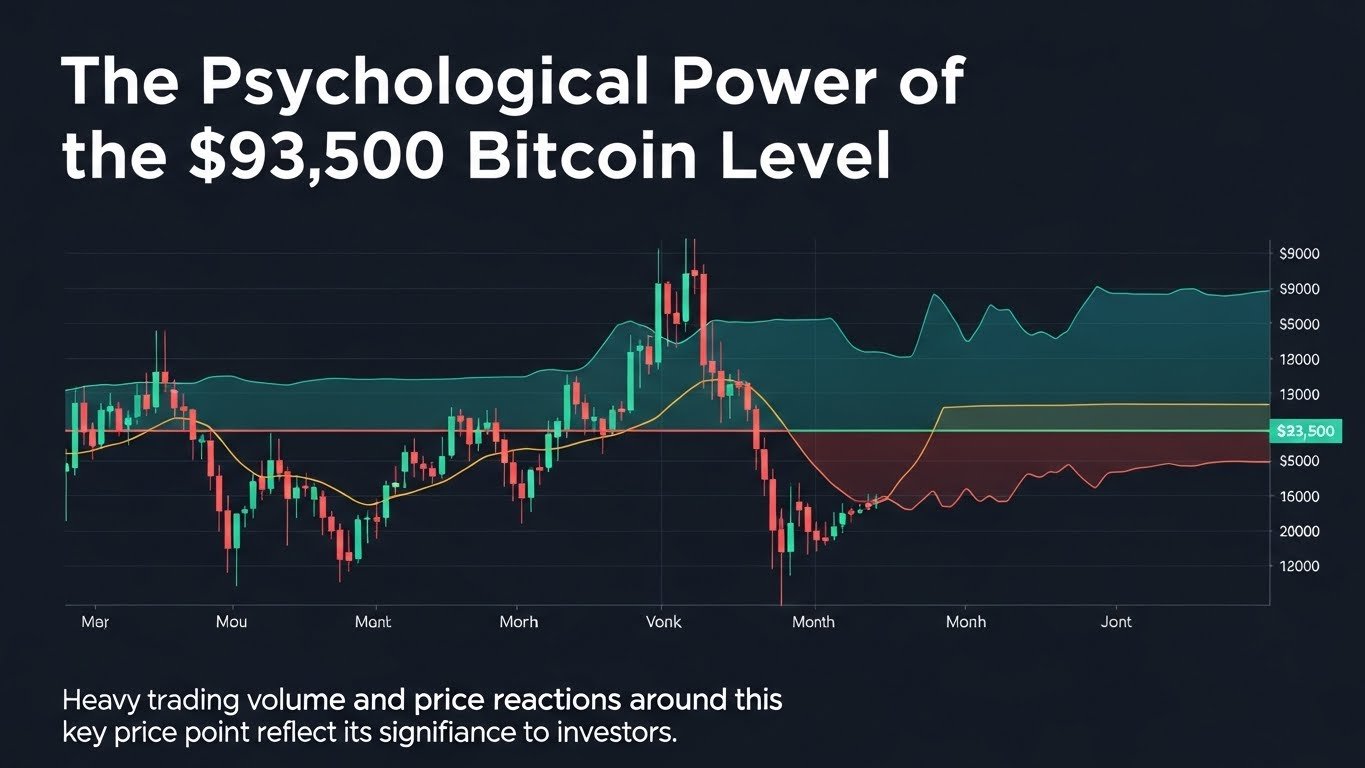
In other words, Bitcoin at $93,500 isn’t just about price—it’s about narrative. When Bitcoin climbs over $93,500, headlines change from “struggling recovery” to “bullish momentum returns,” and that shift alone can influence market participation.
Macro Factors Shaping the Bitcoin Trend
If you want to know whether Bitcoin climbs over $93,500 and stays there, you have to look beyond crypto and into macroeconomics. Bitcoin is still heavily influenced by rates, liquidity conditions, and investor perception of risk.
Interest Rates, Liquidity, and the Risk-On Trade
When global liquidity expands or when investors expect easier monetary conditions, speculative assets tend to benefit. Bitcoin’s strongest rallies historically align with periods when capital is searching for growth and alternative returns.
That doesn’t mean Bitcoin can’t rise during tight conditions, but it usually requires strong internal catalysts, such as major ETF inflows, a new adoption wave, or a powerful narrative shift.
Geopolitical Events and Market Volatility
Bitcoin also reacts to geopolitical headlines, though not always in a predictable “safe haven” way. Barron’s noted that Bitcoin has lately traded more in line with tech stocks than as a defensive asset, even as geopolitical tensions have increased. That’s important because it suggests Bitcoin sentiment is still tied to overall market confidence.
When volatility spikes, Bitcoin can move sharply in either direction—especially if leveraged traders are over-positioned.
Bitcoin Technical Analysis: Support and Resistance Levels
When Bitcoin climbs over $93,500, technical traders immediately focus on whether the move is a true breakout or a liquidity grab. The chart matters because Bitcoin is still a market where technical levels influence short-term behavior significantly.
Key Support Zones if Bitcoin Pulls Back
If Bitcoin fails to hold above $93,500, traders will look for support at previous consolidation zones. In recent market commentary, Bitcoin has also been described as range-bound at times near the high-$80,000s, suggesting that region can act as a fallback support if momentum fades.
A healthy uptrend often includes pullbacks that hold higher lows. If Bitcoin climbs over $93,500 and then retests the level successfully, that can strengthen the bullish case.
Key Resistance Zones if Bitcoin Breaks Higher
On the upside, Bitcoin typically faces resistance at major round numbers, prior swing highs, and psychologically important thresholds like $95,000, $100,000, and beyond. If Bitcoin can establish itself above $93,500 and push into the mid-$90,000s, it may trigger renewed FOMO, especially among sidelined investors waiting for confirmation.
On-Chain and Market Sentiment: What the Data Suggests
When Bitcoin climbs over $93,500, on-chain observers often look for confirmation in real behavior: are long-term holders selling, are exchanges seeing inflows, and is demand organic or leverage-driven?
Although this article focuses on broad market structure rather than specific proprietary datasets, the general interpretation is clear: sustainable rallies tend to happen when:
- long-term holders are not aggressively distributing,
- exchange reserves trend lower,
- spot demand leads the move rather than excessive leverage.
If Bitcoin climbs over $93,500 mainly due to leveraged speculation, it becomes vulnerable to sharp corrections. But if it’s supported by steady spot accumulation—especially from institutions—then pullbacks may become buying opportunities rather than trend reversals.
Institutional Adoption and the “Maturing Bitcoin” Narrative
One major reason Bitcoin climbs over $93,500 is the continued expansion of institutional involvement. Whether through funds, corporate allocations, or crypto-linked financial products, institutional participation changes the way Bitcoin trades.

Some analysts argue that Bitcoin is moving toward a “mature cycle” structure, where volatility compresses and price trends become more methodical compared to earlier boom-and-bust eras. Even some 2026 outlook discussions emphasize that Bitcoin could be defined more by institutional stability than retail frenzy.
This doesn’t eliminate volatility—Bitcoin will always be volatile relative to traditional assets—but it does suggest that the market may be building deeper liquidity pools that can support higher prices over time.
Regulation and Policy: A Quiet but Powerful Catalyst
Bitcoin climbs over $93,500 in a market that is increasingly shaped by regulatory clarity—or the lack of it. Regulatory headlines can create sudden rallies, abrupt selloffs, or long consolidation periods.
Reuters noted that regulatory developments have played a role in shaping sentiment, including progress on frameworks and shifting enforcement dynamics, even as major structural reforms remain pending.
The key idea for investors is simple: markets like certainty. When policy direction becomes clearer, capital allocation decisions become easier for institutions. That can support Bitcoin’s long-term trajectory even if short-term reactions remain volatile.
Will the Bitcoin Trend Continue Above $93,500?
This is the most important question: Bitcoin climbs over $93,500, but will it stay above it?
The answer depends on how the market reacts over the next several sessions and weeks. A single close above $93,500 can be encouraging, but trend continuation usually requires follow-through—higher highs, higher lows, and steady volume.
Bullish Scenario
If Bitcoin climbs over $93,500 and holds the level, it can signal that the market is comfortable accepting higher prices. In this scenario, Bitcoin could grind upward toward the mid-$90,000s, test $100,000 again, and potentially spark a broader crypto recovery.
This path becomes more likely if macro conditions remain supportive, risk appetite holds, and institutional buyers continue to accumulate.
Bearish Scenario
If Bitcoin climbs over $93,500 but quickly falls back below, the move can become a “fakeout.” Fakeouts often trap late buyers and invite sellers to push the price lower, sometimes back into the prior consolidation range.
In that case, Bitcoin could revisit the high-$80,000s or other prior support zones before attempting another breakout.
How Traders and Investors Can Think About Risk Here
Bitcoin climbs over $93,500, but that doesn’t mean the market is suddenly risk-free. Whether you’re trading short-term moves or holding long-term, the most important factor is understanding volatility.
If you’re trading, you need to respect invalidation levels and avoid emotional decisions. If you’re investing, you need to recognize that Bitcoin’s long-term narrative can remain bullish even during drawdowns.
Bitcoin is famous for testing conviction. That’s why focusing on position sizing, time horizon, and discipline often matters more than predicting the next $2,000 move.
Conclusion
Bitcoin climbs over $93,500 and sends a clear message: the market still has strong demand near major psychological levels. With Bitcoin trading around $93,662 and showing renewed momentum, the bulls have an opportunity to build a stronger uptrend—especially if the price can hold above this key zone.
However, the trend continuing depends on follow-through, macro stability, and whether the move is driven by spot demand rather than leveraged speculation. For now, Bitcoin over $93,500 is a meaningful technical and psychological signal, but not a guaranteed breakout.
If Bitcoin holds above this zone in the coming days, the market may start shifting from “recovery” into “trend continuation.” If it fails, the market may simply return to consolidation until the next catalyst arrives.
FAQs
Q: Why is $93,500 such an important Bitcoin level?
Bitcoin climbs over $93,500 because it’s a major psychological and historical reference zone. Traders often treat it as a breakout point, and it has been highlighted as a key area in recent price commentary.
Q: Is Bitcoin’s move above $93,500 a confirmed breakout?
Not necessarily. A confirmed breakout usually needs multiple strong closes above the level and continued buying pressure. One spike can still turn into a fakeout.
Q: What could push Bitcoin higher from here?
Bitcoin could continue rising if macro conditions remain supportive, risk appetite stays strong, and institutional demand grows. Regulatory clarity can also help by reducing uncertainty.
Q: What are the biggest risks after Bitcoin climbs over $93,500?
The biggest risks include leverage-driven rallies that unwind quickly, sudden macro shocks, and bearish market structure if Bitcoin fails to hold key support zones.
Q: Could Bitcoin return to the $80,000s again?
Yes. Bitcoin has recently traded in ranges around the high-$80,000s at times, and if $93,500 fails as support, prior consolidation zones could be revisited.
