


XRP has once again grabbed the crypto market’s attention after XRP jumps 8% above $2 as traders bet on a friendlier SEC, sparking fresh debate about whether the long-standing regulatory cloud over Ripple is finally lifting. Price action around the $2 mark is more than just a psychological milestone—it often becomes a battleground where momentum traders, long-term holders, and institutional participants test conviction. When XRP pushes firmly above $2, it tends to send a loud signal that sentiment is shifting, liquidity is returning, and buyers are willing to absorb sell pressure at historically important levels.
This time, the rally is not happening in isolation. A growing share of market participants appear to be pricing in a future where the U.S. Securities and Exchange Commission adopts a more constructive stance toward crypto—particularly toward assets that have spent years entangled in legal uncertainty. As speculation builds around a more accommodating SEC, XRP’s move has become a headline event that reflects not only the token’s own fundamentals but also the market’s broader hunger for regulatory clarity.
In the short term, XRP jumps 8% above $2 as traders bet on a friendlier SEC has fueled a sharp increase in trading activity, bringing XRP back into the spotlight among large-cap altcoins. In the medium and long term, the key question becomes whether this breakout is the beginning of a sustained trend—or a volatility spike that fades once the initial optimism cools. Understanding what’s happening requires digging into the intersection of regulation, trader psychology, liquidity, and Ripple’s place in the evolving crypto payments narrative.
Why XRP is rallying now: the “friendlier SEC” narrative
When XRP jumps 8% above $2 as traders bet on a friendlier SEC, the first layer of explanation is sentiment. Markets move on expectations, and expectations are currently shifting toward a U.S. regulatory environment that could become less hostile to crypto innovation. For XRP, this narrative carries more weight than it does for many other tokens because Ripple’s story has been closely tied to regulatory outcomes for years.
The crypto market has learned, repeatedly, that regulatory tone matters almost as much as regulatory action. Even subtle changes—such as personnel shifts, altered enforcement priorities, or signals from policymakers—can dramatically reshape how traders price risk. The idea of a more welcoming SEC suggests fewer headline shocks, a more predictable compliance path for crypto firms, and a reduced “discount” applied to assets that have been seen as legally vulnerable.
That’s why the market’s reaction can be swift. Traders are not waiting for perfect certainty; they’re positioning for probability. If XRP is perceived as a prime beneficiary of improving regulatory conditions, then the token becomes a natural target for momentum flows. Add the fact that XRP is a highly liquid, widely available asset with strong name recognition, and it’s easy to see why a sentiment-driven catalyst can produce a sudden surge.
The $2 level: why this price matters for XRP traders
The rally is notable not only because of its size but because of where it happened. The $2 zone acts like a magnet for XRP’s market structure. It’s a point where support and resistance often flip, where leveraged traders set stops, and where options markets tend to cluster interest. When XRP hovers near $2, liquidity increases because both buyers and sellers see it as a reference point for their strategies.
In practical terms, the $2 line is significant because it can quickly shape narrative. A clean break above $2 encourages bullish headlines, attracts trend followers, and triggers mechanical buy signals across many trading systems. Conversely, a failure to hold above $2 can invite profit-taking, stop hunts, and renewed skepticism.

So when XRP jumps 8% above $2 as traders bet on a friendlier SEC, the market is not just celebrating a one-day pump. Many participants are watching to see if XRP can build acceptance above $2—meaning sustained trading above the level with healthy volume—rather than merely tagging it and falling back. If XRP holds, the breakout can become a foundation. If it rejects, the move could be remembered as a short-lived burst of optimism.
Regulatory clarity and XRP: why the SEC factor is unique here
XRP has been shaped by regulation more than most major tokens
For years, XRP’s trajectory has been influenced by legal and regulatory uncertainty. That context makes today’s price reaction especially sensitive to the SEC narrative. When XRP jumps 8% above $2 as traders bet on a friendlier SEC, traders are effectively expressing a belief that the regulatory overhang is shrinking—or at least that the next phase of enforcement may be less aggressive.
Unlike many crypto assets that rise and fall primarily with macro liquidity cycles, XRP has often traded with an additional “legal premium” baked in. The moment the market perceives that this premium is decreasing, price can re-rate quickly.
A friendlier SEC could change institutional behavior
Institutional capital tends to avoid uncertainty. When rules are unclear, compliance costs rise and reputational risk grows. If the SEC’s stance becomes more constructive, institutions may find it easier to justify exposure to XRP and other major altcoins, especially via regulated products.
That’s why a “friendlier SEC” theme can matter even before new legislation appears. Markets are forward-looking. They respond to what participants believe will be easier, safer, or more profitable in six months—not just what is true today.
Ripple’s real-world use case: payments, liquidity, and cross-border utility
Beyond regulation, XRP has always marketed itself as a token built for fast, efficient value transfer. The strongest long-term case for XRP is not as a meme asset or a purely speculative play, but as a tool for cross-border payments, liquidity provisioning, and settlement efficiency.
Ripple’s broader vision has typically centered on integrating blockchain rails into legacy payment systems, reducing friction and cost. In theory, that creates persistent demand for the token if it becomes deeply embedded into payment corridors.
When XRP jumps 8% above $2 as traders bet on a friendlier SEC, it also revives attention around this utility story. Traders don’t only buy XRP for fundamentals, but fundamentals shape how long rallies can last. A token with a credible use case often attracts longer-duration capital—holders who are willing to wait through pullbacks.
If regulatory pressure eases, the argument goes, Ripple’s business development could accelerate, partnerships could expand, and the ecosystem could grow in a way that justifies higher valuations. Whether or not that plays out exactly as bulls hope, the narrative itself can extend momentum.
Market mechanics: how XRP rallies accelerate so quickly
Liquidity and leverage amplify momentum
XRP is one of the most liquid altcoins in the market, which means it’s easy for traders to enter and exit positions quickly. Liquidity is usually seen as stabilizing, but it can also make rallies faster because large pools of capital can rotate into XRP without major slippage.
At the same time, derivatives markets often magnify moves. When price rises rapidly, short sellers are forced to close positions, creating a short squeeze effect. Liquidations can become fuel, turning a steady climb into a sharp vertical candle.
This is one reason why XRP jumps 8% above $2 as traders bet on a friendlier SEC can unfold in hours rather than days. Once momentum ignites, mechanical forces take over: stop-losses trigger, shorts cover, algorithms chase breakouts, and trend followers pile in.
The psychology of “catch-up trades”
A major driver of XRP rallies is the “catch-up” mentality. When the market believes XRP has underperformed relative to peers—often due to regulation—any hint of improvement can lead to aggressive positioning. Traders fear missing the first leg of a multi-week breakout, so they buy quickly, even at higher prices than they would prefer.
That emotion is intensified when headlines suggest the SEC environment is becoming less hostile. The market interprets that as a structural shift, not a temporary catalyst. And when structural shifts are perceived, price can move dramatically.
Technical structure: key areas traders are watching next
When XRP jumps 8% above $2 as traders bet on a friendlier SEC, technical analysis becomes the language many traders use to define risk. Even long-term investors pay attention to major zones because they shape how the next weeks of price discovery might unfold.
A common approach is to watch whether $2 flips into support. If XRP consolidates above it, the market may treat that as confirmation of strength. If XRP dips below and cannot reclaim it quickly, the move could be categorized as a false breakout.
Beyond $2, traders often watch nearby resistance pockets where previous sell-offs occurred. Those areas tend to attract profit-taking because early buyers want to lock in gains. If XRP slices through resistance with strong volume, it signals demand is still outpacing supply.
The most important point here is that technical zones are not magical numbers; they’re behavioral landmarks. They represent where traders previously made decisions, and therefore where they are likely to make decisions again.
What could keep XRP’s rally going?
XRP’s rally A sustained shift in regulatory tone
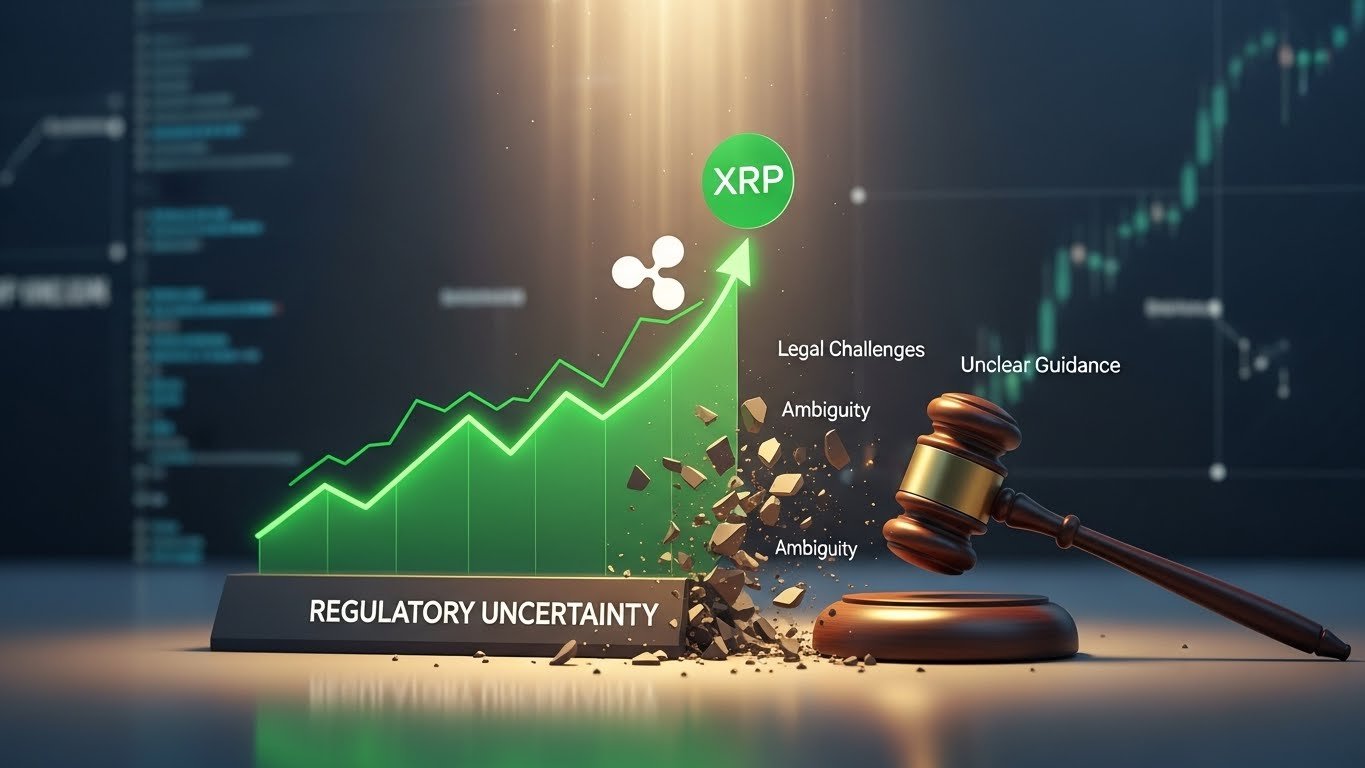
If the “friendlier SEC” thesis continues to gain credibility, it can become a multi-week catalyst. Markets don’t just price the present—they price the trend. Even incremental developments can keep the narrative alive, keeping XRP bid.
Continued strength across the crypto market
XRP rarely moves in a vacuum for long. If Bitcoin and the broader altcoin market remain strong, XRP’s rally has a better chance of holding. Healthy risk appetite across crypto tends to increase liquidity and lift most major assets, especially high-liquidity names like XRP.
Broader adoption and partnership headlines
Utility narratives gain power when supported by visible progress. Any meaningful news around Ripple’s partnerships, payment corridors, or integrations can reinforce the fundamental case and attract capital that’s less likely to sell quickly.
What could derail the bullish momentum?
“Buy the rumor, sell the news” behavior
One major risk with rallies fueled by narrative is that traders may exit once the story becomes fully priced in. If XRP jumps 8% above $2 as traders bet on a friendlier SEC, the market may already have captured much of the optimism. Without fresh catalysts, momentum can fade and price can retrace.
Regulatory setbacks or mixed signals
Even a friendlier tone can change quickly. If regulators issue statements that reintroduce fear, or if enforcement actions spike again, the market’s confidence can reverse. XRP is particularly sensitive to such shifts because of its history.
Overheated leverage
When leverage becomes too crowded, the market becomes fragile. A small pullback can trigger liquidation cascades, turning a manageable dip into a sudden drop. If XRP’s rally has been heavily leveraged, volatility can increase sharply.
Long-term outlook: what XRP needs beyond a headline surge
A single day’s move—no matter how exciting—doesn’t define a long-term trend. For XRP to sustain higher levels, it needs the market to believe in a durable thesis. Regulation is part of that thesis, but so is adoption, ecosystem development, and real-world integration.
If the SEC environment truly improves, it could lower barriers for institutional products, increase listings and liquidity pathways, and encourage more fintech collaboration. That creates a more supportive backdrop for XRP’s long-term valuation.
At the same time, XRP must compete in a world with rapidly evolving payment-focused crypto projects, stablecoins, and blockchain-based settlement networks. The token’s future depends not just on regulatory relief, but on whether it can strengthen its position as a real utility asset in an increasingly crowded market.
Still, the reason the current rally matters is clear: XRP jumps 8% above $2 as traders bet on a friendlier SEC reflects a potential shift in the market’s core assumptions about risk. And when core assumptions change, price can follow for much longer than many expect.
Conclusion
The latest surge shows why XRP remains one of the most closely watched assets in crypto. When XRP jumps 8% above $2 as traders bet on a friendlier SEC, it isn’t just a technical breakout—it’s a market statement about expectations. Traders are positioning for regulatory tailwinds, reduced uncertainty, and the possibility that XRP may finally trade without the heavy discount that legal ambiguity created.
Whether this move becomes the start of a sustained rally depends on what happens next: can XRP hold above $2, can the regulatory outlook continue improving, and can broader market conditions remain supportive? For now, the breakout has reignited optimism, but smart participants will watch confirmation signals—volume, structure, and follow-through—rather than relying purely on headlines.
FAQs
Q: Why did XRP jump 8% above $2?
XRP surged because traders interpreted signals pointing to a potentially friendlier SEC as bullish for assets that have faced regulatory pressure. When XRP jumps 8% above $2 as traders bet on a friendlier SEC, momentum and liquidity often amplify the move.
Q: Is $2 a major support level for XRP?
Yes. The $2 zone is a key psychological and technical level. If XRP holds above $2, it can act as support and encourage further upside. If it fails, the move may be seen as a rejection.
Q: Does a friendlier SEC guarantee XRP will keep rising?
No. Regulatory tone can influence sentiment, but price also depends on market liquidity, adoption, and broader crypto conditions. A friendlier SEC may reduce risk, but it doesn’t eliminate volatility.
Q: What should traders watch after this XRP rally?
Traders often monitor whether XRP can consolidate above $2, how volume behaves during pullbacks, and whether the rally is driven by spot buying or excessive leverage.
Q: Can XRP benefit from institutional adoption?
Potentially. If regulatory clarity improves, institutions may find it easier to access XRP through compliant channels, which could strengthen long-term demand and stabilize liquidity.
