


If you’ve ever watched an altcoin pump 15% in minutes and wondered how other traders reacted so fast, the answer is usually the same: altcoin news alerts for traders. In crypto, speed creates opportunity. Altcoins respond aggressively to exchange listings, major partnerships, token unlock schedules, protocol upgrades, security incidents, and narrative shifts that spread across X and Telegram. By the time most people “hear about it,” the market has already priced it in. That’s why serious traders don’t rely on manual scrolling. They build a system of alerts that delivers the right information instantly, filters noise, and helps them act with clarity instead of panic.
In this guide, you’ll learn what altcoin news alerts for traders actually are, which alert types matter most, how to structure a clean alert stack, which features to prioritize when choosing tools, and how to avoid common mistakes that cause traders to either miss trades or get overwhelmed.
Why Altcoin Alerts Matter More Than Bitcoin Alerts
Altcoins move differently than Bitcoin. They often have thinner liquidity, wider spreads, and stronger narrative sensitivity. That means a single headline can create a chain reaction that looks like this: first a news spike, then social amplification, then momentum traders chase it, then leverage gets liquidated, then the market either continues trending or snaps back.
This is why real-time crypto alerts and breaking crypto news matter so much more for altcoin traders. When information arrives late, your entry becomes worse, your stop needs to be wider, and your risk increases. When information arrives early, you can plan calmly, choose your setup, and enter with defined risk.
What Counts as an “Alert” in Crypto Trading?
A crypto alert is any notification that tells you something has changed and may require action. For traders using altcoin news alerts for traders, alerts typically fall into four core categories that complement each other.
News-based alerts notify you when a headline drops, often filtered by ticker, topic, or category. This includes exchange listings, protocol upgrades, partnerships, funding announcements, regulatory developments, or security incidents.
Price-based alerts notify you when the chart hits a level you care about. These are essential because price often moves before the news reaches your feed.
Technical indicator alerts notify you when indicators meet your criteria, such as RSI crossing a threshold, volume expanding, a breakout confirming, or a trendline breaking. These alerts let you trade without staring at charts all day.
Event and calendar alerts notify you of upcoming catalysts such as airdrops, token unlocks, hard forks, releases, and network upgrades. Crypto event calendars are built for this purpose and help traders prepare ahead of volatility.
When you combine these, you stop depending on luck. You create a repeatable information advantage.
Altcoin News Alerts for Traders That Actually Improve Performance
The best alerts are not the loudest. They’re the most actionable. The fastest way to improve your results is to use fewer alerts that produce clearer decisions.
Breaking Headlines That Trigger Real Moves
A headline matters most when it changes market perception. Not all news creates lasting momentum, but some news does, especially when it connects to a strong narrative or affects liquidity.
Exchange listing confirmations tend to move price sharply, especially on mid-cap and low-cap tokens.
Major integrations and partnerships often create medium-term trends when they align with a hot narrative like AI, DePIN, L2 scaling, or gaming.
Protocol upgrades and mainnet launches can shift both perception and utility, especially if they improve fees, speed, or staking incentives.
Security incidents, hacks, or exploit disclosures can cause instant selloffs, and fast alerts can protect your capital.
News alerts are valuable because they explain the “why” behind price movement. Many traders combine crypto news alerts with crypto price alerts so they get both cause and confirmation.
Price Alerts That Catch Momentum Before It Becomes Obvious
Price alerts are the backbone of almost every trading workflow. They help you detect breakouts, breakdowns, liquidity sweeps, and sudden volatility without being glued to screens.
Market tracker apps commonly offer price alerts and notifications built around watchlists, making it easier to track many altcoins at once. CoinMarketCap’s mobile app highlights alerts and broad market coverage, while CoinGecko’s mobile app emphasizes portfolio tracking, market updates, and price alerts.
To make these useful, you set alerts at levels that match your strategy, such as support zones for bounce setups, resistance zones for breakout setups, and percentage moves for volatility detection.
When your phone pings with a meaningful alert, you want to instantly know what it means, what you plan to do, and where your risk line is.
Technical Alerts That Confirm the Setup Without Guessing
Technical alerts help traders reduce emotion. Instead of constantly checking charts, you let the system tell you when your rules are met.
TradingView is widely used for this because it supports alerts with different delivery options, including desktop notifications, email, and webhook integrations for automation.
This matters because crypto trades often fail when traders act early, act late, or act inconsistently. Technical alerts reduce that inconsistency and let you focus only when conditions are aligned.
Events and Calendar Alerts That Keep You Ahead of Known Catalysts
Many altcoin moves are not random. They’re scheduled. Token unlocks, airdrops, network upgrades, and major releases are often known in advance. When you track them, you stop being surprised by volatility.
Crypto event calendars exist to help traders monitor market-moving catalysts, and they often include filtering and alert features that support pre-planning.
This type of alert is especially useful for swing traders because it helps you prepare for volatility windows without reacting impulsively.
How to Build a Clean Alert Stack Without Getting Overwhelmed
Most traders fail with alerts for one reason. They enable everything. That creates noise, and noise leads to missed opportunities and burnout.
A clean alert stack is built around your timeframe.
If you are a day trader, you need fast volatility alerts, breakout alerts, and a curated set of breaking news alerts. Your edge comes from speed and execution.
If you are a swing trader, you need fewer alerts, but higher-quality ones. You want calendar alerts for scheduled catalysts, major news alerts, and key level alerts based on higher timeframes.
If you trade micro caps, you need alerts for sudden volume spikes, price moves, and listings because micro caps can move violently with little warning.
The simplest way to reduce noise is to make every alert answer a single question: “What do I do if this triggers?” If the answer is “nothing,” delete the alert.
Best Tools and Apps for Altcoin News Alerts for Traders
There isn’t one perfect tool. Traders typically combine a charting platform, a market tracker app, and a news or events layer.
CoinMarketCap’s mobile app positions itself as a full market-data platform with watchlists and alerts across a large number of crypto assets. CoinGecko’s mobile app focuses on tracking crypto prices, portfolio performance, market updates, and price alerts, which is useful for traders who want quick market monitoring.
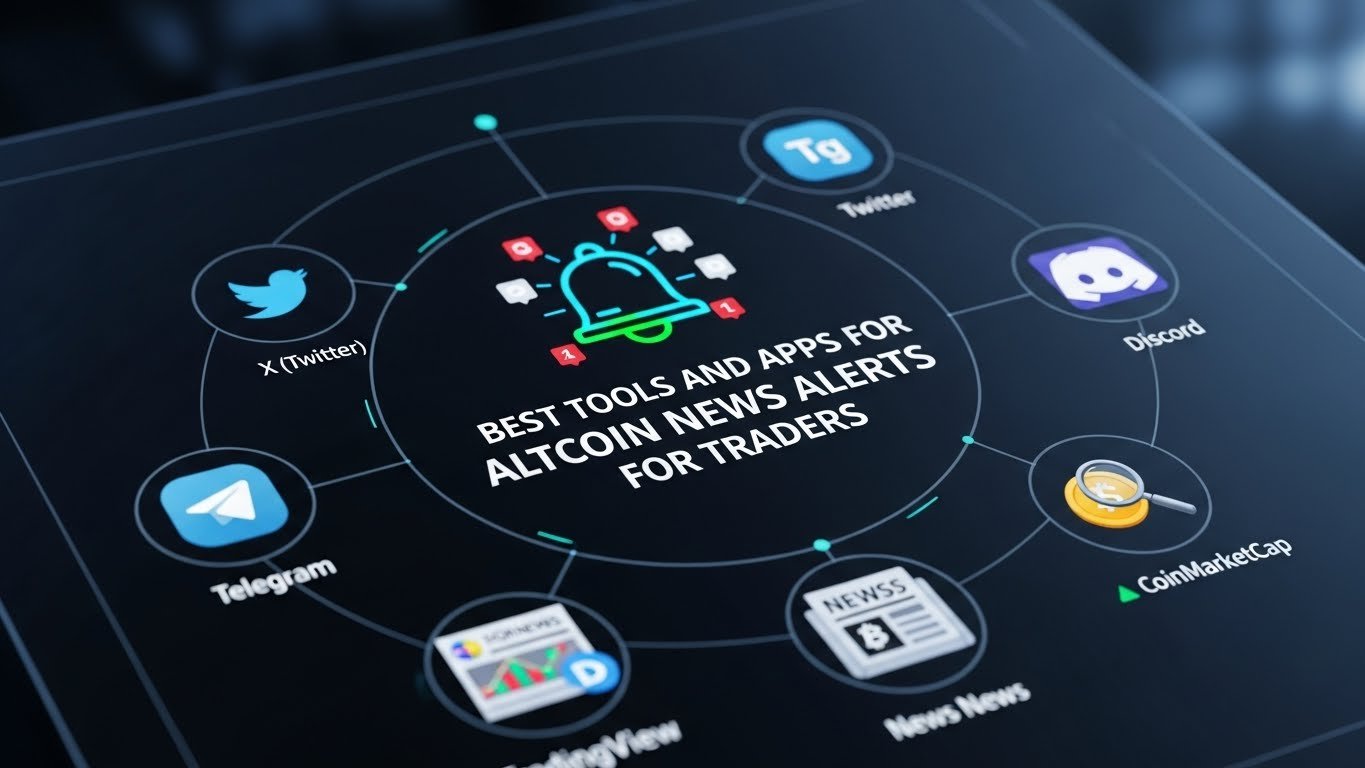
TradingView provides flexible alert delivery methods, including email and webhooks, which is valuable for traders who want advanced automation and chart-based triggers. CoinMarketCal positions itself as a crypto events calendar designed to help traders track catalysts, and it offers tools for staying ahead of market-moving even. The right choice depends on your style. Some traders want maximum speed and automation. Others want a simple system that reduces screen time.
How to Filter Alerts Like a Professional Trader
The most profitable alert setups are not “coin-based.” They’re “event-based.” Instead of only watching tickers, traders watch triggers that historically move markets.
Common high-impact keywords include listing, partnership, integration, upgrade, mainnet, testnet, airdrop, unlock, burn, exploit, hack, audit, SEC, ETF, and funding round.
You can apply these keywords across your alert tools, news feeds, and event calendars. That way, you catch the news that moves markets and ignore the news that creates clicks.
The Best Reaction Framework When an Alert Hits
An alert should never force a trade. It should prompt a process. When an alert triggers, your job is to evaluate, then decide.
First, verify the source. If the alert is news-based, confirm it comes from a trusted outlet, the official project account, or a reputable aggregator.
Second, categorize the catalyst. Is it a listing, upgrade, security incident, regulation, or rumor? Each category has a different reaction pattern.
Third, check liquidity and spread. If slippage is high, your potential reward may vanish instantly.
Fourth, decide whether your setup is momentum-based or reversal-based. Momentum trades need speed and confirmation. Reversal trades need patience and precise invalidation.
Fifth, define risk before entry. The fastest way to blow up is entering on adrenaline with no invalidation point.
This framework turns altcoin news alerts for traders into a controlled advantage instead of a stress trigger.
Mistakes Traders Make With Crypto Alerts
The most common mistake is having too many alerts. Too many alerts lead to alert fatigue, and alert fatigue leads to ignoring the one alert that mattered.
Another mistake is relying only on price alerts without context. Price moves are easier to trade when you understand what caused them.
A third mistake is chasing alerts emotionally. If you enter after a parabolic candle without a plan, your trade becomes a coin flip.
Security mistakes are also common. There have been real cases of malware campaigns targeting crypto traders by distributing fake versions of popular trading apps through malicious ads and phishing pages. Always download apps from official sources and avoid “free premium” offers shared through ads or random links.
Using Alerts With Three Practical Trading Styles
Momentum traders use real-time crypto alerts to catch early breakouts, especially when the move is confirmed by volume expansion and news.
Range traders use alerts to identify liquidity sweeps and false breakouts that often happen around news events, then trade the reversion with tight risk.
Event traders use crypto news alerts and calendar alerts to plan around known catalysts and position ahead of volatility.
In every style, the alert is not the strategy. The alert is the trigger that tells your strategy to wake up.
What to Look for in the Best Altcoin Alert System
Speed is non-negotiable because late alerts are useless in fast markets.
Customization matters because you need filters. Without filters, alerts become noise.
Coverage matters because altcoin traders often track many coins across different narratives and exchanges. Apps that support broad watchlists and market coverage can reduce switching between tools.
Trust matters because bad alerts create bad trades.
Conclusion
Crypto rewards preparation, not luck. With a clean system of altcoin news alerts for traders, you stop finding out late and start acting early. If you want a practical edge starting today, set up altcoin news alerts for traders using a blend of price alerts, technical triggers, and curated event notifications, then connect every alert to a clear action plan. When your alerts match your strategy, they become one of the highest-leverage tools you can use in altcoin markets.
If you want, I can also rewrite this article for a specific platform focus, such as “Telegram-based altcoin news alerts for traders” or “TradingView + webhook alert system for altcoin traders,” while keeping it fully Rank Math compliant and still with no bulleted formatting.
Also Read: Altcoin Under $0.05 Eyes a 400% Play
