


The question on every crypto watcher’s mind right now is simple: is altcoin season dead, or are we just stuck in the awkward “in-between” stage of the cycle where nothing feels like it’s working? If you’ve been watching charts, you’ve probably felt the same frustration. Bitcoin pumps, the market cheers, and then many alts barely move—or they spike for a day and then give it all back. That pattern makes investors wonder whether the classic altcoin playbook has changed for good.
But here’s the truth most experienced traders keep repeating: altcoin season rarely arrives on schedule, and it almost never looks obvious while it’s forming. The real altcoin season tends to feel impossible right before it becomes undeniable. That’s because altcoin season is not a single moment—it’s a rotation. Liquidity moves in stages, narratives take turns, and market confidence builds gradually. When that rotation is incomplete, you get a market that feels confusing: Bitcoin remains strong, Ethereum hesitates, and altcoins look like they’re “broken.”
In this article, you’ll get a clear, human-friendly breakdown of why people think altcoin season is dead, why top traders disagree, and what a realistic altcoin season timeline looks like from here. We’ll also explore the key indicators traders use—like Bitcoin dominance, ETH/BTC strength, liquidity conditions, and sentiment shifts—to judge when the real altcoin rally is starting. Most importantly, you’ll come away understanding how altcoin season typically unfolds, what can delay it, and what could flip the switch into a broad-based run.
What “Altcoin Season” Really Means in 2025 Market Terms
Before we decide whether altcoin season is dead, we need to define what people actually mean by altcoin season today. In older cycles, altcoin season often referred to a period when nearly everything outside Bitcoin surged together. That did happen at times, but it also created unrealistic expectations. Many traders now define altcoin season more precisely as a window when altcoins, on average, outperform Bitcoin over a sustained period, often driven by capital rotation and rising risk appetite.
In practical terms, altcoin season tends to show up after Bitcoin has already done the heavy lifting. Bitcoin rallies first, pulls in attention, increases overall market liquidity, and improves sentiment. Then Ethereum often takes the baton, especially when traders feel confident enough to move from the safest “crypto risk” into slightly higher beta exposure. Only after that does the broader altcoin market get the kind of inflows that create a true altcoin season.
This is why the “altcoin season is dead” narrative spreads during the wrong phase of the cycle. When Bitcoin is still dominating market attention, many altcoins can feel stagnant. That doesn’t mean altcoin season is gone; it often means the rotation isn’t ready. Bitcoin dominance rising is not automatically bearish for altcoins forever—it can simply be part of the early-cycle structure.
Another important shift is that altcoin season now appears more narrative-driven than ever. Instead of every sector pumping together, we often see rotating “mini seasons.” One month it’s Layer 2, another month it’s DeFi, then it’s AI tokens, then memecoins, then gaming, then infrastructure again. That doesn’t kill altcoin season—it changes how it expresses itself.
Why People Think Altcoin Season Is Dead
The belief that altcoin season is dead usually comes from a few painful observations that many holders have lived through.
First, there’s the heavy overhang of supply. Compared to earlier cycles, the market has far more tokens, more unlock schedules, more venture allocations, and more competing chains. When supply expands faster than demand, price action can feel muted. During periods when liquidity is tight, this makes altcoin season feel like a myth.
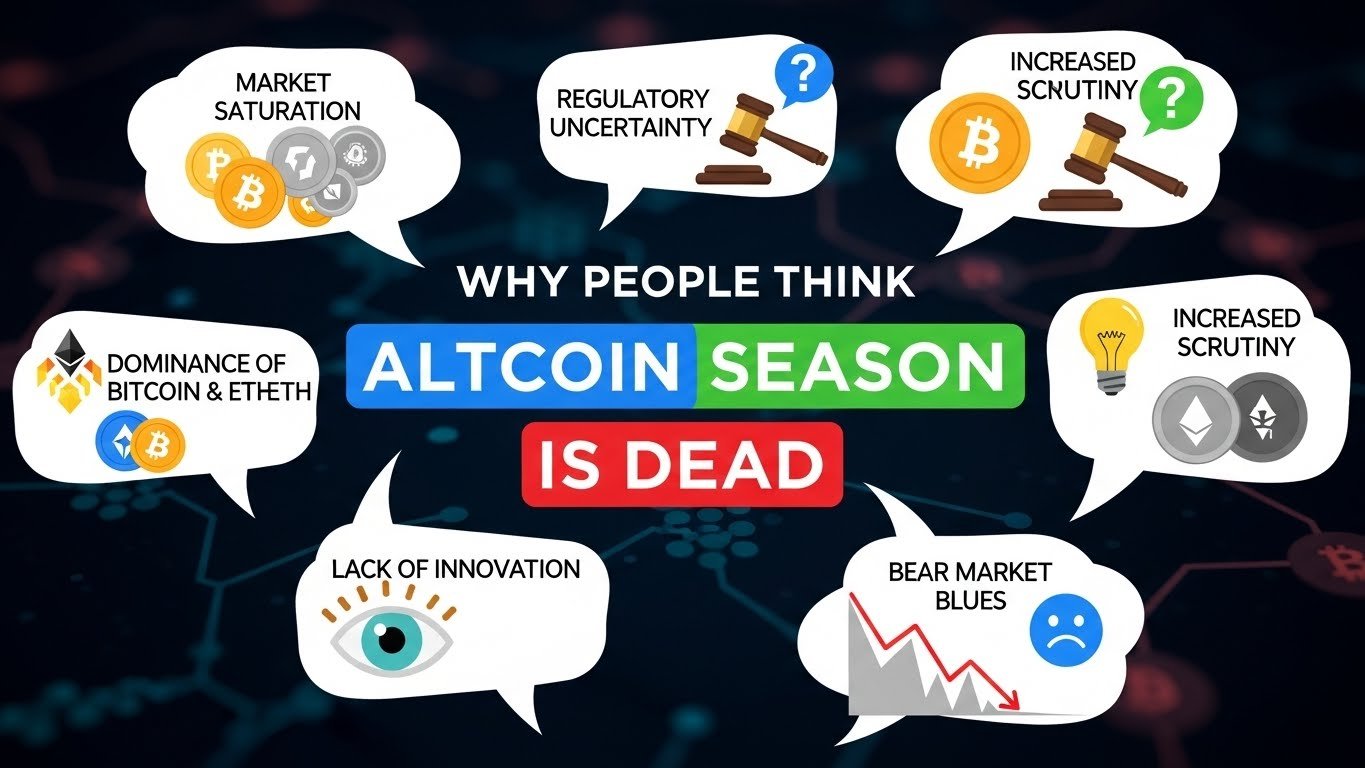
Second, the market structure has matured. Institutions entering through Bitcoin products can concentrate flows into BTC rather than spreading them across altcoins. When large pools of capital choose Bitcoin exposure first, altcoin season may arrive later than retail expects, even if it eventually arrives with force.
Third, many traders got conditioned by one-cycle expectations. If someone expects altcoin season to start the moment Bitcoin goes up, they will feel disappointed again and again. Historically, altcoin season often starts after Bitcoin’s first big run cools down and the market begins hunting for “what’s next.”
Finally, macro conditions matter. When rates are high or uncertainty is high, the market tends to prefer safer assets. In crypto terms, that typically means Bitcoin first. Until the market is comfortable moving into higher-risk bets, altcoin season can remain delayed. This doesn’t mean altcoin season is dead; it means the risk-on switch hasn’t fully flipped.
Top Traders’ “New Timeline” for the Real Altcoin Rally
When traders talk about the new altcoin season timeline, they usually describe a sequence of phases rather than a single date. Their logic is simple: capital rotation follows confidence, and confidence builds step-by-step.
Bitcoin Expansion Builds the Base
Most traders agree that altcoin season is hard to sustain without a strong Bitcoin trend first. Bitcoin is the market’s liquidity anchor. When BTC trends upward, it attracts new attention, pulls sidelined cash into exchanges, and increases overall speculative energy. This is the “setup” stage for altcoin season.
In this phase, Bitcoin dominance often rises because BTC is the easiest entry point. That doesn’t kill altcoin season. Instead, it often lays the groundwork by growing total market participation.
Ethereum Confirms Risk Appetite
A common trader rule is that a real altcoin season needs Ethereum to show strength, especially in the ETH/BTC pair. Traders watch Ethereum because it acts like a bridge between Bitcoin and the broader altcoin universe. When Ethereum starts outperforming Bitcoin, it signals that the market is willing to take on more risk.
This is where the “new timeline” becomes important. Many traders say the real altcoin season tends to begin after Ethereum confirms. If ETH remains weak relative to BTC, it can delay altcoin season even if Bitcoin is pumping.
Large-Cap Alts Lead the First Rotation
Once Ethereum strength appears, capital often rotates into larger, more liquid altcoins first. Think of this as the market’s “warm-up” altcoin season. These moves can be strong, but they may not feel like a full altcoin party yet because mid-caps and small-caps can still lag.
Traders see this as the stage where the market begins believing in the broader cycle again. As confidence grows, more participants start chasing altcoins, and the altcoin season narrative begins trending again across social channels.
The Broad Altcoin Rally Becomes Obvious
This is what most people picture when they say altcoin season: multiple sectors rallying, daily winners everywhere, and Bitcoin feeling “slow” compared to alts. This tends to happen after the earlier phases, not before them. It’s also often the shortest and most emotional part of the cycle, because once the crowd realizes altcoin season is here, positioning becomes crowded quickly.
If you want a practical “timeline” takeaway, most traders frame it as: Bitcoin trend first, Ethereum confirmation second, then large caps, then broad altcoins. That is the new altcoin season timeline in a sentence, and it’s why altcoin season can feel dead while it’s actually forming.
The Key Signals Traders Watch to Call Altcoin Season
Traders don’t guess altcoin season purely by vibes. They watch measurable signals that historically align with a real altcoin rally.
Bitcoin Dominance and the “Turn” Moment
Bitcoin dominance is one of the most discussed indicators around altcoin season. When dominance is rising fast, it often means BTC is absorbing flows. When dominance stalls or starts dropping, it can suggest money is rotating outward. The key is not just the direction—it’s the timing. A dominance drop after a strong BTC run can be a classic early sign of altcoin season emerging.
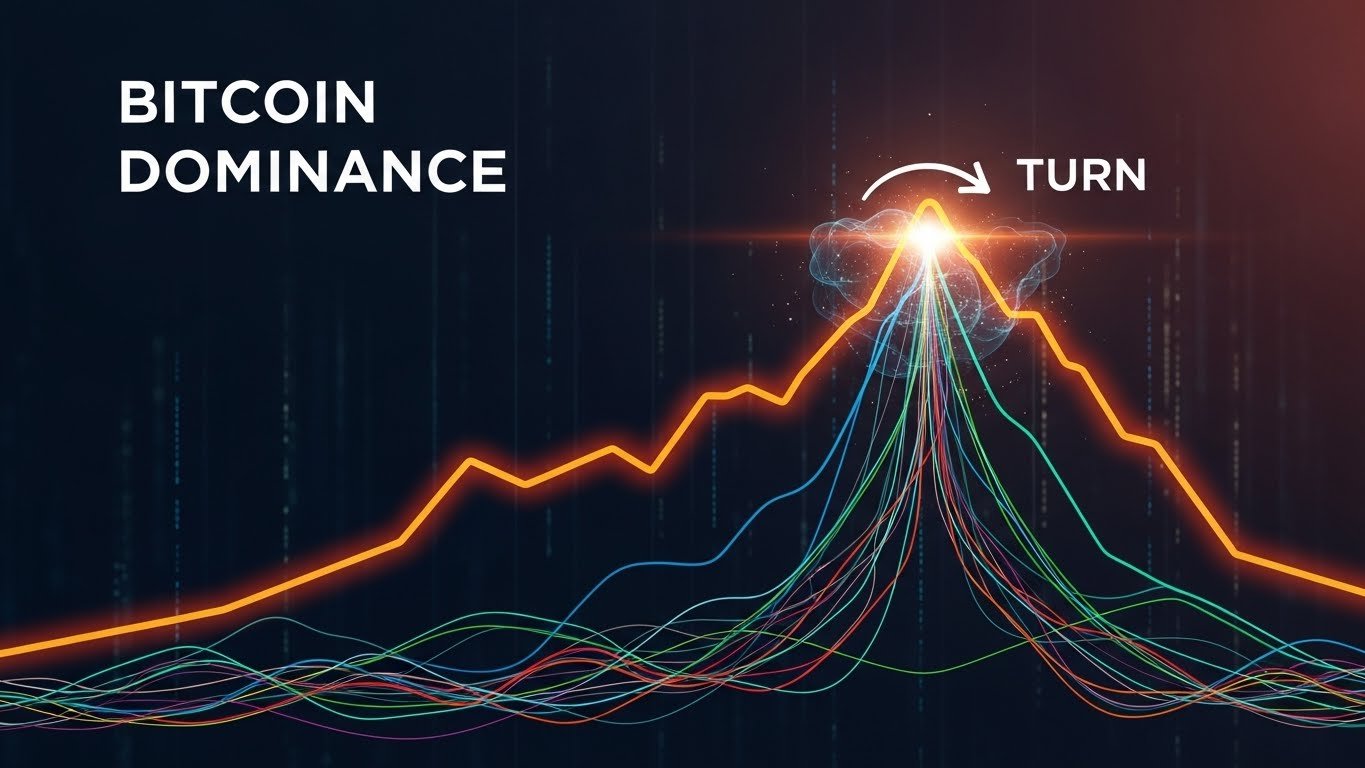
What confuses people is that dominance can stay high for a long time. That doesn’t erase altcoin season; it can simply mean the market is still in Phase 1 or Phase 2.
ETH/BTC Strength as a Gatekeeper
Many experienced traders treat ETH/BTC as a gatekeeper for altcoin season. If Ethereum can’t outperform Bitcoin, broad altcoin leadership is harder to sustain. When ETH/BTC starts trending up, traders often interpret it as the market shifting from “Bitcoin-only confidence” to “ecosystem confidence,” which is the psychological fuel behind altcoin season.
Liquidity Conditions and Risk-On Behavior
No altcoin season thrives without liquidity. Traders look at the broader environment: stablecoin supply trends, exchange inflows, and the overall appetite for speculative assets. When liquidity is improving, traders become more willing to move into higher beta positions, which supports altcoin season.
This is also why sudden risk-off events can interrupt a developing altcoin season. The more speculative the altcoin, the more it depends on loose conditions and positive momentum.
Narrative Strength and Sector Rotation
Modern altcoin season is often a sequence of narrative rotations. Traders watch which sectors consistently attract attention, volume, and capital. If DeFi rallies, then Layer 2 rallies, then AI-related projects rally, and the market keeps rotating rather than collapsing, that’s often a sign the broader altcoin season engine is running.
This matters because the “everything pumps together” version of altcoin season is less common now. The healthier tell is whether the market can keep rotating into new themes without losing overall bullish structure.
Why Altcoin Season Can Feel Late Even When It’s Coming
One of the biggest misunderstandings is expecting altcoin season to be synchronized with Bitcoin’s first breakout. The market is emotional, and people want immediate confirmation that their altcoin bags will move. But in many cycles, altcoin season begins when impatience peaks.
There’s also a structural reason: Bitcoin is the first asset most newcomers buy. When new money enters crypto, it often enters through BTC. That money needs time to “graduate” into Ethereum and then into altcoins. The market has to build confidence step-by-step. That step-by-step process is exactly why traders talk about a new altcoin season timeline instead of promising an instant explosion.
Another reason altcoin season feels late is that many older altcoins don’t lead anymore. In previous cycles, a handful of legacy names could rally hard simply because they were familiar. Today, capital can be more selective. Some projects will underperform even during altcoin season, while others become the face of the rally. That selective behavior makes some investors conclude altcoin season is dead, when the reality is that only certain narratives are being rewarded.
What Could Trigger the Next Real Altcoin Rally
If altcoin season isn’t dead, what flips it from “boring and choppy” into a real, sustained altcoin rally? Traders typically point to a few catalysts that can work together.
The first is Ethereum strength. When Ethereum looks healthy, it pulls the ecosystem upward and helps validate the idea that altcoins deserve capital. The second is a stabilizing Bitcoin trend. A wildly volatile BTC can keep traders defensive, while a steadier uptrend can encourage risk-taking. The third is improving liquidity and sentiment, which turns dips into buying opportunities rather than panic events.
On the crypto-native side, major narrative catalysts can accelerate altcoin season. A surge in on-chain activity, a breakout in a sector like DeFi, or a new wave of adoption around scaling, tokenization, or AI infrastructure can spark strong rotations. The market doesn’t need one perfect trigger. Altcoin season often ignites when multiple “good enough” conditions align and traders realize risk is being rewarded again.
How to Think About Altcoin Season Without Getting Trapped
The smartest way to approach altcoin season is to treat it like a weather system, not a switch. It forms, it builds pressure, it breaks, and then it fades. If you wait until everyone agrees altcoin season is here, a big part of the move may already be done. If you assume altcoin season is dead every time alts go quiet, you’ll get shaken out repeatedly.
Traders stay grounded by watching structure. They ask whether the market is building higher lows, whether capital is rotating rather than leaving, and whether Ethereum is acting as a healthy bridge asset. They also respect that altcoin season can be uneven. Some weeks will feel amazing, others will feel brutal. That push-and-pull is not proof that altcoin season is fake; it’s often how it looks while it’s happening.
Above all, remember that altcoin season is not a promise that every altcoin wins. It’s a period where the average altcoin performs well, and where strong narratives and strong liquidity can create outsized moves. That’s why the “new timeline” matters. It keeps expectations realistic and reduces the emotional whiplash that comes from demanding instant results.
Conclusion
So, is altcoin season dead? The trader view is clear: altcoin season is not dead—it’s conditional. The market has evolved, liquidity rotates in clearer phases, and Ethereum confirmation matters more than ever. What many people call a dead altcoin season is often just the early part of the rotation, where Bitcoin leads and confidence hasn’t fully spread across the ecosystem yet.
The most realistic takeaway is this: a true altcoin season tends to arrive after Bitcoin builds the base, after Ethereum proves strength, and after capital starts rotating beyond the largest names. If those pieces are still forming, the market can feel slow and discouraging. But if they align, the real altcoin rally can arrive faster than most people expect—because once altcoin season catches attention, momentum tends to feed on itself.
FAQs
Q: What is altcoin season in simple terms?
Altcoin season is a period when altcoins, as a group, outperform Bitcoin for a sustained stretch. It usually happens because capital rotates from Bitcoin into Ethereum and then into a broader set of altcoins as risk appetite increases.
Q: Why does Bitcoin pump first before altcoin season?
Bitcoin is seen as the safest major crypto asset, so new money often enters through BTC first. That initial Bitcoin move builds confidence and liquidity, which later supports altcoin season when traders feel comfortable taking on more risk.
Q: Is Ethereum required for a real altcoin season?
Many traders believe Ethereum strength is a major confirmation signal for altcoin season, especially via the ETH/BTC pair. While some altcoins can rally without ETH leading, a broad and sustained altcoin season is often stronger when Ethereum participates.
Q: Can there be altcoin season without small caps exploding?
Yes. Modern altcoin season often begins with larger, more liquid altcoins and then expands outward. Sometimes the market remains selective, rewarding certain sectors like Layer 2 or DeFi more than random small caps, especially when liquidity is not extreme.
Q: What’s the biggest mistake people make about altcoin season?
The biggest mistake is expecting altcoin season to start immediately when Bitcoin rises. In many cycles, altcoin season follows a rotation timeline—Bitcoin first, Ethereum second, then large caps, then broader altcoins—so patience and confirmation signals matter.
Also More: Best Crypto To Buy Now as “Stealth QE” Hits
