



When crypto markets slow down, traders don’t stop watching charts—they watch them more closely. Quiet periods are often where the most important setups are built. Right now, many altcoins are compressing, volatility is tightening, and price is approaching key decision zones. That’s why the debate around ETH vs SOL vs AVAX matters more than usual.
Each of these layer-1 blockchains represents a different type of altcoin trade. Ethereum is the market’s anchor, Solana is the high-momentum favorite, and Avalanche sits somewhere in between, often driven by catalysts and narrative shifts. The key question isn’t which project is “better” long term. The real question is simpler and more practical: which one has the cleanest breakout setup right now?
A clean breakout setup is not about hype or predictions. It’s about structure. It’s about clarity. When a chart shows obvious resistance, strong support, and tightening price action, traders can clearly define risk. Either the breakout happens and continues, or it fails quickly and invalidates the idea.
In this article, we’ll break down ETH vs SOL vs AVAX in a calm, readable way. We’ll look at structure, momentum, confirmation signals, and context. No jargon overload. No forced keywords. Just clear analysis that flows naturally and helps you understand what the charts are actually saying.
What a “Clean Breakout Setup” Really Means
Before comparing ETH vs SOL vs AVAX, it’s important to define what “clean” actually means in trading terms.
A clean breakout setup usually has three elements. First, price is trapped below a clearly defined resistance level. Second, buyers continue to defend higher lows or a strong support zone. Third, volatility contracts as price moves sideways, showing compression. This combination creates tension. When resistance finally breaks, that tension can release quickly.
Clean setups are easy to manage emotionally. You know where you’re wrong. If price breaks resistance and then falls back below it, the setup fails. There’s no guessing. That’s why experienced traders prefer clean setups over messy, choppy charts. When comparing ETH vs SOL vs AVAX, the cleanest setup is the one that offers the clearest decision point, not necessarily the biggest upside.
Market Context: Why Timing Matters Right Now
Breakouts don’t happen in a vacuum. The broader market environment plays a huge role in whether a move follows through or fails. Right now, Bitcoin is not trending aggressively in either direction. That usually shifts attention toward altcoins. When Bitcoin consolidates, capital often rotates into ETH, SOL, and AVAX as traders look for higher volatility opportunities. Liquidity conditions also matter. When liquidity is stable and fear is low, breakouts are more likely to hold. When liquidity tightens, false breakouts become more common. That’s why structure and confirmation matter so much in ETH vs SOL vs AVAX right now.
This is not a market for blind entries. It’s a market for patience.
Ethereum (ETH): The Most Structured Breakout Candidate
Ethereum often produces the cleanest charts in the entire crypto market. That’s not because it’s less volatile, but because it’s heavily traded and widely watched. Large players respect levels on ETH, which makes its structure easier to read. In the ETH vs SOL vs AVAX comparison, ETH usually wins when it comes to clarity.
ETH Price Structure and Resistance
Ethereum has spent extended time trading below a major resistance zone. This zone has rejected price multiple times, making it obvious to almost everyone watching the chart. That’s important. When many traders see the same level, reactions tend to be stronger.
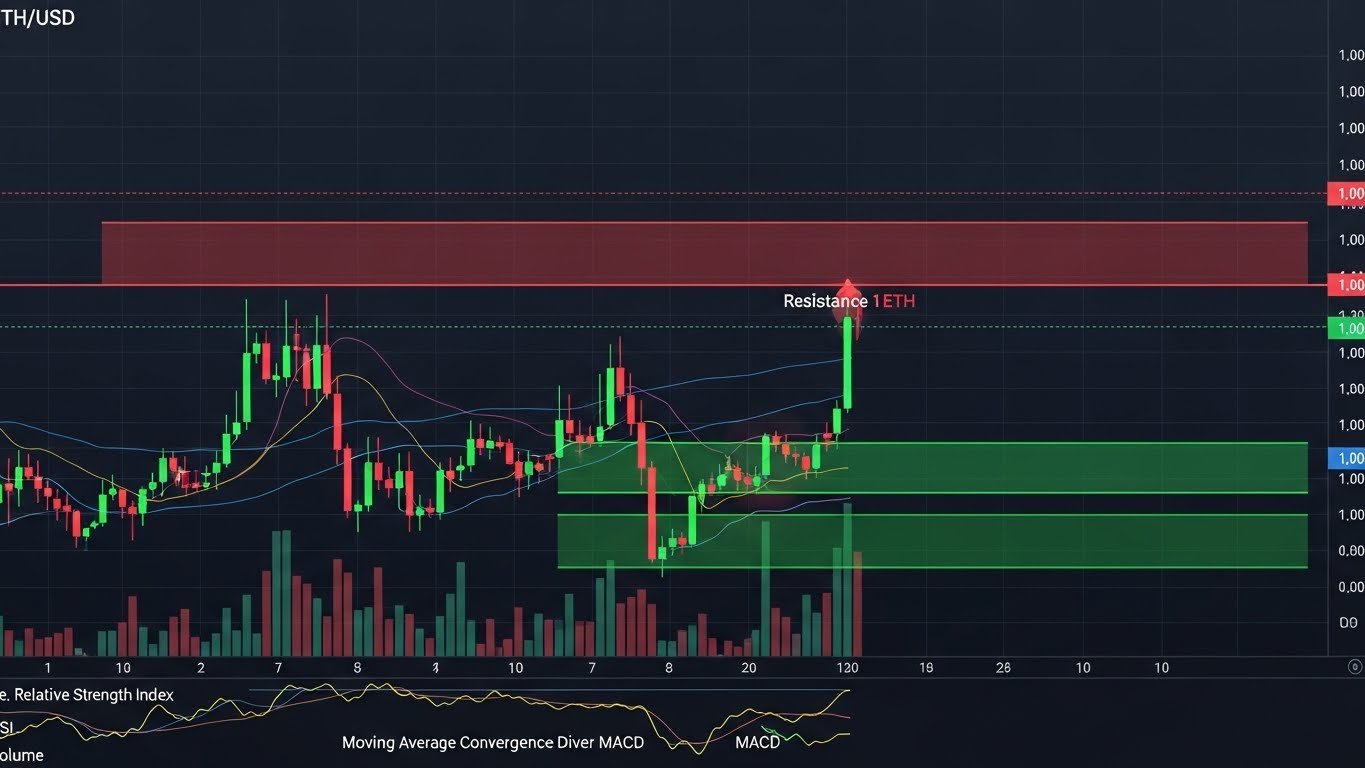
What makes ETH interesting is that price continues to hold above strong support while pressing into resistance. That’s classic compression. Sellers are active, but they are not pushing price lower. Buyers are patient and consistent. This is exactly the type of environment where a clean breakout can develop.
What Confirms an ETH Breakout
For ETH, confirmation is simple. A daily close above resistance is the first signal. A successful retest of that level as support is the second. Without the retest, the breakout is incomplete. ETH does not need explosive volume immediately. What matters more is follow-through. If ETH holds above the breakout level for several sessions, it signals acceptance at higher prices. That’s why ETH is often described as “slow but reliable” in breakout scenarios.
Why ETH Breakouts Matter for the Whole Market
ETH is not just another altcoin. It’s the backbone of DeFi, NFTs, and many layer-2 networks. When ETH breaks out cleanly, it often improves overall market confidence. In ETH vs SOL vs AVAX, ETH’s breakout can act as a green light for broader altcoin strength. That makes its setup especially important even for traders who don’t plan to trade ETH directly.
Solana (SOL): The Most Explosive Breakout Setup
If Ethereum is the steady mover, Solana is the sprinter. SOL is known for fast rallies and sharp pullbacks. That volatility makes it attractive—but also dangerous.
In the ETH vs SOL vs AVAX comparison, SOL often has the most visually obvious breakout box.
SOL Range Compression and Clear Ceiling
Solana has been trading inside a well-defined range. Support is clear. Resistance is clear. Price keeps moving back and forth inside this box, and the range is tightening. This is one of the cleanest forms of compression you can get. The market is telling you exactly where the decision point is. When SOL approaches resistance, sellers step in. When it dips toward support, buyers defend. That balance can’t last forever.
Why SOL Needs Stronger Confirmation
Because SOL is volatile, confirmation rules should be stricter. A quick spike above resistance is not enough. SOL needs to close above resistance and stay there. The best SOL breakouts happen when price breaks out, pulls back gently, and then continues higher. That pullback shakes out weak hands and confirms demand.
In ETH vs SOL vs AVAX, SOL’s setup is clean, but the margin for error is smaller.
Momentum and Crowd Behavior in SOL
Solana attracts momentum traders. When it breaks out, derivatives activity often increases quickly. That can fuel sharp upside moves, but it can also lead to violent reversals if the breakout fails. This is why SOL can deliver some of the cleanest and fastest breakouts—but only after confirmation.
Avalanche (AVAX): Clean Setup With a Catch
Avalanche often flies under the radar compared to ETH and SOL. It doesn’t always trend smoothly, but when AVAX moves, it can move aggressively. In ETH vs SOL vs AVAX, AVAX sits in a unique position. Its breakouts are often cleaner when a catalyst is present.
AVAX Structure and Base Formation
AVAX has shown an ability to hold a strong base while testing overhead resistance. This is constructive behavior. Sellers are present, but they are not overwhelming buyers. Technical perspective, AVAX does have a breakout setup. Resistance is visible. Support is holding. Compression is developing. On structure alone, AVAX looks promising.
Why AVAX Needs Narrative Support
Unlike ETH and SOL, AVAX often needs a story to sustain momentum. Ecosystem growth, institutional adoption, or tokenization narratives tend to drive follow-through. Without that narrative, AVAX breakouts can fade faster than expected. That doesn’t make the setup bad—it just makes confirmation more important. In ETH vs SOL vs AVAX, AVAX’s setup is clean, but conditional.
Comparing ETH vs SOL vs AVAX Side by Side
If we compare all three purely on structure and readability:
ETH offers the cleanest levels and the most predictable behavior. SOL offers the most obvious breakout box and the strongest momentum potential. AVAX offers a technically sound setup that benefits greatly from external catalysts. There is no single “best” altcoin at all times. The cleanest breakout setup is the one closest to confirmation with the least ambiguity. Right now, ETH and SOL stand out because their breakout levels are extremely clear. AVAX remains a strong secondary candidate if momentum shifts in its favor.
Common Mistakes Traders Make in Breakout Markets
Many traders lose money not because the setup is bad, but because their execution is poor. Buying the first green candle is one of the most common mistakes. Clean breakouts usually give you time. Chasing spikes often leads to frustration. Another mistake is ignoring invalidation. In ETH vs SOL vs AVAX, every setup has a failure point. Respecting that level protects your capital and your mindset.
Conclusion
So, which one wins the ETH vs SOL vs AVAX debate right now? If you value structure, clarity, and reliability, Ethereum likely has the cleanest breakout setup. Its levels are respected, its liquidity is deep, and its confirmation signals are straightforward.
If you prefer momentum and explosive potential, Solana offers a very clean range breakout setup—but it demands patience and discipline. Avalanche sits just behind, with a solid technical base that could turn into a clean breakout if the right catalyst appears. The real edge is not picking the “best” coin. The edge is waiting for confirmation and letting the market prove itself.
FAQs
Q: What does “clean breakout setup” mean in crypto trading?
It means price is compressing below clear resistance with strong support underneath, making risk and invalidation easy to define.
Q: Why is ETH often considered the safest breakout trade?
ETH has deep liquidity and well-respected levels, which reduces noise and false moves.
Q: Is SOL riskier than ETH in breakout trades?
Yes. SOL moves faster and can reverse quickly, which increases both reward and risk.
Q: Can AVAX still outperform ETH and SOL?
Absolutely. AVAX often performs best when strong narratives align with technical breakouts.
Q: Should beginners trade breakout setups?
Beginners should focus on learning confirmation and risk management before trading breakouts, as false moves are common.
