


Cryptocurrency traders woke up to a significant development in the digital asset world as Binance, the largest global crypto exchange, officially announced that it will delist three altcoins from its trading platform. Whenever Binance marks a token for removal, it sends a strong ripple across the market because the exchange holds enormous influence over liquidity, trading volume and investor sentiment. The decision to delist any token often triggers debate regarding the project’s stability, credibility and long-term potential, while also influencing price action in both the short and long term.
The announcement that Binance is delisting 3 altcoins has generated a wave of reactions from traders, project supporters and market analysts. Some view delisting events as a natural part of the exchange’s responsibility to maintain quality and protect users. Others worry about what such a move signals for the affected cryptocurrencies and their future. Regardless of perspective, understanding why Binance makes these decisions, how it evaluates tokens and what consequences follow is crucial for anyone involved in the crypto market.
This in-depth article explores every essential detail, from why Binance delists altcoins, to how markets typically react, to what traders should expect in the coming days. With clear explanations and smooth readability, this guide provides a comprehensive breakdown of everything you need to know about Binance’s latest delisting announcement.
Why Binance Delists Altcoins: Understanding the Evaluation Criteria
Whenever Binance announces the removal of an altcoin, it emphasizes that the decision follows a structured evaluation process designed to ensure the exchange remains safe, compliant and reliable. Binance periodically reviews all listed cryptocurrencies, monitoring factors that affect quality, sustainability, integrity and user safety. If a token consistently fails to meet these expectations, it may be marked for delisting.
One critical aspect Binance evaluates is development activity. A healthy cryptocurrency project typically demonstrates consistent progress, transparent communication and regular updates. If development stagnates for too long or if the founding team becomes inactive, Binance interprets this as a warning sign. Poor communication or the inability of the team to maintain a functioning ecosystem can put users at risk.
Another important factor includes trading volume and liquidity. Binance must ensure that every listed asset meets certain trading standards. If volume consistently drops, the altcoin becomes difficult to trade and can expose users to slippage or manipulation. Low liquidity often indicates diminishing interest and weak investor confidence, which reduces the token’s viability in a highly competitive market.
Security vulnerabilities or evidence of unethical behavior also play a major role in delisting decisions. If a project becomes associated with fraud, insider misconduct or irresponsible governance, Binance prioritizes user protection and may remove the token. The exchange also considers regulatory compliance, ensuring that the asset does not pose legal risks. Ultimately, Binance’s evaluation framework ensures that only tokens meeting high standards remain accessible to the world’s largest crypto community. While delisting may appear dramatic, it reinforces the exchange’s commitment to quality and market integrity.
Which 3 Altcoins Binance Is Delisting and Why It Matters
The announcement that Binance marks 3 altcoins for delisting has dominated crypto discussions because delistings often lead to rapid market reactions. When tokens lose their spot on a major exchange, the impact is immediate: trading pairs disappear, liquidity declines sharply and prices usually experience abrupt volatility. Even if the project remains functional, the loss of access to Binance’s enormous user base dramatically alters its trading landscape.
The three altcoins chosen for delisting share a combination of declining liquidity, reduced community engagement, weakened development activity or issues related to regulatory concerns. While the specific reasons vary, the overall decision underscores Binance’s mission to maintain a vibrant ecosystem with strong-performing cryptocurrencies.
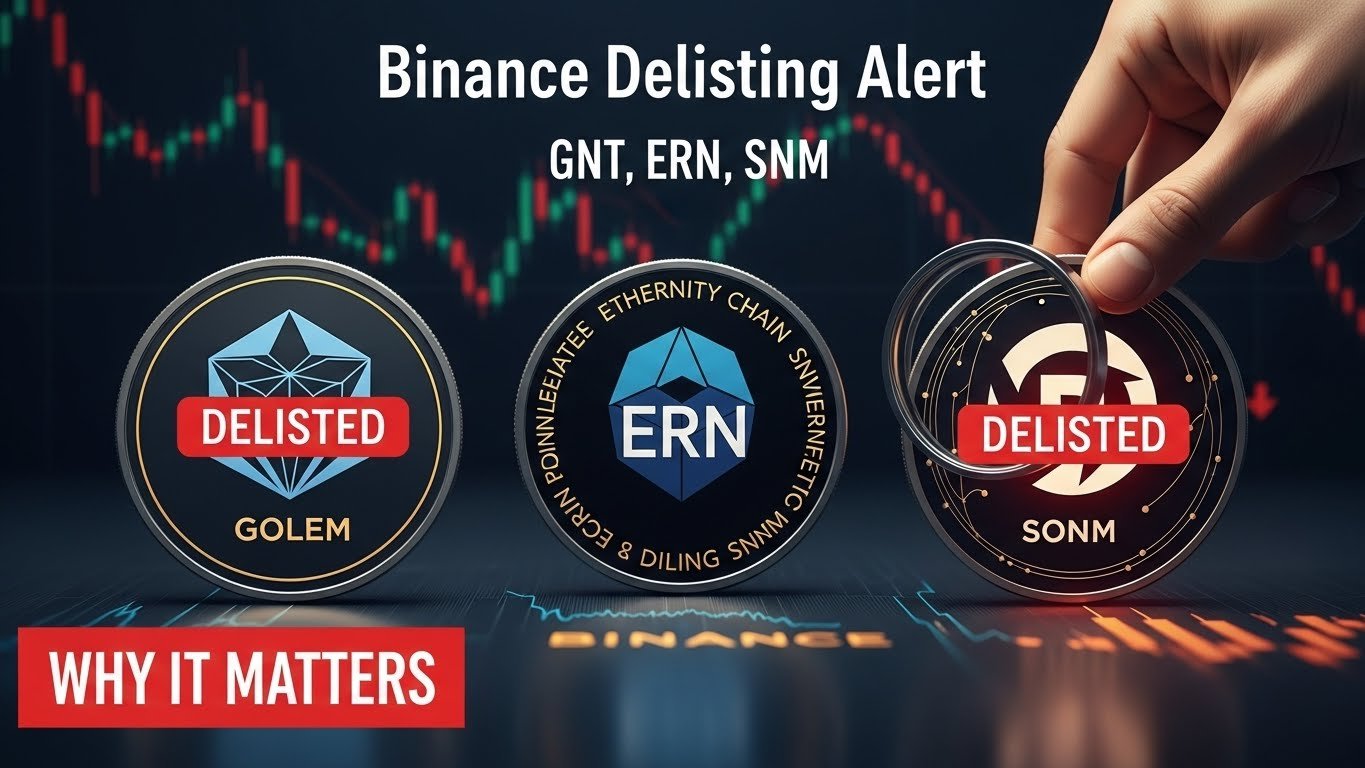
For traders, the delisting of these three altcoins signals an early warning to reassess their market positions. Investors often use Binance’s decisions as a reference point because the exchange conducts extensive due diligence before taking such a step. If Binance identifies red flags, traders may re-evaluate holdings to manage risk more effectively. This naturally shapes market behavior and alters the trajectory of affected projects.
The delisting also matters from a psychological standpoint. News of removal from Binance quickly spreads across the crypto community, shaping narratives and influencing speculation. Supporters of the affected tokens may feel concerned, while speculators might attempt to capitalize on short-term volatility. Understanding the motivations behind Binance’s decisions can help traders avoid emotional responses and adopt a more analytical approach.
How Delisting Affects Prices and Market Sentiment
One of the most immediate consequences of a Binance delisting announcement is a sharp shift in market sentiment. Investors tend to react quickly, often selling their positions out of concern that the token’s value will drop. Price declines are common because liquidity evaporates rapidly once the token loses access to a major exchange. Without large-scale trading volume, altcoins struggle to maintain stability.
Another reason delisting impacts prices is the perception of risk. Many retail traders view Binance as a benchmark for legitimacy. When Binance removes a token, it signals potential problems with the project’s fundamentals or long-term sustainability. As confidence weakens, traders may exit their positions to avoid further losses, which contributes to downward price pressure.
However, delisting does not always mean a token will disappear completely. In some cases, altcoins maintain vibrant ecosystems outside Binance, continuing to trade on smaller exchanges or within decentralized platforms. Still, the removal tends to limit mainstream accessibility, reducing exposure and slowing growth.
Long-term investors often interpret delisting events differently. Some may identify opportunities if they believe the token retains strong fundamentals despite the delisting. Market sentiment can gradually improve if the project resolves issues and continues to innovate. But for most traders, Binance’s decisions serve as a useful barometer for identifying assets with declining momentum.
Understanding Binance’s Responsibility to Protect Users
As the largest cryptocurrency exchange in the world, Binance must prioritize user safety, regulatory compliance and operational efficiency. The decision to delist altcoins that no longer meet quality standards reflects this responsibility. By taking proactive steps to remove problematic or unstable tokens, Binance safeguards traders from unnecessary risks.
User protection extends beyond removing tokens with declining performance. It also includes monitoring the integrity of project teams and ensuring that listed assets comply with evolving regulations. Binance continuously evaluates the legal environment surrounding cryptocurrencies, adapting its policies to avoid exposing users to vulnerabilities or legal complications.
Removing altcoins also helps maintain the exchange’s reputation as a trusted global trading platform. With thousands of cryptocurrencies in existence, not all can be expected to uphold strong standards. Binance’s role is to provide a curated environment where users can trade confidently, knowing that each listed asset meets strict criteria. Understanding this responsibility helps explain why delisting decisions should not be interpreted as attacks on individual projects. Instead, they represent Binance’s broader mission to support a healthy and credible digital asset marketplace.
How Traders Should Respond to Binance’s Delisting Announcement
When Binance marks 3 altcoins for delisting, traders often wonder how they should respond. The most important step is understanding the timeline provided by Binance, including the last trading date and the deadline for withdrawing assets. Traders must ensure that they manage their holdings before trading pairs become unavailable.
Emotional reactions are common during delisting events, but a calm and analytical approach is essential. Traders should examine the reasons behind Binance’s decision and evaluate whether the token still aligns with their investment strategy. Some investors may choose to exit their positions due to reduced liquidity, while others may decide to hold if they believe the project can recover.
It is also useful to explore other exchanges where the altcoin remains listed. Although delisting from Binance is significant, it does not eliminate all trading options. The token may continue to exist on other platforms or within decentralized finance ecosystems where users can still buy, sell or stake their holdings.
In any case, understanding the implications of delisting empowers traders to make informed decisions. Rather than reacting impulsively to market fluctuations, thoughtful planning helps protect capital and ensures that investment choices remain aligned with personal risk tolerance.
The Broader Impact on the Crypto Market
Every delisting event on Binance has implications beyond the affected altcoins. As a global leader in the industry, Binance influences market trends and investor perceptions. When it removes tokens, the decision signals a broader message about the standards cryptocurrency projects must meet to survive in an increasingly competitive environment.
The removal of these three altcoins may prompt other exchanges to conduct similar evaluations. Some platforms follow Binance’s lead when reassessing token quality, meaning delisting could spread across multiple exchanges. This creates a ripple effect that reshapes the market, emphasizing the importance of transparency, strong development teams and regulatory compliance.
Delisting events also highlight the necessity for investors to diversify their portfolios. Relying heavily on speculative or lower-cap tokens can increase exposure to risk, particularly when exchanges take corrective actions. Binance’s decision reinforces the idea that successful long-term investing requires research, strategy and a clear understanding of market conditions.
What This Means for the Future of the Delisted Altcoins
The future of the three altcoins marked for delisting depends on several factors, including the response of their development teams, the strength of their communities and their ability to maintain relevance without Binance. Some projects may survive and even thrive on decentralized platforms, where community engagement plays a larger role than exchange listings.
If the projects continue developing innovative technology, rebuilding trust and expanding real-world use cases, they may gradually regain momentum. On the other hand, projects that fail to address underlying problems may struggle to recover from the decline in accessibility and liquidity.
The delisting can serve as a wake-up call for project teams, highlighting the need for transparent communication, continuous development and long-term vision. The most resilient altcoins are those capable of adapting to challenges, learning from setbacks and proving their value through tangible progress.
How Binance Maintains Market Quality Through Delisting
Delisting tokens is not purely a reactive process. It is part of Binance’s structured method of maintaining market quality. Through this continuous evaluation system, Binance ensures that only assets meeting high standards remain available to traders. This creates a more stable environment where users can participate confidently.
By removing assets that show declining performance or potential security issues, Binance minimizes user exposure to risk. This not only protects individuals but also strengthens the overall integrity of the market. Stronger markets attract more institutional investors, increasing liquidity and supporting long-term growth across the cryptocurrency ecosystem.
Maintaining quality requires difficult decisions, but Binance’s willingness to make them demonstrates an unwavering focus on user trust. Through carefully monitored listing standards, the exchange helps create a safer, more sustainable environment for crypto adoption.
Conclusion
The announcement that Binance marks 3 altcoins for delisting represents an important moment in the evolving cryptocurrency landscape. While such decisions may spark concern or speculation, they ultimately reinforce Binance’s commitment to maintaining a secure and high-quality trading environment. Delisting does not necessarily spell the end for any project, but it does emphasize the importance of accountability, development consistency and regulatory alignment.
Bitcoin and top altcoins have shown that strong fundamentals lead to long-term success, while weaker projects often fade without innovation and community support. As the crypto industry grows, exchanges like Binance will continue playing a crucial role in setting standards, guiding investor expectations and promoting responsible development.
Understanding why delisting occurs, how it affects market behavior and what traders should do in response will empower investors to navigate the landscape with clarity and confidence. The crypto market is constantly evolving, and staying informed remains the most valuable strategy for success.
FAQs
Q: Why did Binance decide to delist these 3 altcoins?
Binance delisted the three altcoins because they no longer met the exchange’s quality, activity or compliance standards. Declining liquidity, weak development progress or regulatory concerns often contribute to such decisions.
Q: What happens to my assets after delisting?
You retain ownership of your tokens, but trading pairs will be removed. You must withdraw them before the deadline or transfer them to another exchange where the token remains active.
Q: Does delisting mean the altcoin is dead?
No. Delisting simply means the token will no longer trade on Binance. Many altcoins continue functioning on other exchanges or within decentralized ecosystems.
Q: How will delisting impact the token’s price?
Prices typically experience volatility and downward pressure due to reduced liquidity and negative sentiment. The severity depends on the project’s fundamentals and market reaction.
Q: Should I sell my altcoin after a Binance delisting announcement?
Whether to sell or hold depends on your strategy, risk tolerance and confidence in the project’s future. Evaluating the reasons behind the delisting can help you make an informed decision.
Also Read: Best Altcoin to Buy This Week BEST Token?
